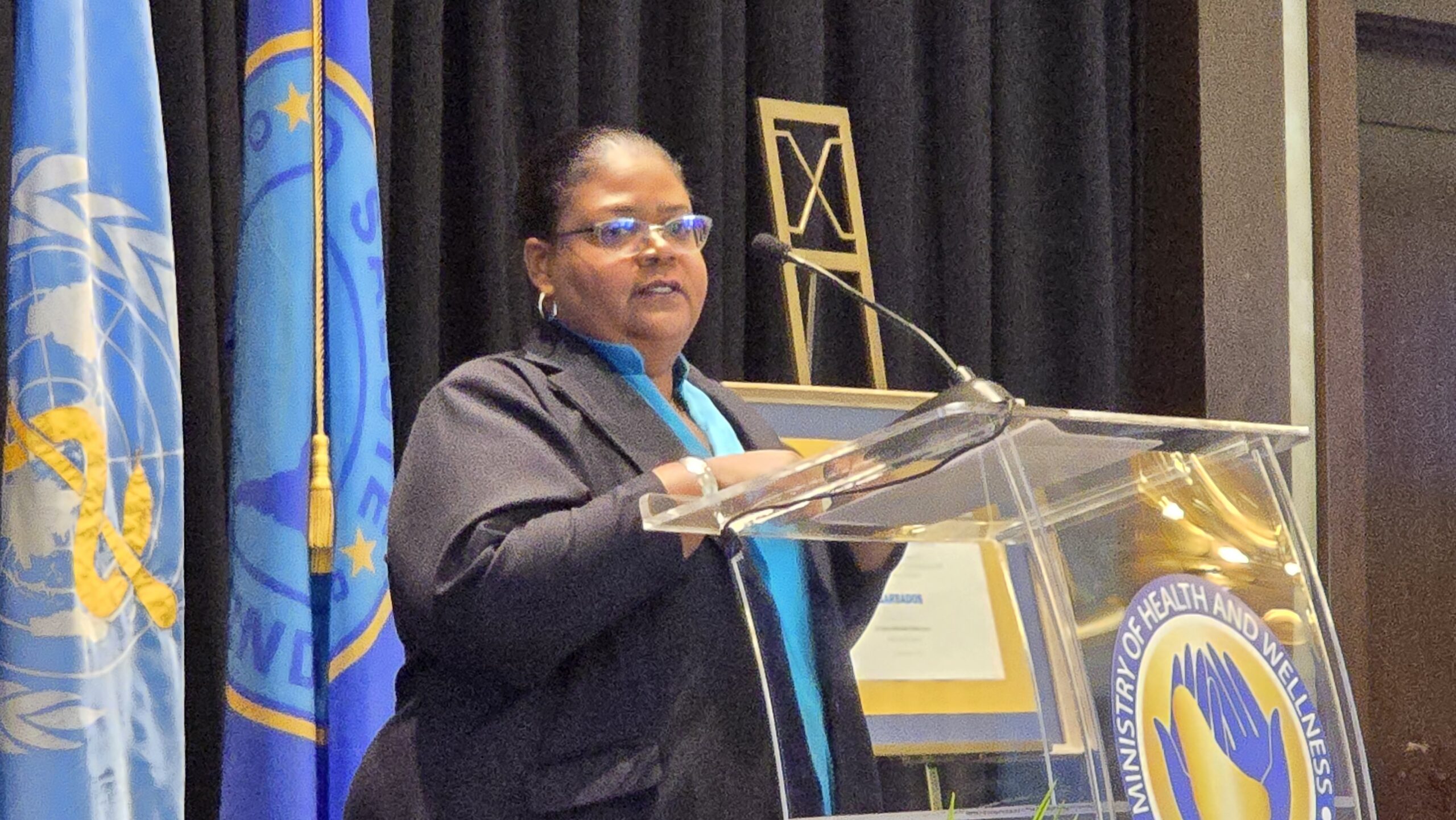
During an official recognition ceremony hosted by the Pan American Health Organization/World Health Organization (PAHO/WHO) and Barbados’ Ministry of Health and Wellness at the Sandals Royal Ballroom in Maxwell, Christ Church, Senior Medical Officer of Health and national HIV/STI Programme Manager Dr. Dale Babb announced on Friday that the island nation has formally eliminated mother-to-child HIV transmission as a public health concern, following more than three decades of coordinated cross-sector effort. Data reviewed for the validation period between 2022 and 2024, which covered 6,352 recorded live births across Barbados, confirmed zero new pediatric HIV infections linked to perinatal transmission, marking a historic public health milestone. As deputy chair of the National Validation Committee, Dr. Babb emphasized that the hard-won certification was the product of unwavering collective dedication, sustained institutional investment, and widespread national resolve spanning generations of public health workers. She confirmed Barbados has met every global benchmark set by WHO for elimination of vertical HIV transmission: a perinatal transmission rate below 2%, an overall perinatal HIV incidence of less than 0.5 cases per 1,000 live births, and coverage rates exceeding 95% for antenatal care, routine HIV screening for pregnant people, and life-saving antiretroviral treatment for expectant mothers living with HIV. Dr. Babb highlighted that Barbados ranked among the first Caribbean nations to roll out the antiretroviral drug AZT (zidovudine) for HIV-positive pregnant women, launching its formal prevention of mother-to-child transmission (PMTCT) program in 1995, shortly after global clinical research confirmed the medication could drastically cut vertical transmission risk. That initial intervention alone drove transmission rates down from a staggering 27% to 5.5%, with further steep declines following the introduction of a second complementary prophylactic drug to pair with AZT. Routine HIV testing uptake among pregnant women also skyrocketed from just 40% in 1993 to 89% by 2004, and has now reached a 98% coverage rate as of 2025. Dr. Babb took time during the ceremony to honor key trailblazers whose decades of work laid the foundation for the victory: Professor Anne St. John, who led campaigns to boost treatment access and medication adherence for HIV-positive pregnant women; Professor Timothy Roach, who first responded to Barbados’ initial recorded AIDS diagnoses all the way back in 1984; and Dr. Anton Best, who steered the national HIV/STI Programme from 2007 through 2021. Delivering opening remarks at the event, Minister of Health and Wellness Senator Lisa Cummins framed the milestone as the culmination of decades of deliberate, patient-focused work, and stressed that certification would not mark the end of Barbados’ PMTCT efforts. She reaffirmed the national government’s ongoing commitment to prioritizing maternal and child health, embedding sustainable support for related services across policy frameworks, operational workflows, and long-term public health infrastructure rather than treating the certification as a one-off ceremonial endpoint. Dr. Eva Jané Llopis, PAHO/WHO Representative for Barbados and the Eastern Caribbean, noted that the achievement came after years of navigating early, daunting barriers in the national HIV response, when widespread social stigma and public fear surrounding the virus posed nearly as great a public health challenge as the pathogen itself. She emphasized that the universal scope of Barbados’ PMTCT protections means every child born on the island, regardless of whether they are delivered at the public Queen Elizabeth Hospital or a private medical facility, and regardless of whether their mother accessed care through a public polyclinic or private obstetric provider, is shielded from preventable perinatal HIV exposure. Prime Minister Mia Mottley framed the certification as a tangible demonstration of what Barbados can deliver when it centers public well-being ahead of commercial and market-driven priorities. She recalled a historic ministerial statement tabled by then-colleague Elizabeth Thompson, which formalized the government’s public commitment to eliminating vertical HIV transmission, backed by full funding for antiretroviral treatment for pregnant women secured by the concurrent prime minister and finance minister at a time when even high-burden nations such as South Africa had not yet adopted comparable policy commitments. “This is a clear example of why we must keep people at the very center of our national development,” Mottley told attendees, noting that countless Barbadian children and adults today who are living full, productive lives would have faced preventable HIV infection if the country had not acted decisively to implement its PMTCT strategy decades earlier. “Success does not always appear as something we can see and touch in the immediate term, but its ripple effects last for generations,” she added.