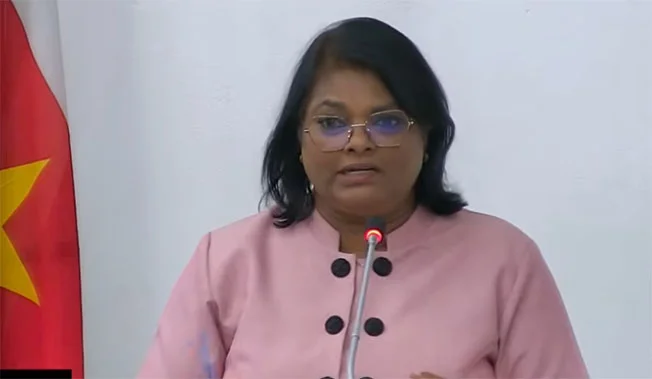
On October 29, senior Surinamese lawmaker and former Minister of Defence Krishna Mathoera, representing the ruling Progressive Reform Party (VHP), raised explosive claims during a parliamentary debate on amendments to special investigative powers, alleging that a functional telecommunications interception unit was housed within the Office of the President, and that unscheduled wiretapping activities had been carried out on an intermittent basis. Mathoera, speaking on the floor of the National Assembly, referenced the 2004 Telecommunications Act, which grants the Surinamese President explicit authority to order communications interceptions in the interest of national security, separate from the prosecutorial wiretapping powers held by the Prosecutor General for criminal investigation purposes. She emphasized that communications interception is an intrusive state power that demands rigid legal guardrails, distinguishing between preemptive intelligence gathering to counter terrorism, espionage and organized serious crime for national security ends, and targeted wiretapping tied to active criminal probes. The veteran legislator called for full public clarity on the approval protocols for such surveillance operations, the eligibility criteria for authorizing interceptions, safeguards to prevent abuse of these powers, legal protections for ordinary citizens whose communications may be intercepted, and strict oversight of all collected surveillance data. She further noted that unauthorized wiretapping constitutes a criminal offense, and pushed for standardized, transparent operating guidelines for both national security agencies and judicial authorities. Expanding the scope of her inquiry, Mathoera also raised questions about the oversight role of Suriname’s Telecommunications Authority (TAS) and local telecom service providers in executing court-approved interception requests, calling for formal binding agreements governing providers’ technical surveillance capabilities, the storage and disclosure of user traffic data, and integrity checks for recorded communications. She proposed a mandatory public log that documents every wiretap request, the timestamp of its activation, its total duration, and all personnel granted access to intercepted materials, to eliminate risks of data manipulation or the use of unvetted surveillance material as evidence in court. To enforce robust cross-agency oversight, Mathoera advocated for the establishment of a centralized independent review commission with representation from the national police, the Public Prosecution Service, and a supervisory judge, tasked with full supervision of all special investigative surveillance tools. In a formal response to local news outlet Starnieuws, Previen Sewnath, Communications Coordinator for the Office of the President, flatly dismissed all of Mathoera’s allegations as entirely baseless and rooted in pure fantasy. Sewnath criticized the legislator for spreading unsubstantiated insinuations without presenting a single shred of concrete evidence, noting that the presidential office’s full focus remains on drafting and implementing targeted policy measures to pull Suriname’s national recovery efforts back on track, and that such distracting speculations are deeply regrettable. The presidential spokesperson declined to offer any specific technical clarification regarding the presence or absence of interception equipment at the president’s offices, instead redirecting all queries related to national security operational matters to the State Security Advisor Melvin Linscheer and the Acting National Security Director Gerard Kalka. Sewnath added that the Office of the President will not allow unsubstantiated speculation to divert its attention from its core priorities of policy delivery, national economic and social recovery, and building a stable, prosperous future for all Surinamese citizens.