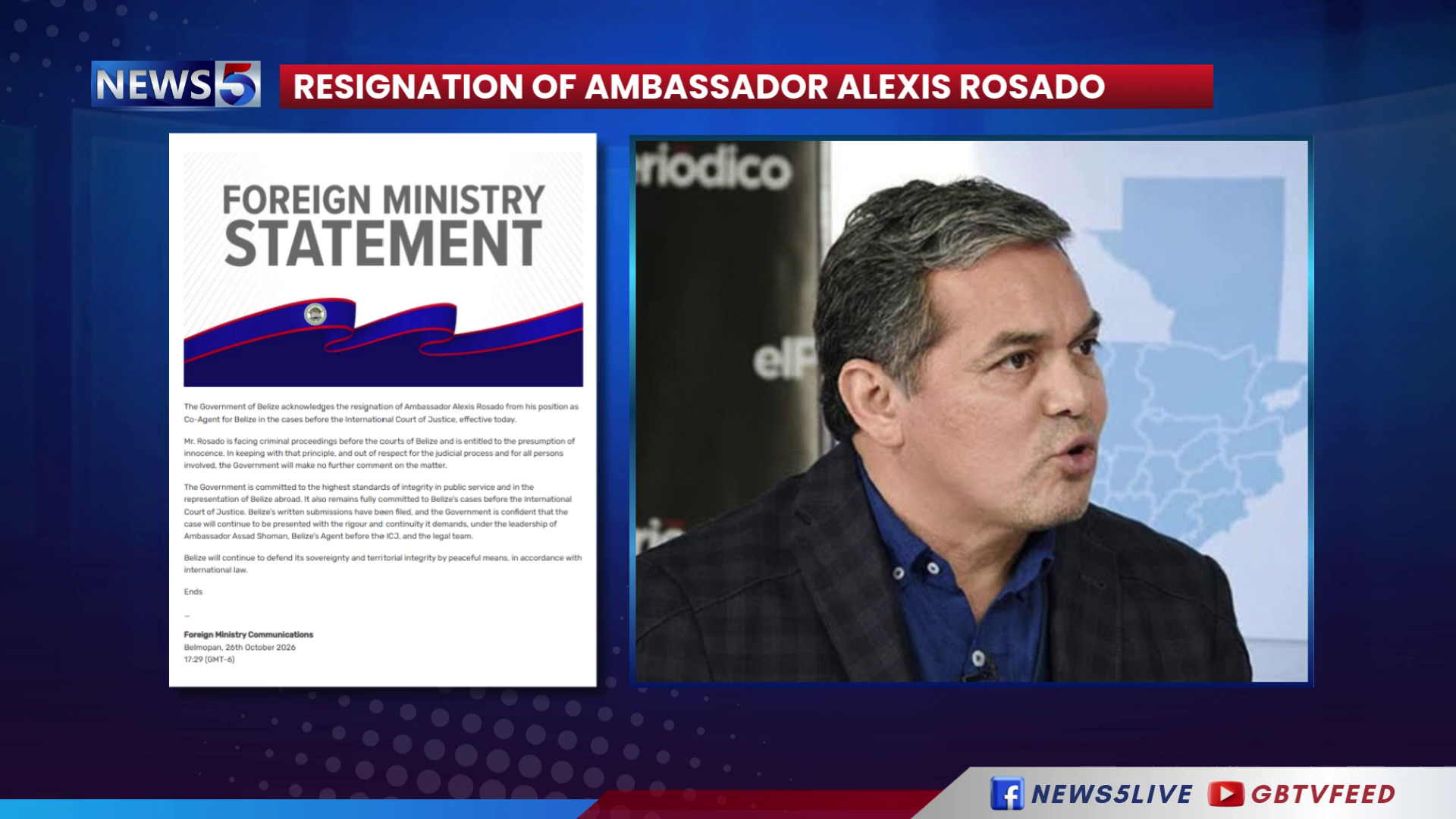
On October 26, 2026, the Government of Belize formally confirmed that Ambassador Alexis Rosado has tendered his immediate resignation from the critical post of the country’s Co-Agent overseeing cases at the International Court of Justice, drawing a temporary close to weeks of heated public discourse over his eligibility to serve in that sensitive role while facing active criminal proceedings. Official government statements emphasized that Rosado retains his full legal right to the presumption of innocence, and that authorities will refrain from issuing further public commentary out of deference to ongoing judicial processes and all parties involved in the related criminal case. While this measured, legally cautious stance avoids prejudicing Rosado’s right to a fair trial, it leaves a suite of pressing, unaddressed questions about governance standards for senior public representatives unanswered. Crucially, the position Rosado vacated carries direct, non-negotiable responsibilities tied to defending Belize’s national sovereignty and territorial integrity at the highest global judicial body, a mandate that demands unwavering public trust. The core unresolved debate hinges on whether the bar for retaining such high-stakes public roles should be limited exclusively to the absence of a formal criminal conviction, or if broader public confidence in the officeholder’s suitability must also factor into official decision-making. Though the government has repeatedly pledged to uphold the strictest standards of integrity across all public service tiers, Rosado’s sudden eleventh-hour resignation has sparked widespread public scrutiny over the timeline of the matter: whether Rosado chose to step down entirely on his own volition, or if senior government officials quietly requested his departure; whether any formal, documented review process was ever conducted to assess his continued fitness to remain on the ICJ legal team; and whether Belize needs to draft explicit, standardized rules to govern senior public officials facing serious active criminal charges. Government spokespersons have assured the public that Rosado’s exit will cause no disruption to Belize’s ongoing ICJ proceedings, noting that veteran diplomat Ambassador Assad Shoman will continue to lead the national team, and that all required written submissions to the court have already been filed. Even so, critical operational questions remain unclarified, including who will assume Rosado’s former core duties, whether a new Co-Agent will be formally appointed in the near term, and if any transitional gaps could undermine final preparations for upcoming ICJ hearings. The departure of Rosado resolves the immediate public conflict over his continued service on the ICJ delegation, but it does not resolve the broader national conversation about balancing the fundamental legal principle of presumption of innocence against the public’s legitimate demand for full transparency, accountability, and unimpeachable integrity for individuals representing Belize’s most vital national interests on the global stage.