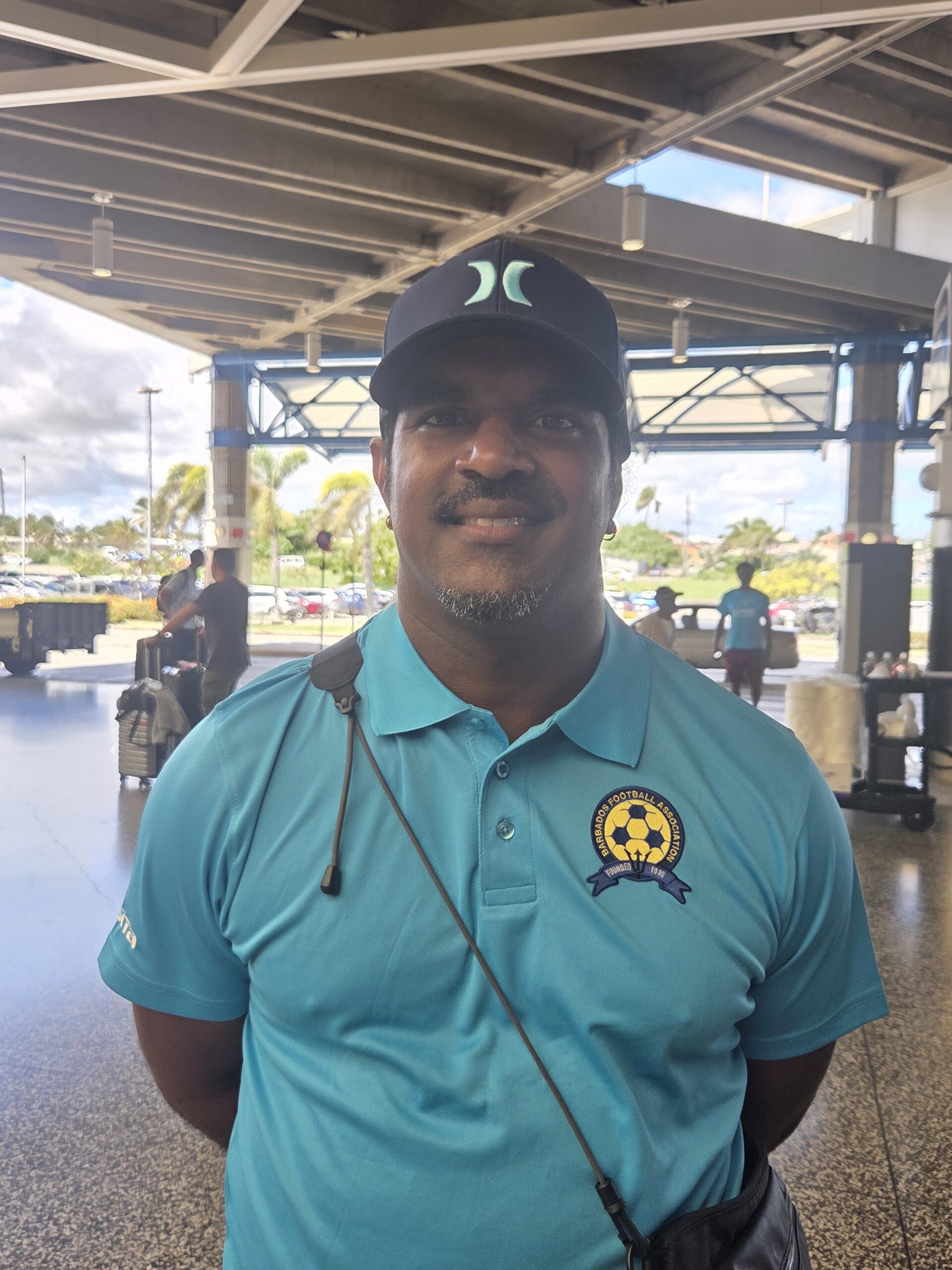
Marking a groundbreaking milestone as the first Barbadian national football side ever to qualify for a FIFA World Cup tournament, the country’s U-15 squad has wrapped up its initial group stage run at the inaugural FIFA U-15 World Cup hosted in Azerbaijan, with head coach Stefan King delivering frank, forward-focused assessments of the team’s performance in an exclusive interview with Barbados TODAY from the tournament base in Baku.
The Barbadian side’s opening four group fixtures yielded a narrow 2-1 loss to Kuwait, followed by lopsided 7-0 defeats to Tajikistan and top-ranked global powerhouse Spain, and an 8-0 shutout against 50th-ranked Chile. King emphasized that the lopsided scorelines are not indicative of a lack of effort from his young squad, but rather a combination of the tournament’s unique 8v8 small-sided format, vastly different preparation timelines across competing nations, and clear gaps in local youth player development that have been laid bare by the elite global competition.
“This is a level of competition no Barbadian national youth side has ever encountered before,” King explained. “We went up against the number one ranked team in the world in Spain, Chile ranked 50th, and every opponent we faced demonstrated a level of technical polish and physical maturity our players are not accustomed to matching at this age group. Many of the U-15 athletes we competed against are nearly six feet tall, with years of specialized small-sided play experience built into their local youth systems.”
King highlighted that the 8v8 format, played on a condensed pitch with larger goal frames, erases the open space that many Barbadian youth players, trained almost exclusively in the traditional 11v11 format, rely on to leverage their natural athleticism. Without that room to run, players are forced to make far quicker decisions both on and off the ball, a skill set that King says is severely underdeveloped in local youth football pathways. “You cannot execute complex tactical game plans if your foundational technical ability is not sharp enough first,” he noted. “Our players need to build far greater speed of play and speed of thought to compete at this international level.”
The Barbados squad also faced structural disadvantages in their pre-tournament setup: the team was assembled only six weeks before departing for Azerbaijan, while King confirmed that opposing national sides had enjoyed up to a full 12 months of dedicated training camps and format-specific preparation for the event. Even minor environmental factors created unforeseen hurdles, as unseasonably cool nighttime temperatures dropping below 20 degrees Celsius stood in stark contrast to the tropical Caribbean climate the players are accustomed to training in at home.
Despite the string of heavy opening losses, King stressed that the young squad’s morale remains unshaken, and the team is now turning its full focus to the newly launched Tier F knockout phase, where Barbados has been grouped with 31 other sides that posted comparable results in the initial group stage. Their first Tier F fixture, kicking off on Wednesday, will pit the Barbadian side against regional Caribbean rival Grenada, an opponent King notes faces nearly identical development and resource constraints, creating a far more level playing field for the young athletes. The squad will compete across five subsequent matches to claim the Tier F championship, turning their historic first FIFA World Cup appearance into a tangible opportunity to measure their progress against a familiar peer.
FIFA President Gianni Infantino was photographed meeting with members of the full Barbadian national delegation during the tournament, marking official recognition of the Caribbean nation’s landmark entry into the global youth competition.