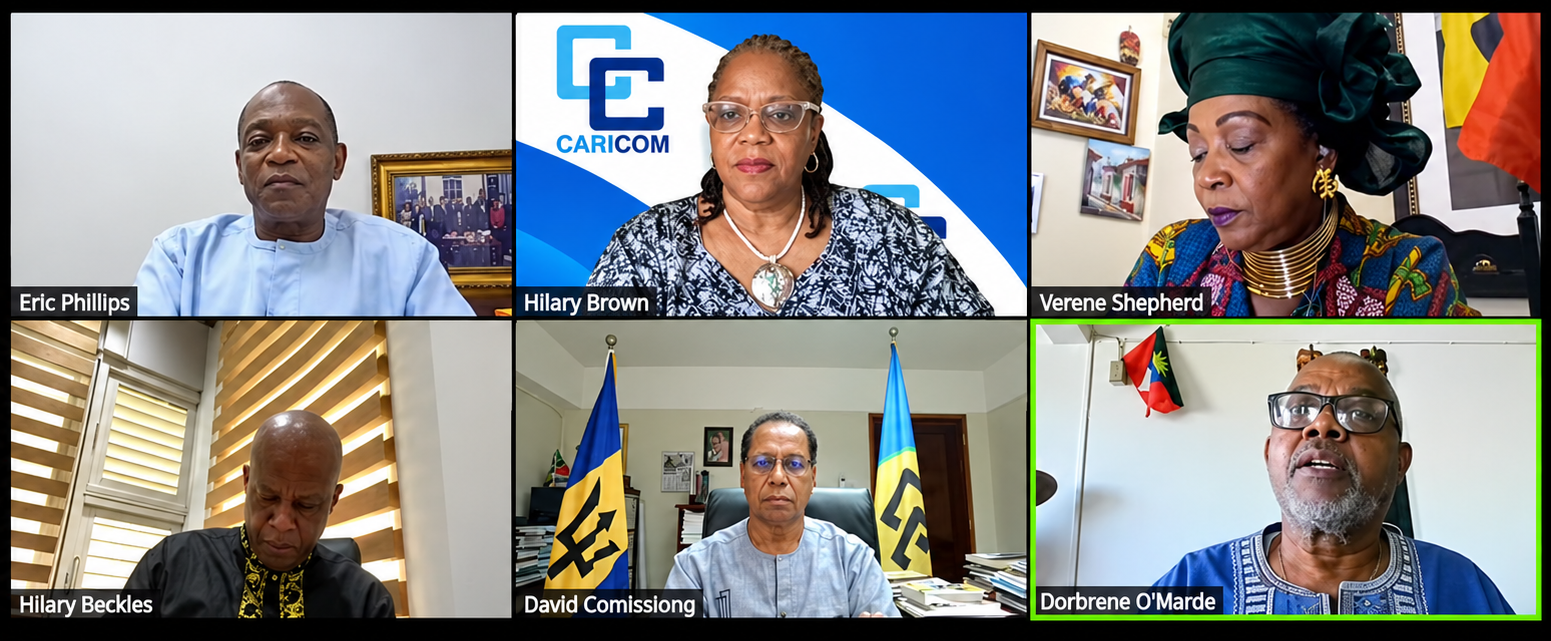
Against the backdrop of heightened global scrutiny over the lingering harms of transatlantic chattel slavery, the Caricom Reparations Commission (CRC) is finalizing a comprehensive 5-year action plan spanning 2027 to 2031, designed to accelerate regional progress toward formal reparatory justice for Caribbean nations and descendant communities. The initiative has gained renewed public attention as King Charles III prepares to travel to Antigua and Barbuda for the upcoming Commonwealth Heads of Government Meeting (CHOGM), where regional advocates are pushing to place unresolved historical grievances at the top of the multilateral gathering’s agenda. During an official media briefing held on October 22, CRC Chair Professor Sir Hilary Beckles directly called on the British monarch to leverage his institutional influence to champion structured, good-faith conversations on reparations across the Commonwealth bloc. The commission has also outlined parallel advocacy pathways through both the Commonwealth secretariat and the United Nations system to advance its demands. Even as momentum builds, Barbados National Task Force on Reparations member David Comissiong revealed that a draft clause in the preliminary CHOGM communiqué, which would have committed member states to inclusive, transparent dialogue on historical harms stemming from colonial exploitation, has failed to secure full consensus from all participating nations. Across the Atlantic in the United Kingdom, the same day saw prominent Labour MP Dawn Butler deliver a landmark address in the House of Commons during official Black History Month commemorations, framing the case for reparations through a vivid analogy of a stolen family watch passed down through generations of thieves. “No subsequent gift can ever erase the original act of theft,” Butler emphasized, rejecting the long-held argument that the passage of time legitimizes the benefits accrued from historical injustice. Her speech also drew attention to pervasive modern cultural appropriation, citing the uncompensated commercial use of traditional Akan Adinkra symbols originating from Ghana, and underscoring how unaddressed colonial inequities continue to shape economic and social outcomes for marginalized communities today. National-level advocacy efforts in Grenada have also kept the reparations movement at the forefront of public discourse. Back in February 2025, Grenadian Prime Minister Dickon Mitchell made a formal appeal directly to European Commission President Ursula von der Leyen, demanding that transatlantic slavery be formally classified as a crime against humanity, followed by a full, unreserved official apology and targeted compensatory measures for affected communities. Arley Gill, who chairs Grenada’s National Reparations Committee, serves as a CRC member and is the Democratic People’s Movement candidate for the St John constituency, has prioritized widespread public education to ensure ordinary Grenadians fully grasp the evidence and rationale underpinning the reparations campaign. In a 2025 interview with The Repair Campaign, Gill noted that targeted outreach in the capital city of St George’s remains a core priority to build broad, grassroots support for the movement. Public education for intergenerational awareness emerged as a central theme during the CRC’s October 22 briefing, with Commission Vice-Chair Verene Shepherd stressing that long-term progress cannot rely solely on high-profile royal visits or international diplomatic summits. Commissioners outlined a suite of proposed public engagement activities, including community town halls, dedicated broadcast programming, curriculum-aligned educational resources, and inter-school debating competitions to embed reparatory justice conversations in younger generations. In Grenada, the long-running annual Grenlec Debates already provides a proven existing platform for secondary school students to research complex public issues, build evidence-based arguments, and explore diverse perspectives – a model that local advocates say could be adapted to incorporate reparations-focused content in the future. The upcoming 2027-2031 CRC action plan will build directly on Caricom’s updated 10-Point Framework for Reparatory Justice, providing a structured roadmap for coordinated regional action over the half-decade period. Eric Phillips, CRC Vice-Chair and Chair of the Guyana Reparations Committee, confirmed that the commission anticipates core funding support from Caricom member governments, though specific individual contribution amounts and a full line-item budget have not yet been publicly released. The commission’s ability to secure stable, sustained funding and establish clear accountability mechanisms to track measurable progress will determine the scope and impact of the landmark 5-year strategy as the regional reparations movement enters a critical new phase.