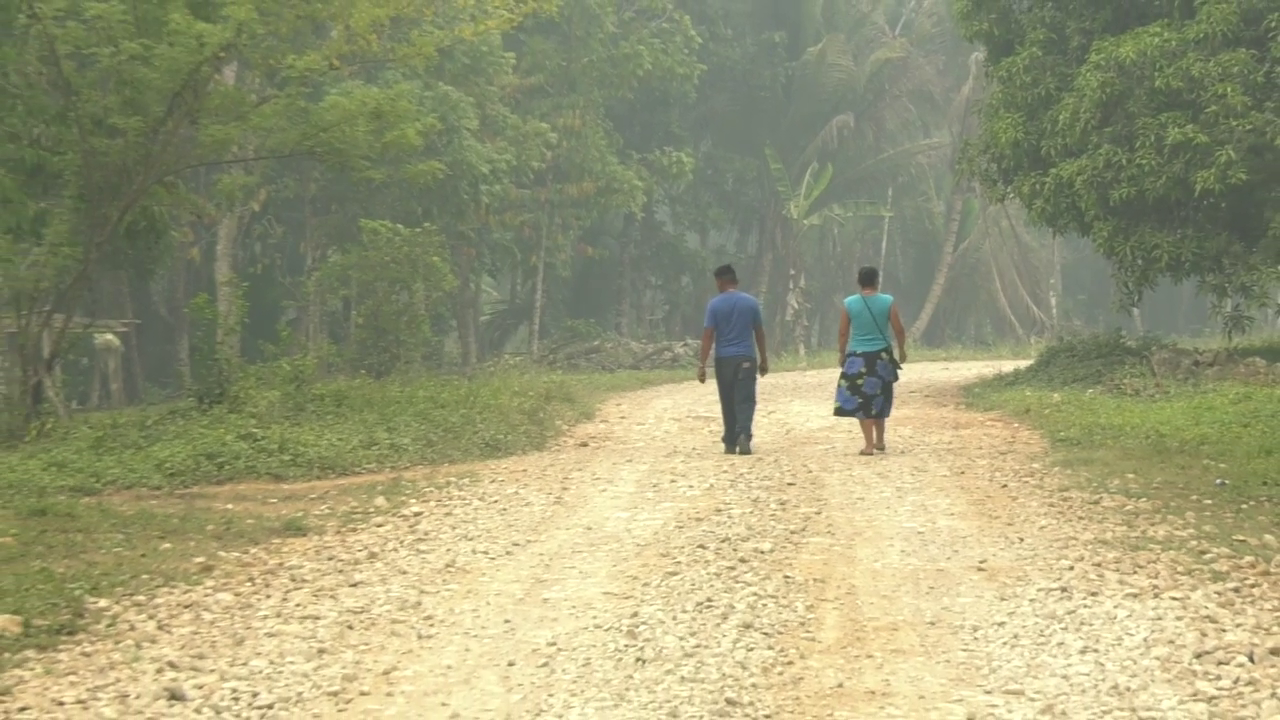
In late October 2026, stakeholders from across Belize—including Maya community leaders, national government officials, international development partners, and human rights advocates—gathered in Golden Stream Village to address a long-simmering question of sovereignty: who holds the ultimate authority to approve activities on traditional Maya land? Hosted by the Sarstoon and Temash Institute for Indigenous Management, the convening focused on turning the legal principle of Free, Prior and Informed Consent (FPIC) from an abstract policy commitment into a consistent, enforceable practice that centers indigenous self-determination.
At its core, FPIC requires that before any government project or private development moves forward on indigenous territory, affected communities must not only be consulted, but given full access to clear, relevant information about potential impacts, deliberate through their own traditional governance structures, and retain the full right to approve or reject the proposal. This model, according to Greg Ch’oc, founder of the Maya Leaders Alliance, is far from a new external legal imposition—it aligns with centuries of collective decision-making rooted in Maya cultural institutions.
“In Maya governance, traditional decision-making cannot be separated from our long-standing institutions,” Ch’oc explained during the conference. “The village meeting is itself a formal governing body, as is the alcalde system, and our protocols recognize the village meeting as the sole authority to make decisions that impact the entire community. Consent is not just a word—it is the collective outcome of that process, whether the community chooses to approve a proposal or withhold its approval.”
The legal basis for FPIC on Maya customary land was formally established more than a decade earlier, in 2015, when the Caribbean Court of Justice officially recognized Maya customary land rights across Belize’s Toledo District and ordered the national government to codify and protect those rights. In the years since, the FPIC Protocol has enshrined Maya communities’ right to a final say over development projects on their land, a framework that has already been tested in practice in several rural communities.
Oscar Requena, the Area Representative for Toledo West, highlighted three ongoing rural electrification projects in his constituency—located in San Vicente, Jalacte, and San Benito Poite—as successful examples of the protocol in action. Funded through a partnership between the European Union, Belize Electricity Limited, and the Government of Belize, none of the projects could move forward without completing the full FPIC process led by the national Office of Indigenous Peoples Affairs. “After working through the entire protocol with community members, each of these villages gave their formal consent to move forward with the electrification work,” Requena noted. “That consent is what allowed these projects to get off the ground.”
The European Union has emerged as a key partner in advancing both infrastructure development and indigenous land rights in southern Belize, supporting not only electricity and clean water expansion projects but also targeted initiatives to expand economic opportunity for Maya women and smallholder farmers. For Elizabeth Lanzi-Mazzocchini, head of the EU’s office in Belize, funding development projects is only half the responsibility—capacity building for all stakeholders is equally critical to ensuring FPIC works as intended.
“Through the projects we have supported, like the rural electrification initiative that will soon bring power to three rural Maya communities, we have seen how important it is for both government and development entities to have specialized training to implement FPIC correctly, and for community leaders and members to fully understand their rights under the framework,” Lanzi-Mazzocchini said. “As an international partner to Belize’s government and civil society, we knew funding this conference and capacity building work was a critical priority.”
The gathering in Golden Stream was never just about unpacking the legal jargon of FPIC. Its core challenge was addressing a larger national question: how can Belize advance inclusive economic development while upholding Maya land rights, traditional governance systems, and the final authority of village communities? For Ch’oc, the path forward starts with honoring the existing legal rights that have already been affirmed by the courts.
“It is my hope that the government will not dilute the FPIC framework as it stands today,” Ch’oc said. “It is my hope that the state will not compromise the judicial recognition of Maya customary land tenure that we have already won.”
As of the conference, national legislation that would fully codify and implement FPIC and Maya land rights remains in development. For Maya communities across the country, the true test of progress will not be new legislation alone—it will be whether FPIC becomes a consistent, meaningful practice that gives them far more than a symbolic seat at the decision-making table, and fully respects their inherent right to say yes or no to any project on their traditional land.