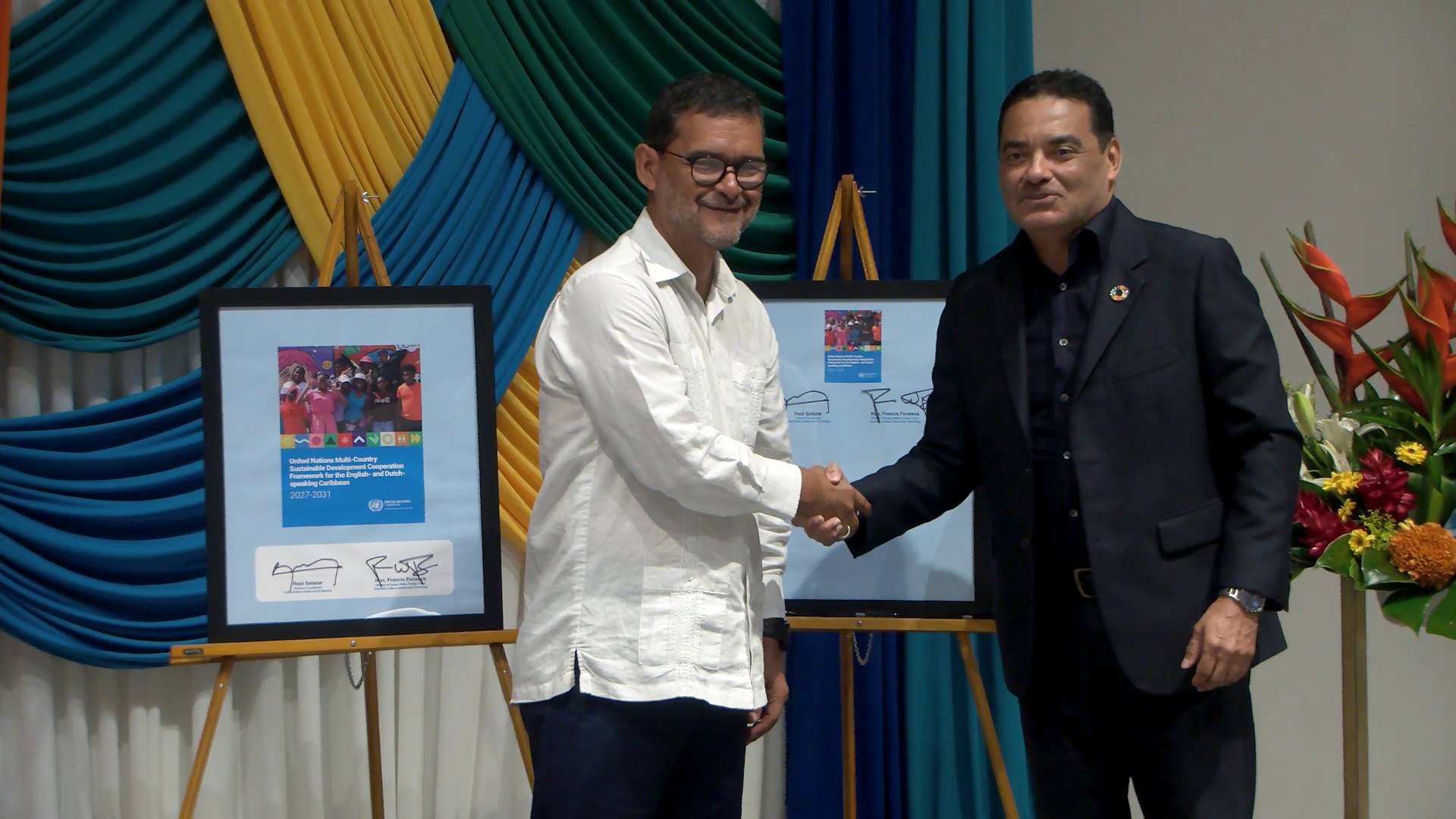
On October 22, 2026, Belize made history as the first country to formalize its participation in a groundbreaking five-year sustainable development partnership with the United Nations, signing the Multi-Country Sustainable Development Cooperation Framework (MSDCF) 2027-2031 at a ceremonial event held in Belize City’s Fort George Hotel.
The new framework, which covers 22 countries and territories across the English and Dutch-speaking Caribbean under the unifying theme “One Caribbean, One Framework”, is designed to align regional and national development priorities with global sustainable development goals set out in the 2030 Agenda. It will guide joint action between the UN system and Belizean authorities across three core pillars: inclusive social development, balanced economic growth, and strengthened environmental resilience to climate and ecological shocks.
Speaking at the signing ceremony, Belize’s Minister of Foreign Affairs Francis Fonseca emphasized the long-standing, trusted relationship between the Central American nation and the UN. “We gather during United Nations Week to celebrate a partnership that has served Belize for decades,” Fonseca noted. “As the first country to endorse and now the first to sign this new framework, we reaffirm our commitment to collective global action toward the 2030 Agenda, leaving no community behind.”
Raul Salazar, United Nations Resident Coordinator for the region, echoed Fonseca’s remarks, praising Belize’s proactive leadership in advancing multilateral cooperation. Salazar highlighted that Belize has consistently centered the core principles of the UN Sustainable Development Goals in its national planning, bringing the voice of small island developing states to both regional and global climate and development forums. “This signing is more than a procedural step—it is a testament to Belize’s unwavering commitment to inclusive, sustainable progress that benefits all of its people,” Salazar said.
For Belize, a small coastal nation highly vulnerable to climate change impacts including sea-level rise and coral reef degradation, the partnership unlocks access to global technical expertise, funding networks, and cross-regional collaboration opportunities tailored to the unique challenges and development opportunities facing Caribbean nations. Over the five-year implementation period, the framework is expected to deliver tangible improvements in living standards, economic diversification, and climate adaptation for communities across the country.