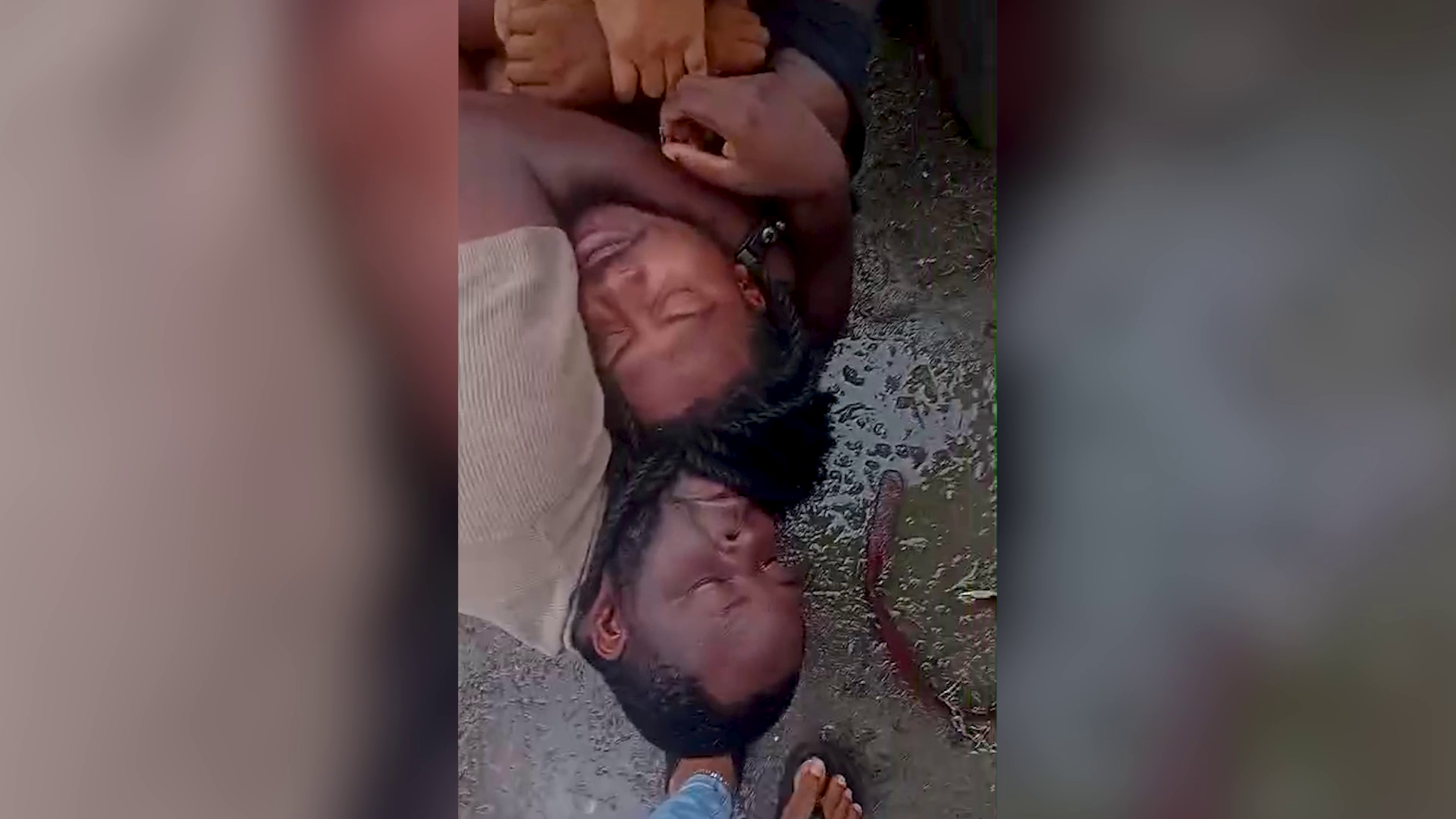
Five years after the Belize Police Department announced a formal ban on routine chokehold use as a restraint tactic, a newly circulated viral video from a Unitedville police confrontation has dragged the controversial maneuver back into the national spotlight, forcing a reckoning over conflicting department policies that have left both officers and civilians confused about when the technique is legally permitted.
The 2021 policy shift came amid a wave of global reckoning over police brutality, sparked by the murder of George Floyd at the hands of U.S. law enforcement. Just months after Floyd’s death, a separate local video showing a Belizean officer applying a chokehold to a stopped motorist pushed then-Commissioner of Police Chester Williams to issue a public ban. Williams stated explicitly at the time that the department had updated its internal rules barring all officers from using chokeholds as a routine method of restraining civilians, directing the Professional Standards Branch (PSB) to investigate any officer who violated the new rule.
But the promise of a full ban never fully resolved the debate. Proponents of retaining the tactic argue that when an officer faces violent, unpredictable resistance from a suspect, a chokehold may be the only available option to defuse a life-threatening situation before other backup arrives. Critics, however, counter that any maneuver that cuts off blood flow or oxygen to the brain carries an inherent high risk of permanent neurological damage or death, even when applied correctly, making it too dangerous to allow under any circumstances.
The confrontation that has reignited this discussion centers on 46-year-old Samuel Parham, who was placed in a chokehold by a responding officer during an altercation earlier this month. The widely shared cellphone footage, filmed by a bystander, shows the officer holding Parham by the neck as onlookers repeatedly shout demands to release him. Police confirm the confrontation left the officer with a fractured arm, and Parham has since been formally charged with inflicting grievous harm. For Parham’s family, the incident raises urgent questions about the legal status of the chokehold and the training officers receive on use-of-force protocols.
“We need clear answers,” said Nikkita Perez, Parham’s relative, in an interview with local outlet News Five. “This has all of us deeply concerned. We want to know if this tactic is actually legal in Belize, if it’s taught at the Police Academy, and if this is an official protocol officers are instructed to follow.”
What the public has since learned is that the 2021 ban was far more nuanced than the initial public announcement suggested. While the department prohibited chokeholds as a routine restraint technique, the official use-of-force policy manual still classifies chokeholds as an allowable form of deadly force under narrow, specific circumstances. According to Assistant Superintendent of Police Stacy Smith, the maneuver is only permitted as a last resort when an officer or another person faces an immediate, imminent threat of death or serious grievous bodily harm. The exception also extends to situations where allowing a suspect to escape arrest would carry the same level of risk to public safety.
“It must be used only as a last resort when there is an imminent threat to life or serious injury,” Smith explained in an official statement. “Chokeholds fall under the umbrella of deadly force, which the policy permits to stop an arrest from being defeated only when the risk of death or grievous harm is present.”
That narrow exception is now the core of the ongoing PSB investigation into the Unitedville incident. Investigators are tasked with determining whether the officer actually met the strict threshold for deadly force when he applied the chokehold to Parham, or whether the use of the maneuver violated the department’s 2021 ban. The criminal case against Parham will ultimately be decided by the courts, which will weigh evidence of the altercation to determine if the grievous harm charge stands. Separately, the PSB will issue an internal finding on whether the officer’s conduct violated police policy, which could lead to disciplinary action if wrongdoing is found.
Beyond the specifics of this single case, the incident has exposed a longstanding lack of clarity in Belize’s police use-of-force rules that has left both the public and frontline officers uncertain. If chokeholds are banned for routine restraint but permitted as a last-resort deadly force tactic, critics argue the vague line between the two uses creates too much room for inconsistent application and abuse. For the Belize Police Department, the outcome of this investigation will likely force a new round of public debate over whether the current ambiguous policy needs to be rewritten to eliminate confusion once and for all.