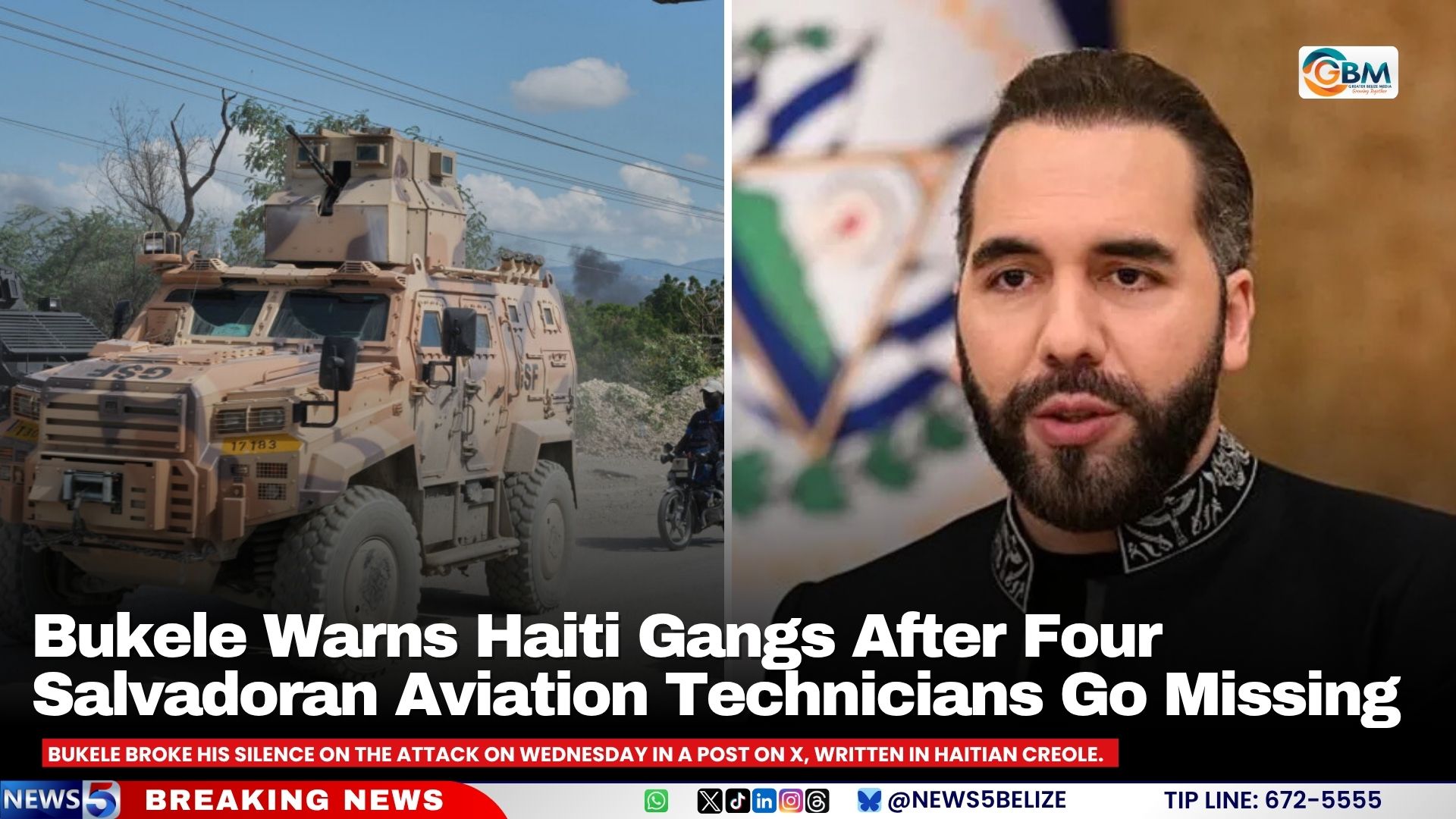
On a Sunday in the Croix-des-Bouquets commune’s Santo district, on the outskirts of Port-au-Prince, a brazen attack marked a dangerous turning point for the United Nations-backed multinational gang suppression mission in Haiti. An armored vehicle carrying four Salvadoran aviation technicians, part of the international contingent deployed to curb Haiti’s rampant gang violence, came under heavy gunfire from gang members. As the vehicle burned, the four technicians fled and have not been heard from since, making this incident the first major lethal attack on the mission since it began operational deployment.
Three days after the abduction, El Salvador’s President Nayib Bukele broke his public silence on the crisis with a sharply worded public statement posted to X, written directly in Haitian Creole to deliver an unmissable message to the gangs holding the men. Bukele, who rose to international prominence for his brutal, successful crackdown on gang activity in El Salvador that largely eradicated widespread gang violence within the country, left no room for ambiguity: the abduction of his country’s citizens will not go unanswered.
“Do not mistake our words for empty threats,” Bukele wrote. “We already defeated all gangs in El Salvador, and we are fully capable of doing the same here.” He emphasized that El Salvador’s sole immediate goal is the safe return of all four technicians, unharmed and alive. “The attack you carried out today is nothing compared to the response that will follow if we do not get all four of our hostages back alive,” he added. In a gesture that balances firmness with a de-escalatory option, Bukele offered gangs a clear path to avoid further conflict: return the compatriots unharmed, and the situation will revert to its state before the kidnapping. “The final decision rests entirely in your hands,” he noted.
Bukele did not release specific operational details about the ongoing rescue mission, leaving ambiguity over whether the operation refers only to the Salvadoran helicopter support already deployed to assist in the search, or a larger deployment of additional combat personnel. He did, however, clarify the non-combat role of the Salvadoran contingent deployed to the Haitian mission, explaining that all Salvadoran personnel assigned to the GSF are either pilots or aviation technical staff whose core responsibility is supporting medical evacuation operations, not frontline combat against gangs.
Haiti’s national government has echoed the urgency of the situation, releasing a statement Wednesday evening confirming that securing the release of the four abducted technicians is an “absolute priority” for the country. Officials confirmed that a high-level meeting held at the prime minister’s office reviewed the ongoing response efforts and outlined next steps to strengthen coordinated operations between Haitian authorities and the multinational GSF. Like Salvadoran officials, the Haitian government has not released any information confirming whether the four men are still alive, leaving their fate uncertain.
As of the latest update, GSF forces continue clearing and securing the area where the abduction took place, and have issued a public advisory for local residents to remain indoors to avoid becoming collateral casualties in ongoing operations. The GSF currently boasts over 2,000 deployed troops on the ground, contributed by multiple partner nations including El Salvador, Chad, Jamaica, and Guatemala.
This abduction comes at a highly sensitive political moment for Haiti, which is currently preparing to hold its first general election in more than 10 years after years of political instability and escalating gang violence. Recent security assessments estimate that armed gangs currently control roughly 70 percent of Haiti’s capital, Port-au-Prince, making the mission to restore state authority an uphill battle for the international force.