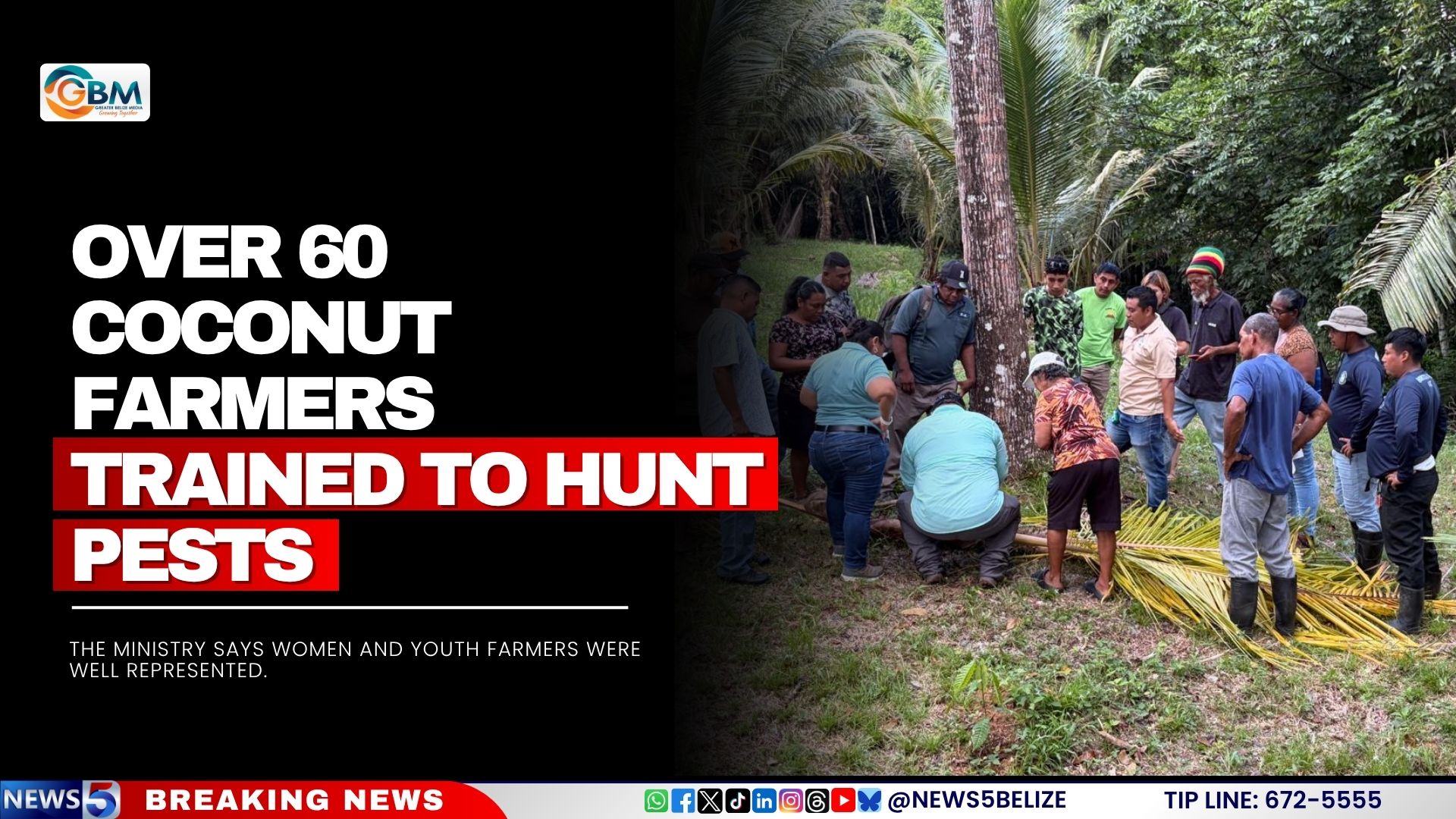
In a major push to strengthen Belize’s coconut sector and boost long-term food security, more than 60 small-scale coconut farmers from the country’s southern Stann Creek and Toledo districts have recently graduated from a comprehensive two-day training program focused on proactive pest and disease control. The initiative, organized jointly by Belize’s Ministry of Agriculture, Food Security and New Growth Industries and the United Nations Food and Agriculture Organization (FAO), forms a core component of FAO’s global “One Country One Priority Product” framework, which is designed to build resilient, environmentally sustainable coconut value chains across Belize.
Led by FAO’s national coconut pest and disease specialist, the workshops drew on technical support from the Ministry of Agriculture’s Fruit Tree Program, central Research Unit, and local District Extension Units to deliver context-specific, actionable training to participating producers. A notable highlight of the sessions was the strong participation of women and young farmers, groups that are increasingly central to Belize’s efforts to revitalize rural agricultural communities and intergenerational knowledge transfer.
Unlike traditional classroom-only training models, the program blended theoretical lectures on pest biology and disease identification with hands-on field exercises, a format that attendees widely praised for its practicality. Participants gained direct experience spotting early signs of common coconut pests, implementing control measures, and constructing monitoring traps on their own land. They were also introduced to a community-centered citizen science framework for pest management that empowers producers to take a leading role in crop protection.
Following the training, participating farmers are now fully equipped to conduct regular monitoring of their coconut groves, maintain pest traps, and submit weekly reports on trapping results and observed pest activity to local agricultural authorities. This community monitoring network will allow government officials to track pest population shifts across Belize in real time, enabling faster, more targeted responses to potential outbreaks before they spread and cause widespread crop damage.
Looking ahead, the Ministry of Agriculture has announced that additional training workshops are already in the planning stages for all remaining coconut-growing districts across the country. Coconut producers and other agricultural stakeholders interested in participating are encouraged to reach out to their local District Agriculture Office to obtain updated workshop schedules and complete registration for upcoming sessions.