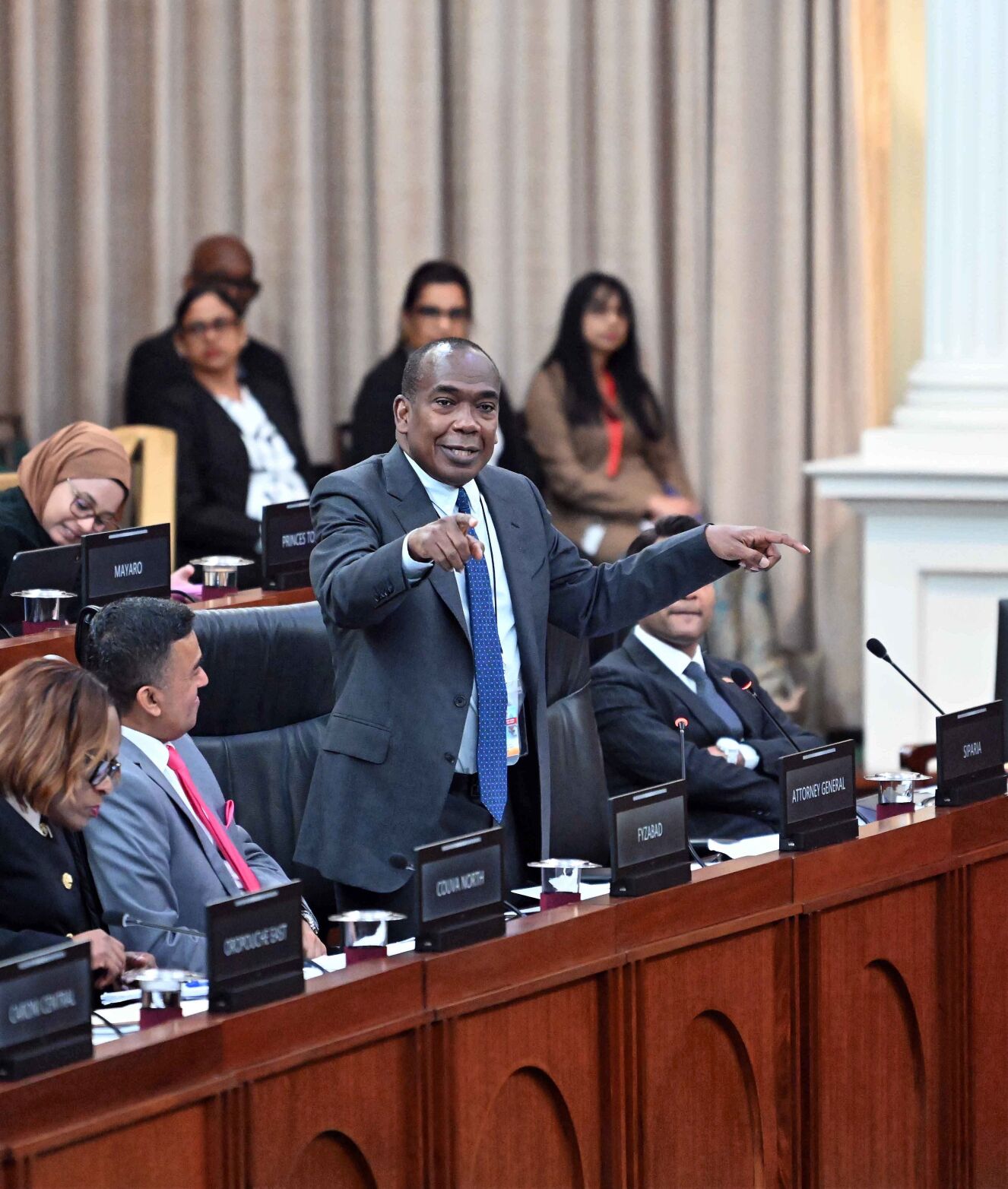
A political firestorm has erupted in Trinidad and Tobago’s House of Representatives, where current Attorney General John Jeremie has publicly called for a formal investigation into the overseas travel records of former prime minister Stuart Young, alleging significant irregularities in documentation covering as many as 78 cross-border trips. Speaking during the ongoing budget debate, Jeremie told lawmakers that his review of Young’s travel documents revealed what he calls “apparent discrepancies” in entry and exit logs kept by national immigration authorities. Breaking down the records he reviewed, Jeremie noted there were 26 entries recorded on the first page of a six-page document, leading him to estimate a total of 156 border movements – the equivalent of 78 round-trip journeys. He called that volume of travel “a hell of a lot of travel for one human being to be doing”, and questioned whether official Cabinet authorization existed for many of the trips, claiming that supporting documentation was missing for a large number of journeys. Beyond missing paperwork, Jeremie also raised questions surrounding the issuance of four separate diplomatic passports to a single individual, and flagged what he described as “ghost trips” – entries showing arrivals with no matching departure records, and departures with no corresponding return logged. One specific trip that drew Jeremie’s scrutiny was a journey that routed through Panama en route to Caracas, Venezuela, about which he demanded clarity on the circumstances. While Jeremie stopped short of drawing definitive conclusions from the available information, he stressed that the apparent inconsistencies demand full, independent investigation. In a prompt response released via social media, Young forcefully rejected all allegations, asserting that every overseas trip he took during his ten years in government was official state business and all travel was properly documented. The former prime minister accused the current administration of misusing state resources to pull his travel records from the Immigration and Homeland Security departments, framing the move as an orchestrated attempt to paint him in a false light. Young reiterated that “I have nothing to hide”, noting that all travel was conducted in his capacity as a government minister and later as prime minister. Addressing the specific Panama trip that Jeremie highlighted, Young explained that at the time of travel, there were no direct commercial flights to Venezuela, and when a state Air Guard aircraft was not available for the journey, he was forced to book passage on Copa Airlines, which routes through Panama before continuing to Caracas. “Nothing is wrong with that”, Young stated. On the matter of the four diplomatic passports, Young offered a straightforward explanation: he received one during his first five years as a Cabinet minister, a second for his second five-year term, a third identifying him as prime minister after he was sworn into office, and a fourth after leaving office marking him as a former prime minister when he returned the previous documents issued to him in official roles. Young also pushed back against the implication that his travel produced no tangible benefits for the nation, pointing to major economic wins negotiated during his time in office that he says came from these overseas engagements. These include the restructuring of Atlantic LNG, a 30-year exploration and production license for the Dragon gas field, a 20-year license for the Cocuina-Manakin project, and multiple other energy initiatives. Young emphasized that these projects have already generated billions of dollars in government revenue and foreign direct investment, and will continue to deliver economic benefits to Trinidad and Tobago for generations to come. Dismissing Jeremie’s allegations as a “desperate and cowardly attempt” to manufacture a false narrative, Young also criticized the Attorney General for raising the claims under the protection of parliamentary privilege, which shields legislators from defamation lawsuits for statements made on the chamber floor. Challenging his critics to repeat the accusations outside of parliament, Young said “I wish they would say it outside because I have my court clothes”, adding that he has never relied on parliamentary privilege to call out wrongdoing by other public officials.