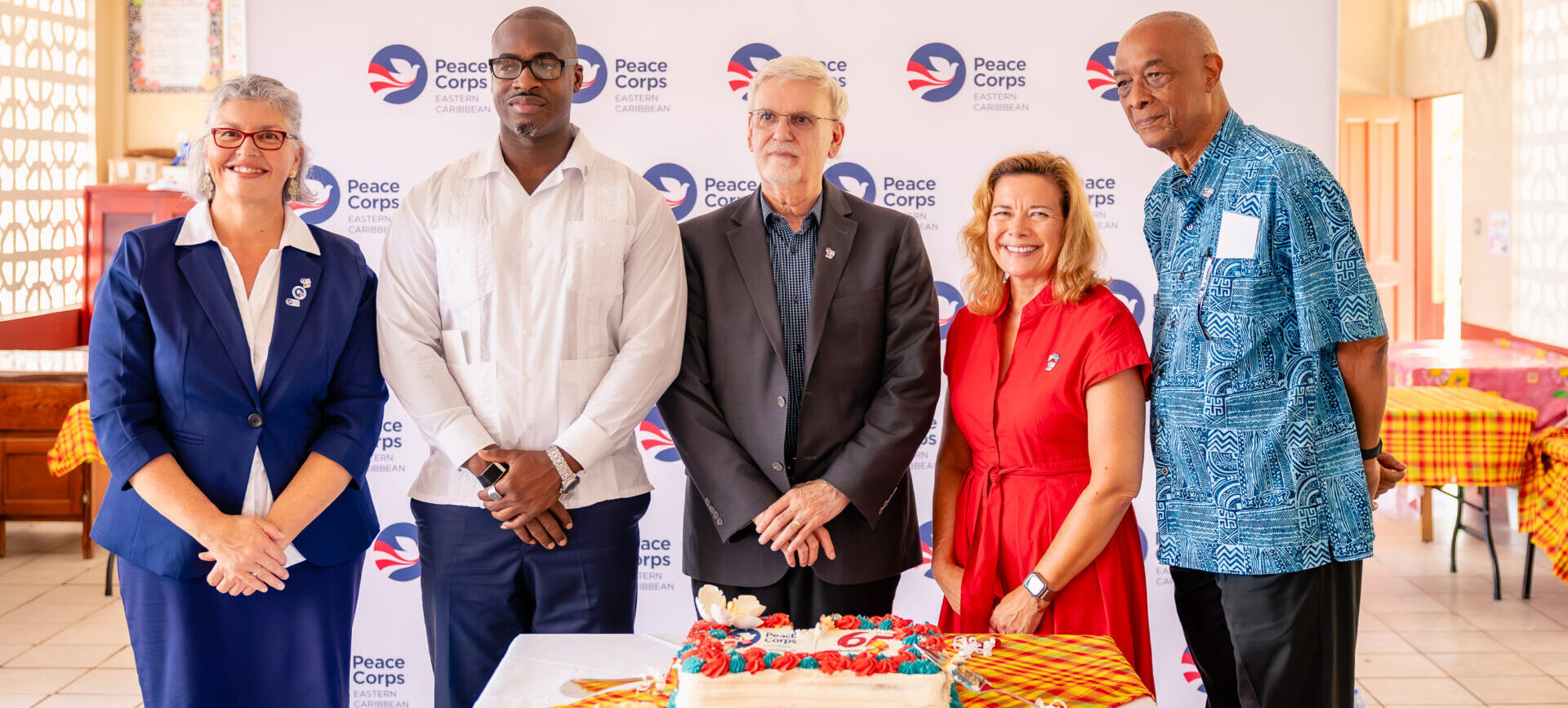
Six and a half decades after first launching volunteer operations in the Eastern Caribbean, the Peace Corps marked its 65-year milestone with a flagship anniversary celebration in Saint Lucia that honored decades of cross-cultural partnership, educational progress, and community development. Held earlier this week at Delcer Combined School in the coastal district of Choiseul, the event was organized in close partnership with the government and people of Saint Lucia, drawing high-level officials from both local and U.S. diplomatic circles. Hosted under the unifying theme “Honoring the Past, Marching into the Future,” the celebration wove together reflections on the Peace Corps’ earliest regional projects and commitments to evolving modern goals. A core focus of the commemoration was the iconic JFK Canal, one of the first major infrastructure projects completed by Peace Corps volunteers in Saint Lucia. Constructed in the early 1960s in collaboration with the island’s Ministry of Agriculture, the canal still holds deep cultural and historical significance for local communities decades after its completion. Attendees gained firsthand context on the project’s origins through a pre-recorded keynote interview with former Saint Lucian Minister of Agriculture Sir Calixte George, which was introduced by Acting Director for Agricultural Services Kimuel Jn Baptiste. The conversation traced the Peace Corps’ early entry into Saint Lucia and walked listeners through the collaborative planning and building process that delivered the canal to local residents. Dignitaries in attendance included Saint Lucia’s Acting Governor General His Excellency Felix Finisterre and Kenson Casimir, the island’s Minister for Education, Youth Development, Sports, and Digital Transformation. Senior leadership from the Peace Corps and U.S. diplomatic mission also participated: Karin Sullivan, Chargé d’Affaires at the U.S. Embassy to Barbados, the Eastern Caribbean and the Organization of Eastern Caribbean States (OECS), Peace Corps Chief of Staff Richard Swarttz, and Peace Corps Eastern Caribbean Country Director Kimberly Will all delivered formal addresses marking the occasion. Beyond historical reflection, the event centered action on two core modern priorities of the Peace Corps: environmental stewardship and educational advancement. Following the formal ceremony, attendees joined a tree-planting initiative on the grounds of Delcer Combined School, where fruit trees were planted to commemorate the organization’s decades of contribution to the region. U.S. Embassy officials noted that the new trees draw water from the same watershed that has fed the JFK Canal since its construction, creating a powerful symbolic link between the Peace Corps’ earliest community projects and its current commitment to environmental sustainability. To highlight the organization’s ongoing educational work, primary school students at the venue performed creative pieces showcasing the Peace Corps’ longstanding efforts to boost English literacy across regional primary schools. The 65th anniversary commemoration was not limited to Saint Lucia. Parallel community activities were rolled out across three other Eastern Caribbean nations hosting Peace Corps volunteers: St. Vincent, Grenada, and Dominica. In those countries, volunteers and local staff partnered with school 4-H clubs and community garden groups to launch new “Literacy Gardens.” These integrated learning spaces combine hands-on environmental education with structured opportunities for students to build and practice reading and core learning skills, merging the Peace Corps’ dual focus on sustainability and education into a single community program. The Peace Corps first launched its permanent service in the Eastern Caribbean on October 15, 1961. Over the 65 years since that launch, more than 4,372 volunteers have completed placements across the region, working alongside local communities on projects spanning agriculture, education, infrastructure, and cultural exchange. As of the anniversary, 44 active volunteers are serving across four Eastern Caribbean islands. Their current work focuses on partnering with local teachers, school principals, and community leaders to strengthen primary-level literacy outcomes and foster sustained people-to-people cultural exchange between the United States and regional communities. Organizers noted that the 65th anniversary served as more than a retrospective celebration: it was an opportunity to reaffirm the Peace Corps’ long-term commitment to collaborative, community-led development across the Eastern Caribbean for decades to come.
Peace Corps marks 65 years in Eastern Caribbean with tribute to historic St Lucia project