Against a backdrop of volatile international energy markets, the Dominican government has doubled down on its promise to protect household finances by extending long-standing electricity and fuel subsidies, locking in retail electricity rates at 2022 levels to buffer consumers from global price spikes.
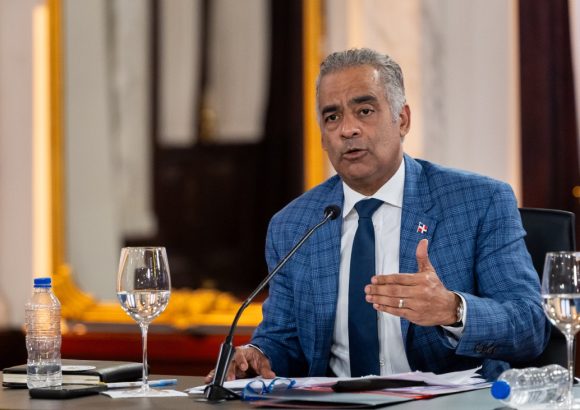
The policy details were outlined by President Luis Abinader and Minister of Energy and Mines Joel Santos during the administration’s weekly public affairs program *La Agenda Semanal*, where the pair emphasized that shielding working families from rising cost of living pressures remains a top policy priority.
Minister Santos clarified that while retail electricity rates have not been raised since 2022, the country operates a four-tier progressive tariff system designed to keep costs manageable for low-volume consumers. For example, users who consume more than 700 kilowatt-hours (kWh) of electricity monthly currently pay RD$13.09 per kWh, while households using between 0 and 200 kWh pay just RD$6.09 per kWh. Crucially, all four consumption tiers receive full government subsidies, compared to the unsubsidized market reference rate of roughly RD$15.50 per kWh.
Beyond the immediate subsidy program, Minister Santos also highlighted decades of progress in diversifying the Dominican Republic’s energy mix. The country has drastically cut its reliance on oil-fueled power generation, which plummeted from 88% of total production in 2000 to just 9% today. Natural gas, coal, and renewable energy sources now account for the vast majority of the country’s electricity output, a shift that has also helped reduce long-term exposure to global oil price fluctuations.
President Abinader noted that growing national electricity consumption can be partially attributed to two key demographic shifts: rising average temperatures driven by climate change, and increased household ownership of electric appliances. Citing data from the country’s National Household Survey, Abinader pointed out that residential air conditioning ownership has jumped from just 7.4% in 2017 to 20% in 2024, while ownership of flat-screen televisions has risen from 30% to 60% over the same period – both contributing to higher overall energy demand.
The Dominican president emphasized that by absorbing much of the global energy price inflation through government subsidies, the administration has prevented these costs from being passed through directly to consumers, protecting household purchasing power and slowing growth in national poverty rates. Looking ahead to 2026, the government has already budgeted approximately RD$100 billion to fund ongoing electricity subsidy programs.
For more coverage of local news and policy developments in the Dominican Republic, readers can visit DominicanScope.