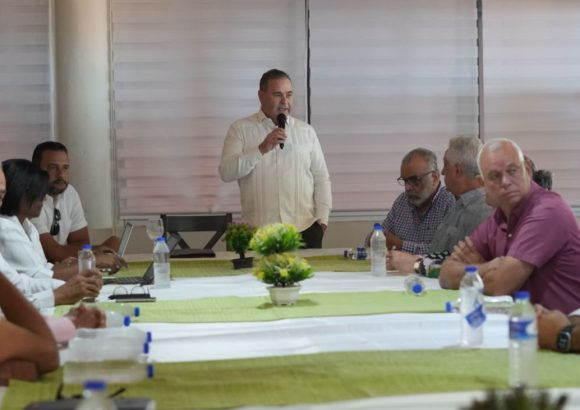
In a coordinated gathering in La Vega, key stakeholders across the Dominican Republic’s rice industry have formally thrown their unanimous support behind the national government in the wake of the repeal of Decree 693-24, the legislation that had set out special tariff rules for rice imports under the Dominican Republic-Central America Free Trade Agreement (DR-CAFTA).
The three-hour meeting, convened and led by Dominican Agriculture Minister Francisco Oliverio Espaillat Bencosme, brought together a broad cross-section of the sector: leadership from large-scale rice producers, mill operators, smallholder producers participating in the country’s agrarian reform program, and suppliers of agricultural inputs. All attendees aligned behind President Luis Abinader’s plan to pursue renegotiation of the DR-CAFTA provisions related to rice, with the group voicing collective confidence that a renegotiated deal will deliver stronger, more favorable terms for domestic rice production and boost the sector’s long-term competitiveness.
Addressing concerns about potential import surges during the renegotiation process, Minister Espaillat confirmed that all existing import controls on rice will stay fully in force under current domestic law, until a formal framework for the renegotiation process is finalized. Both government officials and industry leaders also agreed to establish permanent, ongoing dialogue to tackle persistent challenges facing the rice sector and build inclusive consensus across all stakeholder groups.
Leadership of the country’s top rice industry bodies — including the National Federation of Rice Producers (Fenarroz), the Northeast Rice Producers Association (Aprano), and the Dominican Association of Rice Mills (Adofa) — joined representatives from agrarian reform initiatives and input supply companies in emphasizing that the current moment demands widespread unity and collaborative action across the sector. Industry representatives welcomed the repeal of the controversial decree as a critical opening to push for terms that better protect and benefit Dominican rice producers and the broader domestic industry, while Espaillat reaffirmed the government’s commitment to defending national production through open dialogue, proactive monitoring, and targeted, tangible policy measures.