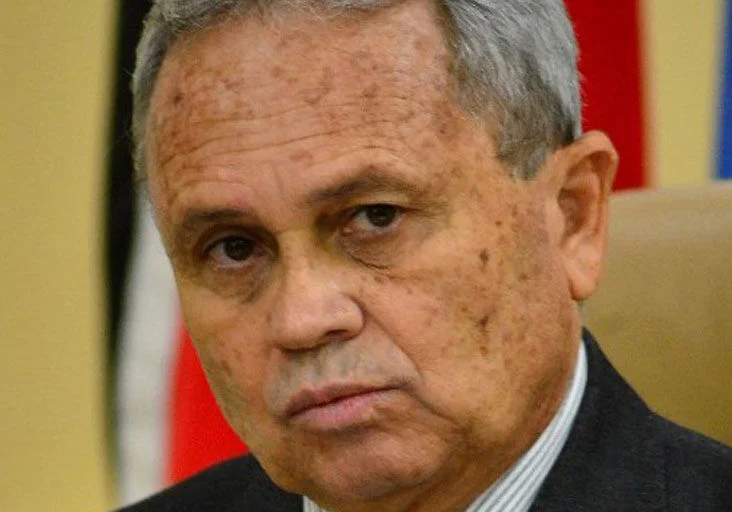
During heated parliamentary budget debate this week, a senior opposition figure in Trinidad and Tobago has issued a stark warning that the national economy is on the brink of total collapse within the next 30 days, launching a blistering attack on the ruling administration’s newly proposed 2026-2027 national budget.
Colm Imbert, opposition member of parliament and former finance minister, announced his outright rejection of the budget tabled last week by current Finance Minister Davendranath Tancoo. Echoing the opposition leadership’s official stance, Imbert reiterated that the country has already slipped into a full recession, and dismissed all fiscal projections laid out in the government’s budget as deceptive, invented, and baseless.
Imbert accused the current finance minister of deliberately turning a blind eye to the acute economic hardship facing ordinary citizens across the country. “People are suffering, going hungry, they have no disposable income in their pockets. Businesses are folding left and right, and the economy is already in recession. That is the ground truth this finance minister refuses to acknowledge,” Imbert argued. He explained his refusal to back the budget by noting it offers no forward-looking policy solutions, nor any meaningful incentives to stimulate struggling business sectors. “If the country hasn’t crashed completely already, it will do so within the next few months,” he warned.
The former finance minister also dismissed the government’s official projected budget deficit as completely fabricated, a claim he says he has repeated since the administration tabled its 2026 budget one year ago. “We told them these numbers were nonsense, imaginary, even before the unexpected energy price shifts. If oil prices had held at the levels forecast by all international agencies, the actual deficit would have hit between $12 billion and $15 billion. Even after receiving an unanticipated $3 billion windfall from the energy sector, the government still could not balance its books. We will all soon see the real consequences of this failure,” Imbert stated.
Drawing directly on official economic data published by the Ministry of Finance itself, Imbert laid out a widespread pattern of contraction across nearly every major sector of the 2026 national economy. The government’s own figures show real gross domestic product (GDP) has shrunk by 2.2%, with drops recorded across core industries: energy output is down 6.6%, non-energy GDP is down 7%, trade and repair services have contracted 4.3%, public administration has fallen 3.4%, construction has dropped 2.7%, electricity and gas output is down 6.6%, accommodation and food services have declined 5.1%, and the petrochemical sector has plummeted 19.8% — the sharpest downturn of any major industry.
This contraction extends beyond core industrial sectors to consumer-facing and small business activity. Imbert noted domestic cement sales have dropped by a dramatic 44%, retail sales of construction and hardware goods are down 12%, and new motor vehicle sales have fallen 14.5%. The once-growing tourism sector has also reversed course, with total visitor arrivals dropping 9.3%, 32.4% of that decline concentrated in Tobago. Employment rates for both youth and women have also fallen, Imbert added, while growth in commercial lending to domestic businesses has all but stalled.
Pointing to recent factory closures and production cuts from major players including Nutrien and Proman, Imbert argued the country has already seen a total collapse of economic momentum and employment. He cited 18 months of data from the Central Bank of Trinidad and Tobago to back his claim that business investment has ground to a halt: annual growth in business lending fell from 11.4% in April 2025 to just 0.6% in July 2026. Adjusted for inflation, that means domestic businesses have not taken on any meaningful new debt for more than a year. “Why would businesses in Trinidad and Tobago refuse to borrow money to expand? The answer is simple: they have no confidence in this UNC administration. No new borrowing in 18 months is clear proof of that,” Imbert said.
Over that 18-month period, Imbert added, both the country’s fiscal position and external balance have steadily weakened. The economy has shrunk, natural gas output has declined, national debt has continued to climb, and recent increases to foreign reserves have been funded almost entirely through new borrowing and withdrawals from the Heritage and Stabilisation Fund, not from new foreign exchange generated by the country’s productive sectors. “Since April 2025, the trajectory has been clear: the fiscal position gets weaker, and government revenue keeps falling,” he said.
To cap his critique, Imbert accused the ruling United National Congress (UNC) administration of open hypocrisy on tax policy, noting the government has imposed at least 70 new taxes and fee increases on domestic businesses over the past 12 months. He recalled that Prime Minister Kamla Persad-Bissessar stated explicitly back in 2020 that “you cannot tax a nation into prosperity”, and pointed to the UNC’s 2025 election manifesto, which promised to cut corporate tax rates to stimulate private sector growth, boost competitiveness, encourage business reinvestment, and drive overall economic expansion.
“After reviewing all government documentation from May 2025 through September 2026, what we found is the exact opposite of what the UNC promised,” Imbert said. Instead of cutting taxes to support the private sector, the administration has rolled out 70 new or increased taxes and charges. These include a new asset levy on commercial banks, a general business surcharge, new landlord registration fees, an electricity surcharge, a tax on single-use plastics, new levies on electric vehicles, increased national insurance contribution rates, a higher minimum age for full national insurance pensions, higher excise duties on alcohol, tobacco and imported goods, and increased processing fees for shipping containers and customs declarations. “These actions directly contradict the prime minister’s own words that you cannot tax a nation into prosperity,” Imbert concluded.