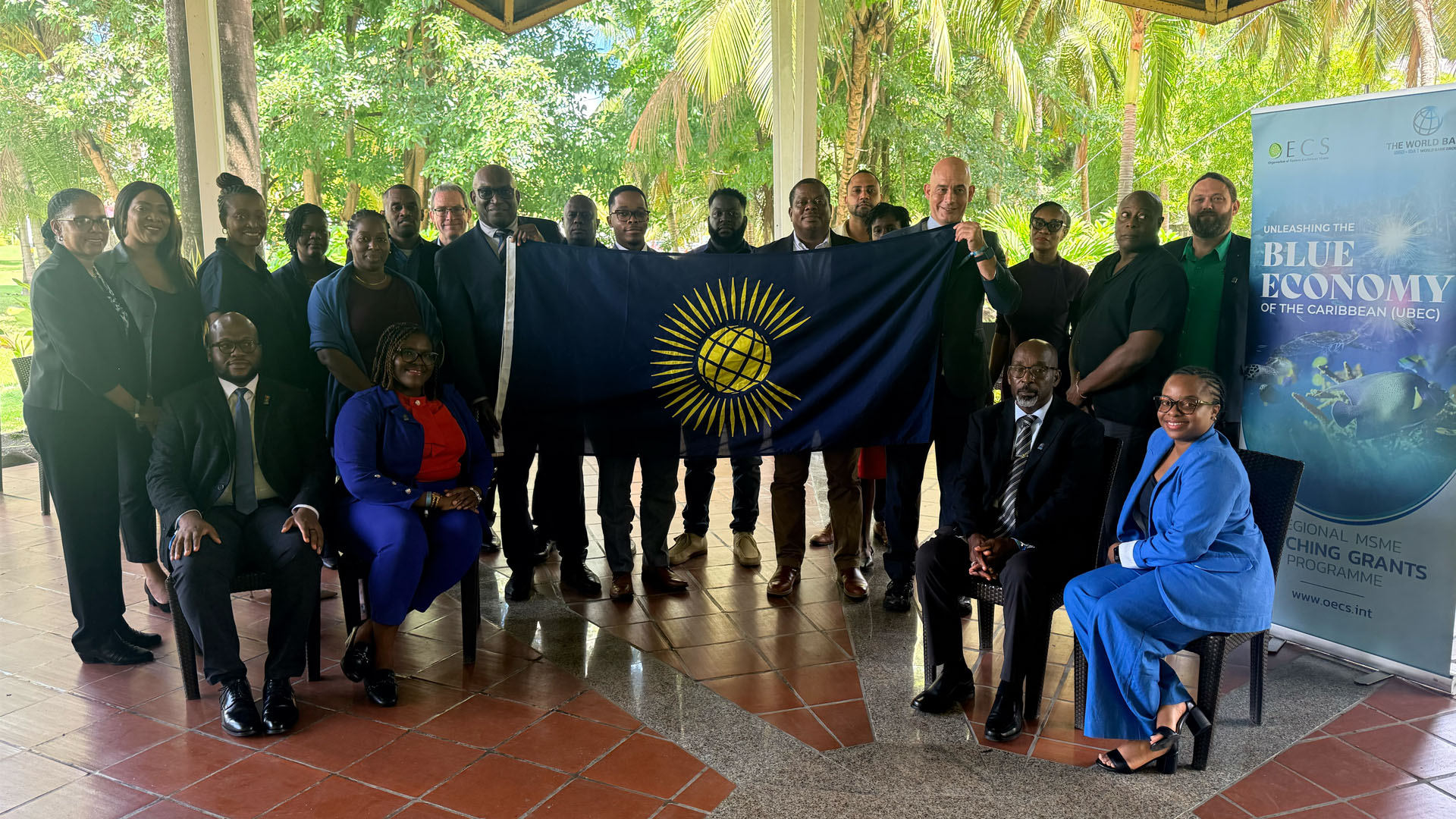
### Regional Collaboration Takes Center Stage for Eastern Caribbean Ocean Governance
In a pivotal move to strengthen regional capacity for sustainable ocean management and blue economy development, the Organisation of Eastern Caribbean States (OECS) Commission, in partnership with the Commonwealth Secretariat, will host a four-day Regional Training Workshop on Maritime Boundary Delimitation in St. George’s, Grenada, running from October 5 to 8, 2026.
Housed at the Radisson Grenada Beach Resort, the 3.5-day interactive training will bring together policymakers, technical experts, and government representatives from across OECS member states. The core goal of the workshop is to deepen participating stakeholders’ mastery of maritime boundary delimitation and its far-reaching implications for cross-regional cooperation, sustainable marine resource stewardship, and inclusive ocean governance.
The workshop curriculum is structured to cover a full spectrum of critical topics, from the foundational international legal framework that governs maritime boundaries and leading delimitation methodologies, to the role of technical experts in cross-border negotiation processes and actionable strategies for preparing and conducting productive negotiation talks. Participants will also engage in hands-on practical exercises to reinforce learning, and explore emerging regulatory developments under the landmark Agreement on Biodiversity Beyond National Jurisdiction (BBNJ), alongside frameworks for provisional arrangements and alternative dispute resolution.
For Small Island Developing States (SIDS) like those that make up the OECS, clear maritime boundary delimitation is not merely a bureaucratic exercise: these expansive maritime zones are the backbone of national economic development, food security, community livelihoods, and long-term sustainable ocean resource use. The OECS Commission and Commonwealth Secretariat have both publicly extended their gratitude to the Government of Grenada for its role in hosting the workshop and backing regional capacity-building efforts for ocean governance.
Opening the training, Susanna De Beauville-Scott, OECS Programme Director for Sustainable Ocean Management, underlined the urgency of building both national expertise and regional collective capacity. “This workshop provides an important opportunity to strengthen our individual technical capacity while also building the region’s collective ability to address maritime boundary matters in a way that is informed, practical and cooperative,” she noted.
Dr Daniel Wilde, Head of Oceans at the Commonwealth Secretariat, echoed this sentiment, emphasizing that clearly defined maritime boundaries are a prerequisite for productive regional cooperation and sustainable ocean management. “Maritime boundaries are far more than lines on a map. They provide the legal certainty that enables States to exercise their sovereign rights, manage marine resources sustainably and maintain good relations with their neighbours,” Dr Wilde explained.
The workshop is a core component of the OECS’s ongoing efforts to strengthen ocean governance frameworks, clarify maritime jurisdiction, and enable sustainable resource management across the region. Back in February 2024, the OECS Authority reaffirmed the priority of delimiting, monitoring, and managing member states’ coastal and maritime areas at its 74th Meeting, including securing sovereign rights and access to marine resources. Resolving outstanding intra-OECS maritime boundaries was named an immediate top priority for the bloc.
Immediately following the conclusion of the training on October 8, 2026, the 25th Meeting of the OECS Ocean Governance Team (OGT25) will convene to review key institutional progress and next steps. A core agenda item for the meeting is consideration of findings from a Commonwealth Secretariat-supported assessment of the effectiveness of the Ocean Governance Team (OGT) and national-level ocean governance coordinating mechanisms across member states. Participants will also discuss opportunities to strengthen these institutions to support blue economy growth and ocean governance at both national and regional levels.
The assessment recognizes the OGT’s critical contributions to advancing implementation of the Eastern Caribbean Regional Ocean Policy (ECROP) across the bloc, while clarifying that the OGT’s mandate is to support, rather than lead, national blue economy development efforts. It also highlights key gaps: several member states lack fully functional national ocean governance mechanisms, and where these institutions do exist, their lines of coordination and collaboration with the regional OGT are often poorly defined and not fully operational.
OGT25 will also conduct a midpoint review of the first five years (2020–2025) of ECROP’s Strategic Action Plan. Early progress has been recorded in establishing regional regulatory frameworks, building cross-sector partnerships, and advancing key technical initiatives, many of which have been supported by external donor funding. However, the review finds that implementation progress has been uneven across member states. Delays in national policy adoption, paired with persistent shortages of financial and human resources, have slowed delivery of key priorities. These findings underscore the ongoing need for sustained intergovernmental coordination, adequate resourcing, and stronger national institutional capacity to advance regional ocean governance goals and unlock the full economic potential of the Eastern Caribbean’s blue economy.
Taken together, the training workshop and OGT25 meeting reinforce the centrality of robust legal, technical, and institutional capacity to advancing effective ocean governance in the region. As OECS member states work to realize their blue economy growth ambitions, clearly defined maritime boundaries, streamlined cross-institutional coordination, and evidence-based decision-making will be foundational to sustainable marine resource management and long-term climate and economic resilience across the Eastern Caribbean. The OECS Commission and Commonwealth Secretariat have reaffirmed their ongoing commitment to supporting member states through targeted capacity development and continuous knowledge exchange on ocean governance and maritime affairs.