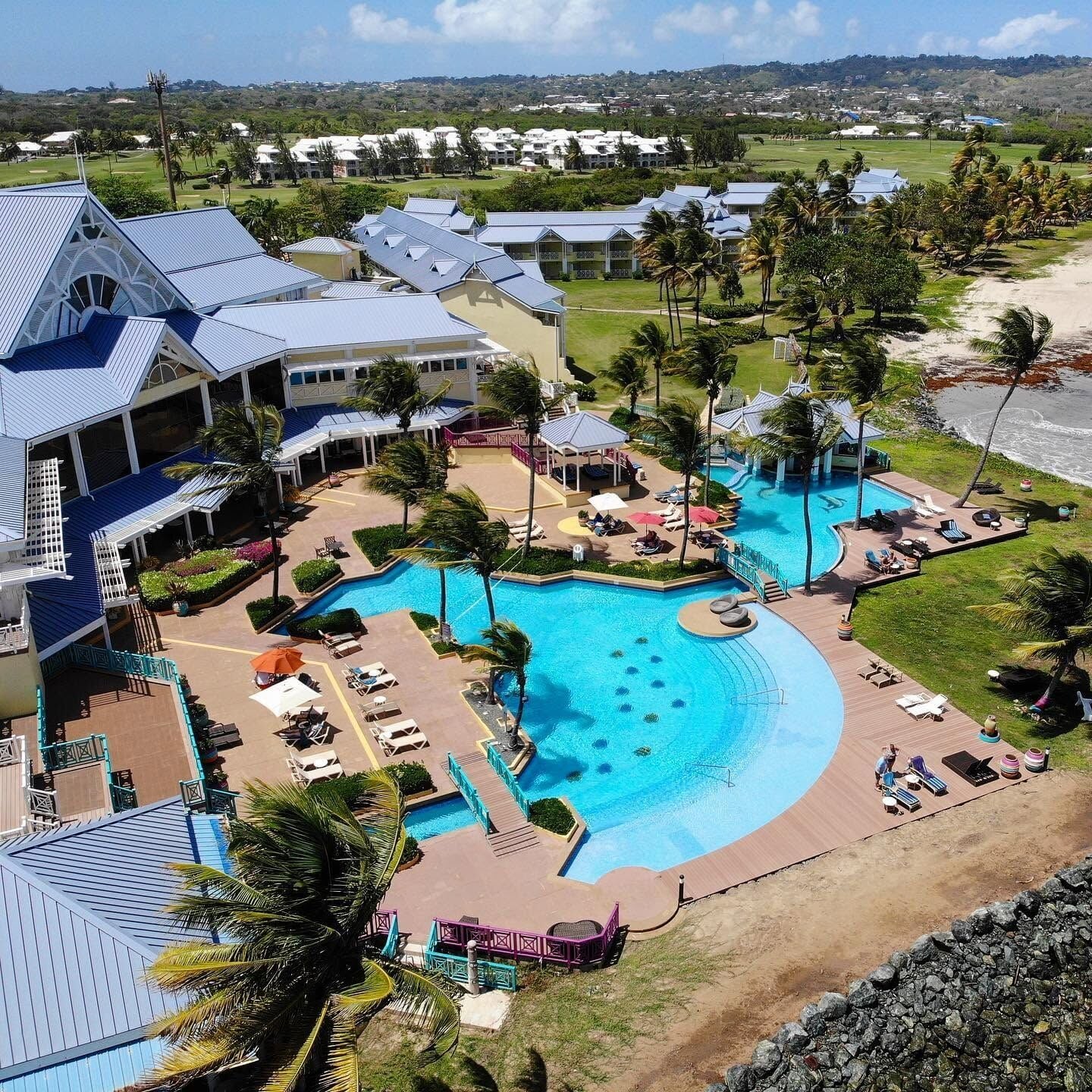
The government of Trinidad and Tobago is moving forward with plans to offload three underperforming state-owned commercial assets, with Prime Minister Kamla Persad-Bissessar confirming that requests for proposals (RFPs) for the divestment of Hilton Trinidad, Tobago’s Magdalena Grand Beach and Golf Resort, and National Quarries Ltd will be issued in the near term. Persad-Bissessar announced the policy push during a sod-turning ceremony for a new $500 million Marriott Resort at Tobago’s Rocky Point, explaining that public finances can no longer sustain companies that consistently drain taxpayer funds without turning a profit.
Persad-Bissessar noted that the state has a well-documented poor track record of running profitable commercial enterprises, framing the planned divestments as a logical step to shift these assets into private hands, where new ownership can inject capital, restructure operations, and restore profitability. “We can’t keep using taxpayer dollars to keep them afloat,” she emphasized. “The private sector can take them over, restructure, invest and make them profitable. The Government has to be removed from some of these loss-making companies for them to become profitable.”
In line with this strategy, the prime minister pointed to the dire financial state of the entities up for sale to justify the move. She highlighted that National Quarries currently spends $350 to produce each unit of aggregate, only to sell it for $150 – a loss-making model she described as indefensible. For the Magdalena Grand Beach and Golf Resort, low tourist occupancy has already forced management to furlough up to 50 workers for at least one month, with Persad-Bissessar acknowledging the property has fallen into significant disrepair. She also aligned with Tobago House of Assembly Chief Secretary Farley Augustine’s position that “the business of Government is not in running hotels”, confirming that early investor outreach for the Hilton Trinidad divestment has already taken place. While LABIDCO, the La Brea-based development entity, has been flagged as a potential future divestment, the prime minister confirmed it remains under active review and has not been added to the immediate sales list.
Persad-Bissessar drew a clear distinction between these commercial assets and the state-owned Guaracara Refinery at Pointe-a-Pierre, which the government has ruled out for divestment. She explained the refinery holds unique strategic importance, explaining it is “directly connected to our energy security and national security priorities”, a status the three assets marked for sale do not share. The government is currently advancing plans for a phased restart of the refinery while evaluating investment proposals from interested private partners, outlining a divestment framework that separates strategically critical national assets from commercial operations that can be better run by the private sector.
Notably, the prime minister declined to share key details of the planned sales, including the valuation of the assets, asking price for potential buyers, pre-qualification requirements for bidders, or whether the government will retain a minority stake in any of the companies after the divestment process.
The announcement has already drawn pushback from organized labor. The Communication Workers Union (CWU), which represents workers at Hilton Trinidad, released a statement voicing grave concern over the proposed sale. The union noted that workers at the hotel only recently emerged from a period of uncertainty over the property’s future, and are now facing another round of untransparent speculation with no clear assurances for their livelihoods. CWU Secretary General Joanne Ogeer demanded the government provide full clarity on how the sale will impact existing jobs, collective bargaining rights, employee accrued benefits, and the continuity of employment for all staff under any new ownership or management structure. Just last month, the government signed a new six-month management agreement for Hilton Trinidad that secured jobs for more than 300 existing employees.