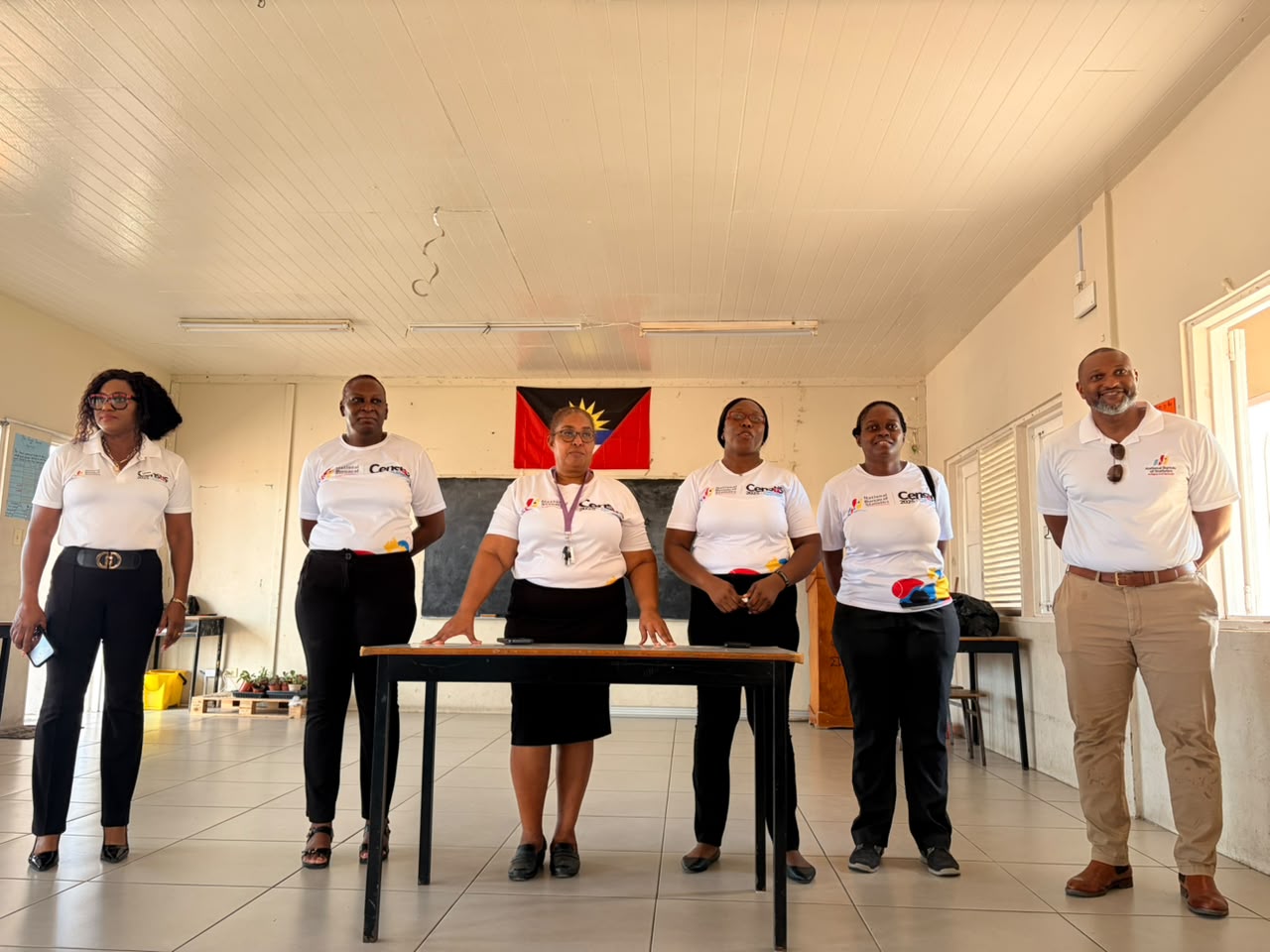
Across the Caribbean region this week, statistical agencies including the National Bureau of Statistics of Antigua and Barbuda are joining forces to mark the 17th annual Caribbean Statistics Day, an observance centered this year on the unifying theme “Harmonising Data, Strengthening Resilience.” This annual commemoration serves two core purposes: to shine a spotlight on the irreplaceable role that high-quality official statistics play in driving sustainable national and regional progress, and to honor the hard work, commitment, and invaluable contributions of statisticians and data professionals who lay the groundwork for informed, evidence-based policy and decision-making across all sectors.
Against the backdrop of this year’s observance, Antigua and Barbuda is in the active phase of rolling out its 2025 Population and Housing Census, a landmark national data collection initiative. To build public awareness and foster early buy-in, census officials took the opportunity of Caribbean Statistics Day to visit a series of primary and secondary schools across the islands, launching an outreach campaign designed to teach young people about the core purpose of the decennial census and the everyday impact of statistical data on communities.
During the interactive school visits, educators and census officers walked students through the fundamentals of census operations, framing the initiative as a comprehensive national “stock-taking” exercise that aims to count every single person residing in the country and capture key demographic and socio-economic details to guide future development. Students were encouraged to act as community ambassadors, carrying the census message home to their parents and guardians, and reminding adults of the critical importance of cooperating with enumerators when they visit households across the country.
Officers emphasized that the anonymized data gathered through censuses and regular surveys is the foundation of effective public planning. Accurate population data enables national and local governments to allocate resources strategically for core public services that touch every resident’s life, from primary and secondary education and public healthcare to affordable housing, job creation programs, transportation infrastructure, and other key development priorities. They also broke down the logistics of the 2025 census for participating students: for statistical purposes, Antigua and Barbuda has been divided into eight administrative census parishes, with the capital St. John’s split into two distinct zones—St. John’s City and St. John’s Rural. Across the country, there are 391 enumeration districts on the main island of Antigua, and an additional nine districts on Barbuda, creating a structured framework for comprehensive enumeration.
Unlike past census cycles, the 2025 initiative leverages modern digital technology to streamline data collection and improve security. Enumerators are using Computer-Assisted Personal Interviewing (CAPI) via tablet devices running the Survey Solutions platform, which allows for secure, real-time completion of census questionnaires and eliminates delays associated with paper-based data processing.
As the anniversary commemoration wraps up, the National Bureau of Statistics has renewed its public appeal, urging all residents of Antigua and Barbuda who have not yet been counted to cooperate fully with enumerators during their household visits. Officials reiterated that the census is a collective national undertaking that depends on widespread participation to succeed, aligned with the initiative’s official slogan: “Mapping the Present, Shaping the Future.” The bureau emphasized that reliable, comprehensive population data will not only strengthen the country’s resilience to future challenges but also ensure that development planning meets the needs of all communities for decades to come.