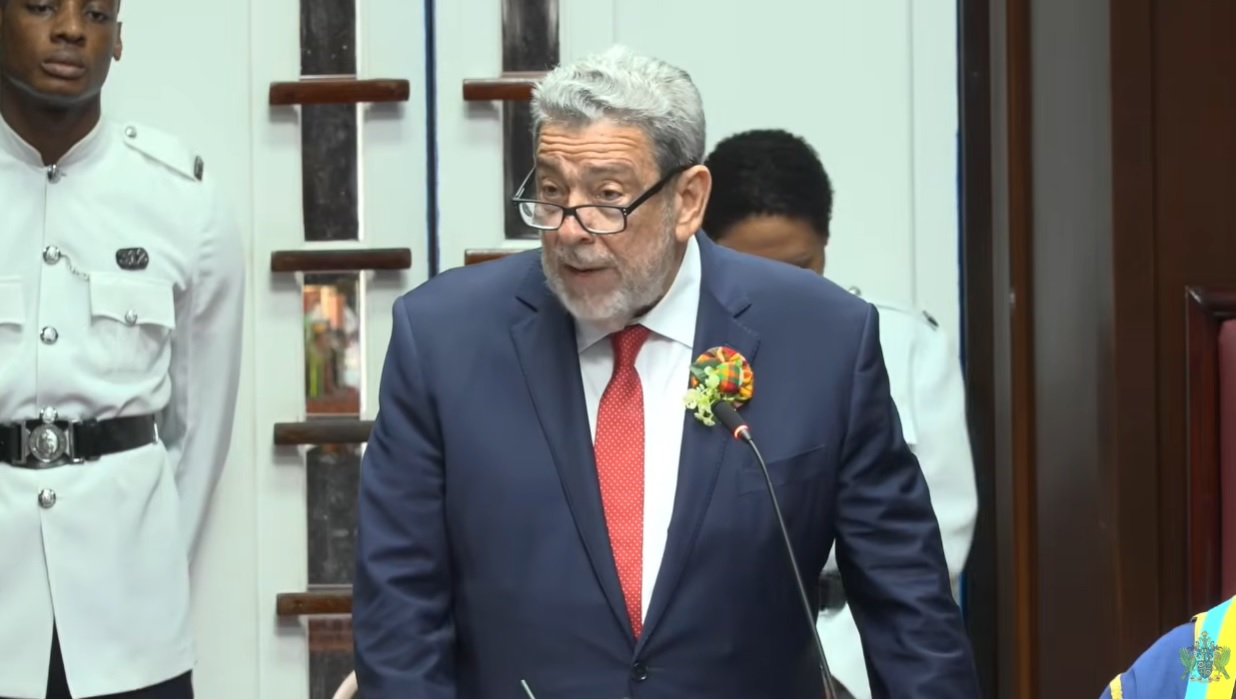
On the occasion of the 75th anniversary of Saint Lucia’s adoption of universal adult suffrage, former prime minister of Saint Vincent and the Grenadines and current opposition leader Dr. Ralph Gonsalves delivered a landmark address to a joint sitting of Saint Lucia’s parliament, laying out his vision for the island nation’s pursuit of long-term shared prosperity and sustainable development.
During the address on Monday, Gonsalves emphasized that meaningful national progress cannot be sustained without foundational social values. “A society of quality and shared prosperity cannot be built on laziness, indiscipline and pervasive crimes of violence. A sustainable, social democracy cannot be shaped by excessive pleasure, leisure and nice time,” he argued, stressing that discipline, productive work, and unwavering commitment to curbing violent crime must form the bedrock of any successful development push.
Gonsalves pushed back against the narrow framing of national progress as purely a product of gross economic growth. Beyond expanding GDP, he noted, building an inclusive, prosperous nation requires robust, effective governance, resilient political institutions, principled, capable leadership, an actively engaged citizenry, and targeted evidence-based policies that maximize the value of every available national resource.
He also placed strong emphasis on the critical role of regional and international collective action in advancing sustainable development across the Caribbean, noting that small island developing states gain critical strength from coordinated solidarity.
Looking back across the 75 years since Saint Lucia introduced universal adult suffrage in 1951, Gonsalves praised the work of successive Saint Lucian administrations, which have worked for decades to build a modern, globally competitive post-colonial economy that can compete on national and international markets. That said, he acknowledged that progress has been uneven, even with measurable gains in both economic expansion and human development outcomes.
“The dialectics of this progressive forward march in Saint Lucia are complicated and demand, among other things, a people-centred vision, a coherent philosophy of advanced social democracy and appropriately devised priority bundles of policies and programmes,” he added.
Gonsalves issued a clear caution for Caribbean nations navigating modern development challenges: small island states have an extremely narrow margin for misstep, making intentional, deliberate policy all the more critical. “Our margin for error is very slim,” he said.
The 1951 introduction of universal adult suffrage marked a transformative turning point for democratic participation in Saint Lucia. Before the reform, only around 5,000 residents were registered to vote out of a total population of nearly 80,000. Just one day after the reform went into effect on October 11, that number jumped to more than 28,000 registered voters, and roughly 15,000 citizens cast ballots in the first election held under the new framework.
As the nation marked this 75-year milestone, Gonsalves called for ongoing reaffirmation of the core principles that undergird Caribbean nationhood. “It is imperative that we continue to reaffirm that our Caribbean nations are founded on the belief in the supremacy of God and the freedom and dignity of man and woman,” he said, framing these values as a precious intergenerational inheritance passed down from the region’s founding ancestors.