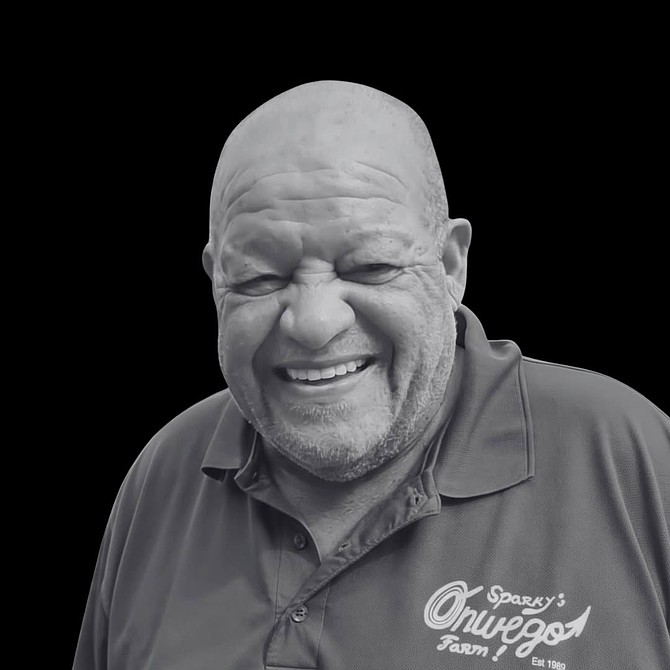
Longtime Bahamian community advocate Gene “Sparky” Fountain has drawn renewed attention to the systemic failures plaguing the country’s public healthcare system through a posthumously released video recorded shortly before his death. In the footage, Fountain detailed a harrowing 11-hour wait for care at Nassau’s Princess Margaret Hospital (PMH), shedding light on both understaffing crises and deep financial inequities that leave low-income residents with life-threateningly limited care options.
Fountain recounts in the video that neighbors had to step in to transport him to the facility when an ambulance failed to arrive in time. With no walk-in clinics open for urgent care, the activist had no alternative but to turn to PMH, the island nation’s main public hospital. His neighbors arranged bedding for him in the back of a private van, secured his home and pets, and got him to the emergency department before any emergency medical personnel could respond.
By his account, the ordeal stretched from 8 p.m. one evening to 7 a.m. the next, and he left the hospital without ever seeing a treating physician, despite completing required intake tests including blood work, blood pressure screenings, and a glucose test. Fountain explained that the emergency department was operating with only three doctors on duty to handle a full load of patients, many of whom were facing urgent medical and family emergencies. He described a chaotic scene filled with patients groaning in unmanaged pain, and one incident where blood was left spilled across the facility’s floors.
While he acknowledged that the overstretched clinical team was working to the best of their abilities, he compared their frantic pace to “chickens without heads.” When he left the facility, he was still in severe pain and had only been able to grab a small change of clothes before rushing out.
Beyond the immediate understaffing crisis at PMH, Fountain used his final public message to call out stark inequities in access to care between wealthy Bahamians and low-income residents. He noted that politicians and affluent residents can afford to seek specialized private treatment in destinations like the United States, Germany, and the Cayman Islands, while poor Bahamians have nowhere else to turn for care. He explained that he could not afford care at private facilities like Doctors’ Hospital or the upscale Lyford Cay medical center, and even public government clinics require upfront payment that many working-class residents cannot afford. He described PMH, the only option for low-income people, as a deeply “scary place” for patients in crisis.
Following confirmation of Fountain’s death, the Public Hospitals Authority (PHA) was contacted by The Tribune for a formal response to the activist’s claims. While the PHA initially stated it would issue a public statement, no comment had been released by the time this report went to press.
Across the political spectrum, Bahamian leaders have paid tribute to Fountain, who was a well-known voice in national public discourse through his frequent calls into local radio talk shows. Michael Pintard, leader of the opposition Free National Movement, remembered Fountain as a relentless advocate for ordinary and low-income Bahamians who never shied away from speaking plainly about systemic issues.
Pintard noted that while the two did not always align politically, he always respected Fountain’s candor and fair-mindedness, saying “He had a way with words, and a gift for saying it plain. You always knew exactly where he stood.” Pintard emphasized that Fountain’s willingness to speak out on behalf of marginalized communities has strengthened Bahamian democracy, adding: “Our democracy is stronger because of people who care enough to speak up, who stay informed, and who demand more from those who serve.”
Pintard also shared a personal connection to Fountain, noting the two shared a passion for agriculture. When Pintard served as a government minister, he was honored to help Fountain access public land for his agricultural work, he said.