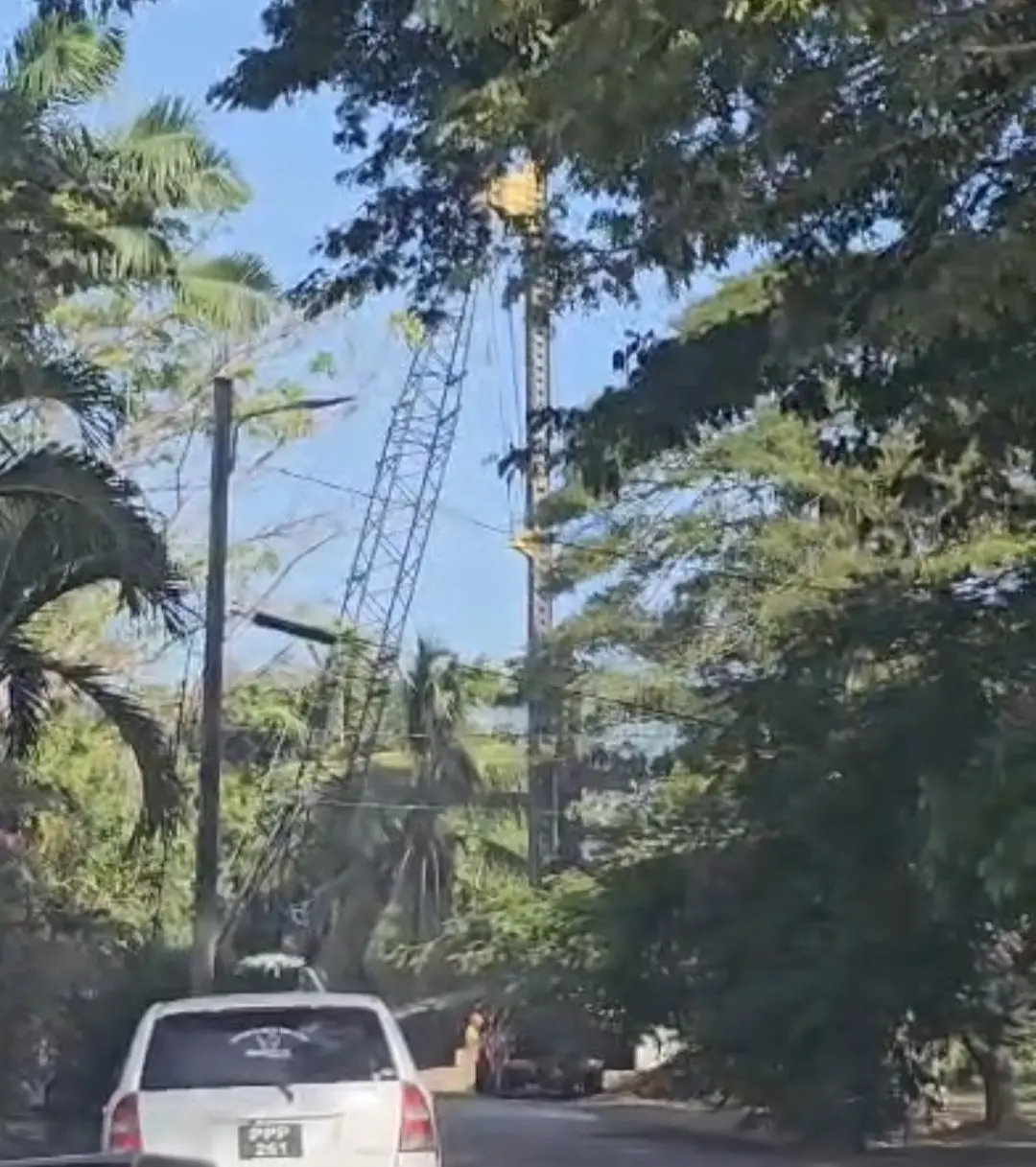
On Friday, October 9, 2026, state utility provider Guyana Power and Light (GPL) declined to comment on growing demands from Meadowbrook Gardens residents to pause construction of a high-voltage transmission line for the region’s gas-to-energy project, sparked by widespread public fears over long-term health and safety risks, including potential links to cancer.
Residents of the established residential neighborhood have organized to oppose the current proposed route, which would place major transmission infrastructure just feet away from occupied family homes and community spaces where children play, families gather, and local events are held regularly. In a formal statement released by the Meadowbrook Gardens Community Group, residents outlined a series of core concerns: heightened electrical safety hazards for nearby properties, reduced ability to freely use and enjoy private residential land, and the understudied impacts of long-term exposure to electromagnetic fields generated by the power lines.
The community’s health concerns are rooted in official classification from the International Agency for Research on Cancer (IARC), the specialized cancer research body of the World Health Organization (WHO). IARC categorizes extremely low-frequency magnetic fields—the type produced by standard electricity transmission systems—as Group 2B, meaning the fields are classified as “possibly carcinogenic to humans.” This designation draws on long-term epidemiological research that has identified a consistent association between prolonged residential exposure to elevated magnetic fields and increased rates of childhood leukemia, a connection residents say GPL has failed to adequately address.
Beyond health risks, residents are questioning the transparency and decision-making behind the routing of the transmission line. They note the project was originally planned for a different community, where it also faced public pushback, before being redirected to run through the heart of Meadowbrook Gardens. For months dating back to February, residents have requested that GPL evaluate a long-proposed alternative route that would run through existing unused public reserves bordering the neighborhood, which would avoid cutting through dense occupied residential space. To date, community leaders say none of these requests have received a formal response, and no technical justifications or public documentation have been released to explain why the alternative route was rejected or never evaluated.
The standoff escalated after GPL reportedly broke a formal commitment made during a recent community meeting with project representatives, where the company agreed to pause all construction on the disputed section of the line while concerns were discussed. Instead, residents say work resumed without warning, leaving the community outraged and profoundly disappointed. “These are not vacant or unused spaces. They are essential parts of our homes, neighbourhood and daily lives,” the statement reads.
When contacted for comment on the residents’ growing list of concerns and the alleged broken commitment, GPL executive team leader Kesh Nandlall did not provide an immediate response. Community leaders emphasized that they are not opposed to the broader gas-to-energy project, which is intended to expand Guyana’s energy capacity, but argue that legitimate resident concerns deserve full consultation and risk assessment. “Our homes are not simply points on an engineering drawing. They are where our families live, our children grow and our communities thrive,” the group added. “We believe that where reasonable alternatives may exist, potential risks and unnecessary proximity to homes should be properly evaluated rather than dismissed.”