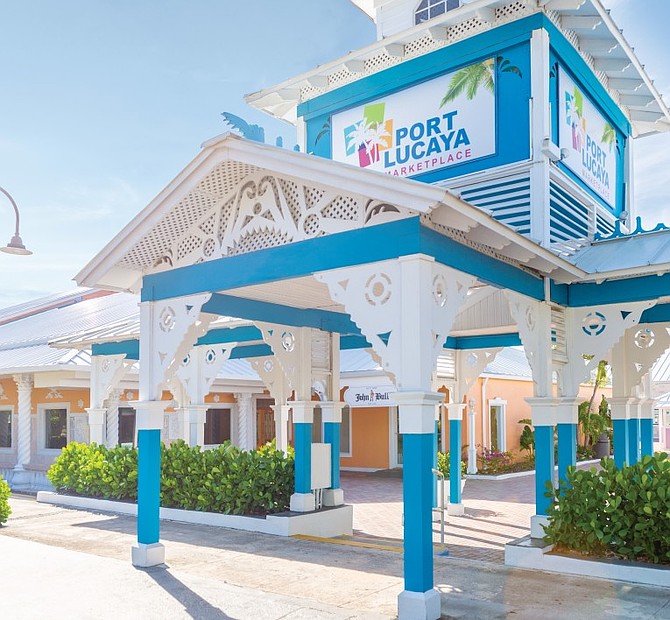
The Grand Bahama business community is facing growing existential pressure, with the president of the Grand Bahama Chamber of Commerce issuing a stark warning that multiple additional establishments at the popular Port Lucaya Marketplace could shut their doors permanently if long-delayed plans to redevelop the area’s marina are not revived quickly. The warning comes on the heels of the temporary closure of Agave Restaurant, a beloved Caribbean-Latin dining spot that has left roughly 40 employees out of work amid the industry downturn.
In an interview with local media on Tuesday, Ralph Hepburn, head of the chamber, described the current visitor flow through Port Lucaya’s retail and food businesses as barely clinging to life, a crisis that has been building for months. While one of Agave’s co-owners clarified that the shutdown is not permanent, noting the restaurant is using the current lull in business to complete much-needed renovations, the closure nonetheless highlights how fragile the area’s business ecosystem has become.
The Tribune reached out to Agave co-owner Nick Vitakos for further comment, who redirected inquiries to fellow co-owner Noel Clarke; multiple calls to Clarke went unanswered as of press time. Local labour officials confirmed they are aware of the temporary closure and have been in communication with the restaurant’s ownership to address the impact on affected workers.
The root of Port Lucaya’s decline stretches back to the shuttering of the Grand Lucayan Resort, after which foot traffic for local merchants and traditional straw vendors dropped sharply. Business owners had pinned their hopes on the recent opening of Carnival’s Celebration Key cruise terminal to reverse the trend, but that boost has so far failed to materialize for off-terminal establishments.
Even as overall cruise passenger arrivals to Grand Bahama have risen substantially in recent months, Hepburn explained that only a tiny fraction of passengers disembarking at Celebration Key actually leave the purpose-built cruise facility to explore surrounding communities and local businesses. He estimated that of the roughly 7,000 passengers that pass through the terminal on a typical week, fewer than 1,000 venture beyond its gates.
This uneven distribution of cruise tourism revenue means the broader Grand Bahama business sector has not reaped the expected benefits from the growth in cruise travel. Hepburn added that Freeport Harbour has also suffered from inconsistent ship arrivals following Carnival’s shift to Celebration Key. The terminal was previously one of Freeport Harbour’s largest cruise line partners, and now the port relies almost entirely on MSC and Royal Caribbean, whose scheduled calls are far less consistent than Carnival’s former operations.
With tourist numbers remaining persistently low, Port Lucaya businesses have been forced to shift their focus to local customers to stay afloat. But Hepburn noted that this strategy is unsustainable long-term, because the local economy itself is overwhelmingly dependent on tourism revenue, which is also barely functioning.
Compounding these challenges, Grand Bahama’s tourism sector faces additional headwinds from limited air access and a chronic shortage of available hotel rooms, issues that are particularly acute during the traditional off-peak months of September and October, when demand slows even further.