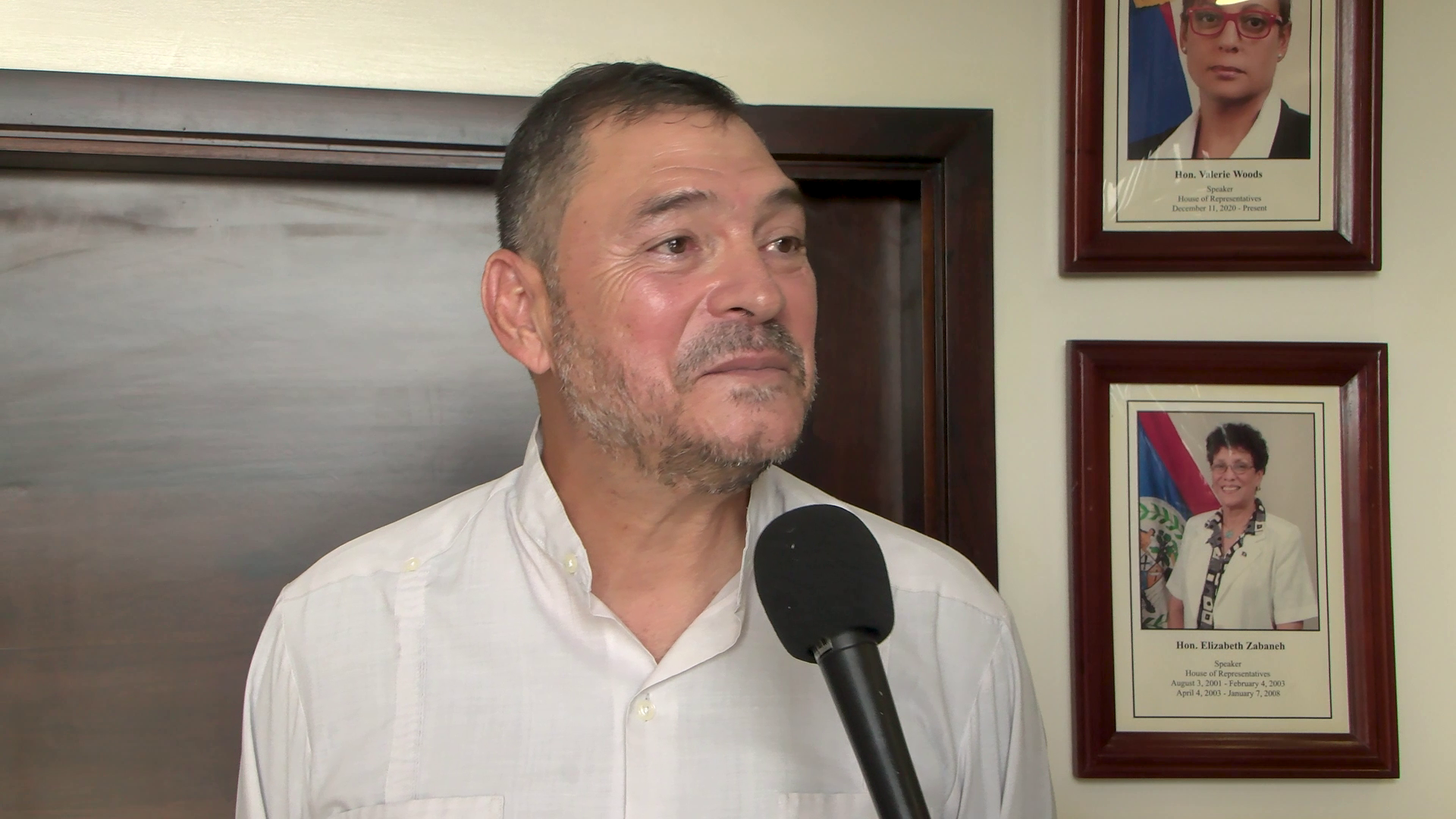
Belizean Prime Minister John Briceño has publicly clarified the status of Julius Espat’s role in the Home Affairs Ministry, pushing back against Espat’s claims that his appointment remains in an uncertain transitional state. In comments made ahead of a House of Representatives meeting on October 2, 2026, Briceño emphasized that Espat is serving as the full, official Home Affairs Minister—not in an acting capacity. Still, the prime minister confirmed he will delay a final long-term leadership decision for the portfolio pending a pending audit report from the country’s Auditor General.
The appointment reshuffle follows three months of Espat stepping into the role amid a high-profile procurement controversy that sidelined former minister Oscar Mira. Since the ruling People’s United Party (PUP) took control of government in 2020, the Home Affairs portfolio has been held by Kareem Musa, then Oscar Mira, before Espat stepped in to cover Mira’s leave. The high-stakes ministry, which oversees the national police force, is widely viewed as one of the most demanding and contentious roles in government, with many politicians avoiding permanent assignment to it.
For his part, Espat says he is ready to retain the role permanently if asked by the prime minister, but he has not hidden his confusion over the ambiguous framing of his appointment so far. In an interview, he noted that the unconfirmed status left him feeling in political limbo, even as he has embraced the day-to-day work of leading the ministry.
Espat’s three months in the role have already reshaped his perspective on public safety and law enforcement in Belize. He says the experience has given him a firsthand look at both the dedication and frustrations of rank-and-file Belizean police officers. “I’ve met really good Belizean police officers. I’ve also met frustrated Belizean police officers,” Espat explained. “It was a good learning experience, and we need to appreciate the people that are there to defend us. Just like politicians, they are beaten up sometimes unnecessarily, and not all the time they are perfect. But with what I have learned, there is hope. I’ve seen that once you give them the respect that they deserve, you can demand the discipline and the service that they are capable of doing.”
When pressed on why he is willing to take on the portfolio permanently, given its reputation as a political headache, Espat dismissed the framing. “No, no headache. That is work. A lot of men no like work. That’s the only difference,” he said.
Espat confirmed he has already communicated his stance to Briceño: he accepted the temporary assignment when the prime minister needed support, and he remains willing to continue in the role permanently if called on, but he will not push for the position. “I accepted what he offered at the time when it was not even on the table… I did it because he’s my Prime Minister and he needed help, and I offered to help,” Espat said. “I’ve mentioned to him if he needs my help, I am willing, but I’m not begging. So he has to decide.”
Briceño, who just returned from an out-of-office period that included high-level diplomatic engagements with Taiwan’s foreign minister, said the timing of his final decision is tied to the completion of the Auditor General’s audit. He pushed back against calls for an immediate announcement, arguing that as prime minister, he is entitled to take the time needed to make a thoughtful decision. “It’s not a matter of me being pressured or being given a timeline when to answer,” Briceño said. “I think I, as the Prime Minister, should be given an opportunity to make decision when I believe is the right time. I was hoping that we’d be able to get a report from the Auditor General on what are her findings and what if there’s any recommendations we can do. Haven’t gotten it as yet. Maybe sometime next week I’ll probably need to try to find out if we’ll be able to [get the report] or if she needs a lot more time. Maybe I may have to make a decision maybe more sooner than later.”