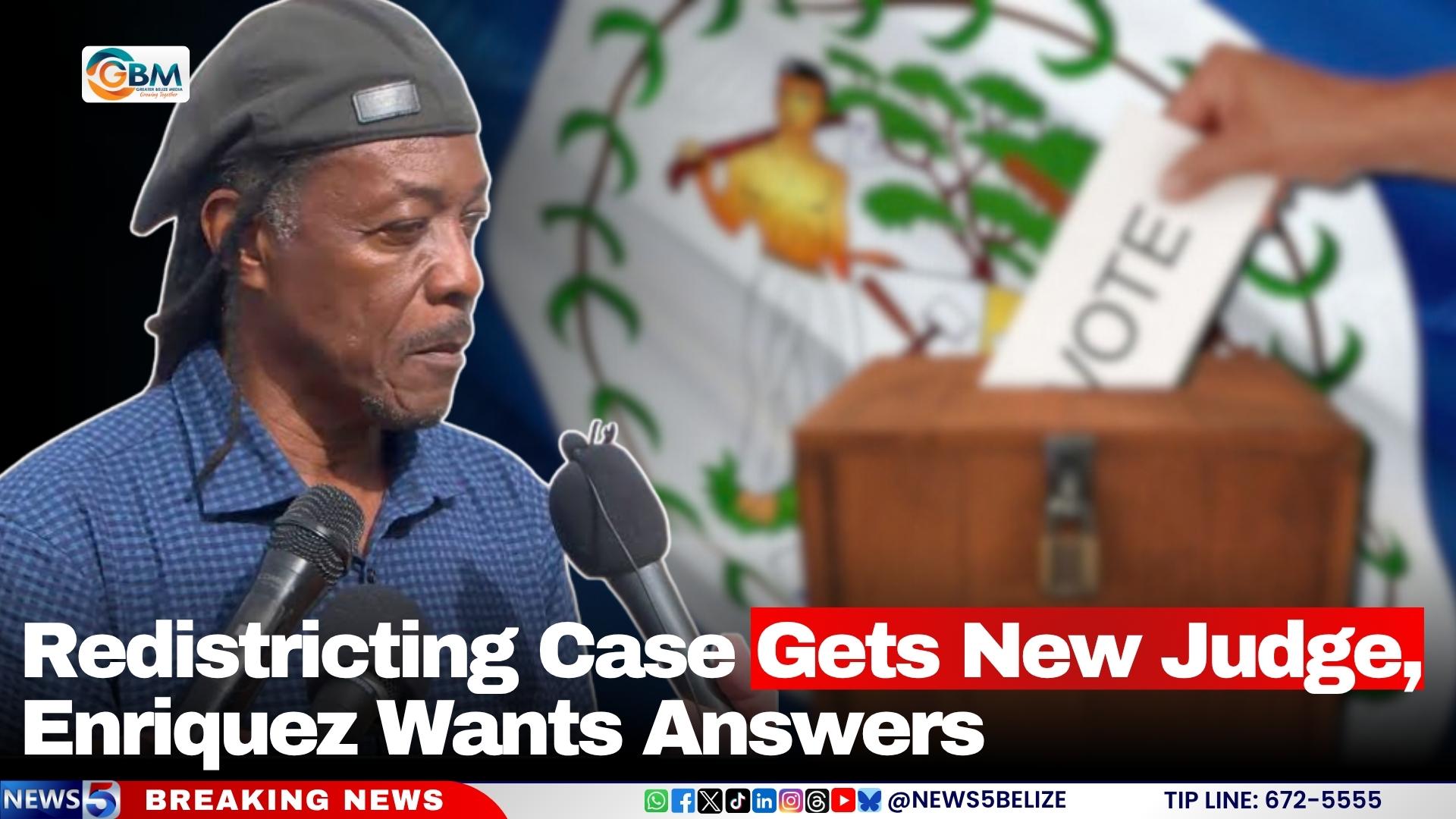
In a developing political and legal controversy centered on Belize’s outdated electoral system, constitutional challenger Jeremy Enriquez is demanding public answers after his high-profile redistricting case was abruptly reassigned to a new judge without formal notification. The case, which questions the constitutionality of Belize’s two-decade-old electoral boundaries, was switched from Justice Tawanda Hondora to Justice Sylvester in a change confirmed via email to Enriquez’s legal team by the Court Registrar on September 30, 2026. What makes the reassignment particularly contentious is that it occurred while Enriquez’s pending application to disqualify Hondora over alleged bias was still under active consideration, leaving key procedural questions unresolved.
Enriquez told reporters that the judge’s name was changed on the court’s official online portal with no advance or formal communication to his legal team. “Had my attorney not written to the Registrar to enquire what had happened, we would not have known,” he stated, criticizing the opaque nature of the decision. The bias allegation against Hondora stems from an incident earlier in the proceedings, where Enriquez’s legal team claims the justice accidentally left his microphone enabled during a lunch break. The legal team says Hondora was overheard making derogatory comments about Enriquez and his lead counsel, Anand Ramlogan SC, while discussing the case with another sitting judge.
Hondora has publicly refuted the claim, calling the allegation “patently incorrect” during open court proceedings. In a formal ruling on the incident, he acknowledged he did speak with Justice Nadine Nabbie during the lunch break, but clarified the conversation only focused on his request for a copy of a past judgment Nabbie issued in a separate elections and redistricting matter. Enriquez counters that the judgment in question was already part of the official court record in his case, undermining Hondora’s explanation.
Along with demanding answers about the reassignment, Enriquez has already filed a formal misconduct complaint against Hondora with the Judicial and Legal Services Commission. He is now calling on Belize’s Chief Justice to issue a public explanation for two key unresolved questions: why Hondora was removed from the case, and what will become of his pending bias disqualification application. “I believe a statement should have been issued with some form of explanation, rather than this being done like a thief in the night,” Enriquez said, emphasizing the public interest in transparent judicial proceedings for electoral matters.
The core of Enriquez’s substantive constitutional challenge argues that Belize’s electoral boundaries, which were last formalized in 2004, have become severely outdated. The outdated lines have resulted in dramatic disparities in the number of voters represented by each parliamentary constituency, creating unequal representation across the country. Precedent in the case already confirms that the Belizean High Court has previously acknowledged broad cross-sector consensus that the boundaries require urgent updating, adding weight to Enriquez’s core legal argument. The reassignment chaos has now delayed progress on a challenge that already targets long-standing inequities in Belize’s electoral system.