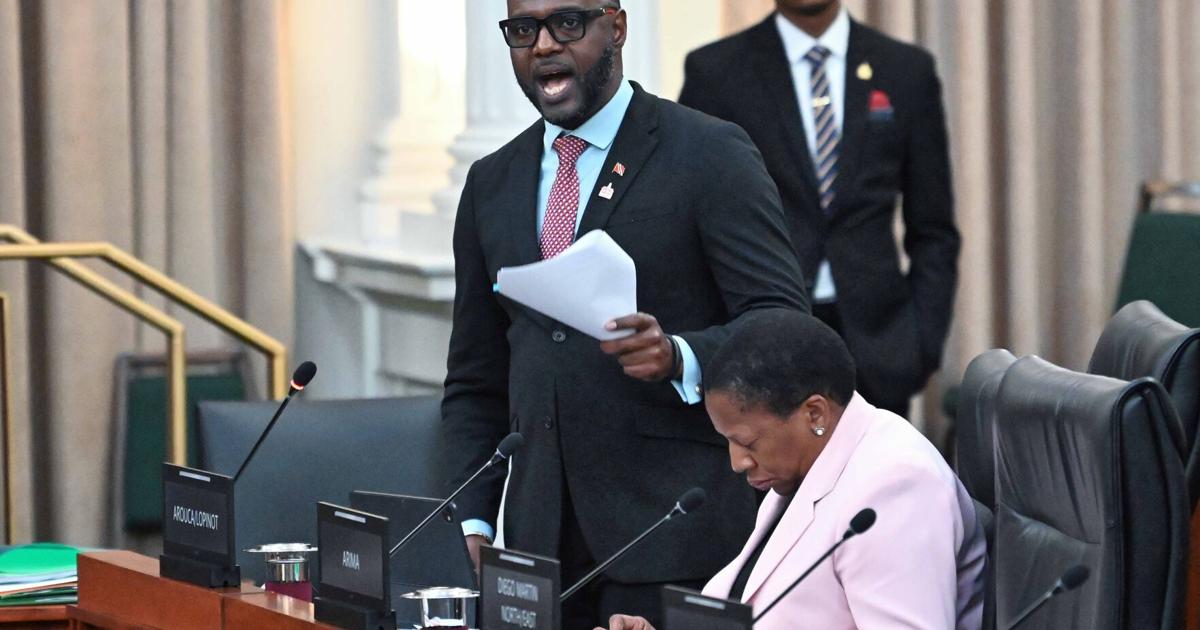
A contentious parliamentary vote has cleared the way for two senior temporary police appointments in Trinidad and Tobago, after the opposition People’s National Movement (PNM) pushed back against the nominations, centered on a decades-old disciplinary ruling against one of the candidates.
The dispute unfolded this week when Homeland Security Minister Roger Alexander tabled two motions before the House, seeking legislative approval for President-endorsed nominations from the Police Service Commission (PolSC). Under the proposal, Junior Benjamin would serve as acting Commissioner of Police, while Anand Ramesar, currently an Assistant Commissioner of Police, would step in as acting Deputy Commissioner. The temporary arrangement is designed to cover the official travel of incumbent Commissioner Allister Guevarro, who is scheduled to attend the International Association of Chiefs of Police’s annual conference and trade exposition in Orlando, Florida, from October 22 to 28.
Despite unified opposition from the PNM, the government’s parliamentary majority carried both motions, with 23 government-aligned MPs voting in favor and 8 opposition members voting against.
Opposition MP and former police officer Marvin Gonzales led the push against Ramesar’s nomination, raising pointed questions about the candidate’s 11-year-old internal disciplinary record. Gonzales told the chamber that opposition researchers had uncovered a 2012 Daily Express report documenting a 2011 disciplinary tribunal ruling that found Ramesar guilty of professional misconduct. The case stemmed from an incident at Tobago’s Scarborough Magistrates’ Court, where Ramesar provided unauthorized legal representation to a fellow police officer facing public misconduct charges connected to the illegal rental of his service weapon. The tribunal ultimately ordered a salary deduction equivalent to 36 days’ pay as punishment.
Gonzales further cited additional reporting showing Ramesar chose not to appeal the guilty verdict, despite disagreeing with it, to avoid delaying his promotion from sergeant to inspector. “So he accepted the punishment,” Gonzales told the House, adding that he could not rule out the possibility that Minister Alexander was aware of this critical background but chose not to disclose it to parliament.
Alexander launched a sharp defense of both nominees and pushed back against Gonzales’ line of questioning, dismissing the opposition’s criticisms as a fruitless search for scandal that he dubbed “Scooby-Doo tactics.” “It seems like the member for Arouca/Lopinot came here with a kind of Scooby-Doo tactics and looking for clues because he had none at all,” Alexander said.
The minister, who also targeted Gonzales for misunderstanding the inner workings of the Trinidad and Tobago Police Service (TTPS), noted that PolSC had already vetted all candidates for the acting positions through a structured interview process, and Ramesar had ranked high enough on the merit-based list to earn the nomination. Alexander emphasized that Ramesar has already advanced to the rank of Assistant Commissioner of Police, and described the decades-old infraction as a “very minor” offense that does not bar officers from promotion within the TTPS. He also reaffirmed full confidence in both Benjamin and Ramesar, pointing to falling national crime rates under the TTPS’s current leadership as evidence of effective command.
The debate boiled over into personal tension when Alexander responded to Gonzales’ comment that he had passed every polygraph examination during his police career by posing a provocative question: “Would you subject yourself to one today? If I was to polygraph you and ask you if you want to be the leader of the opposition?” The Speaker of the House rebuked Alexander for the personal jab, prompting the minister to issue a formal apology. Despite the heated exchange, the government moved forward with the vote, securing final approval for the temporary appointments.