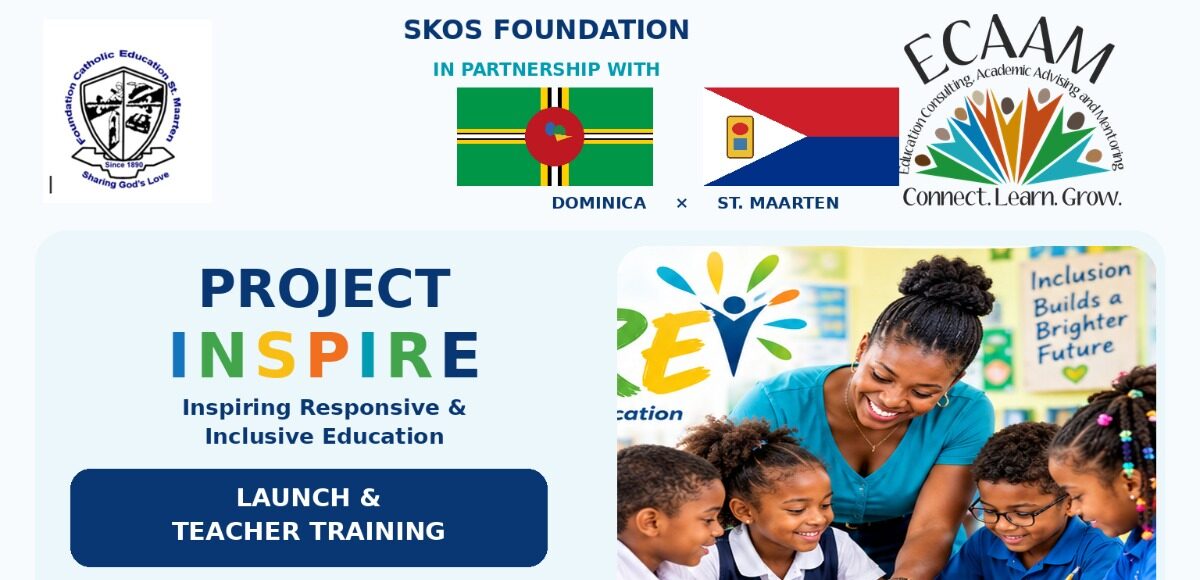
A groundbreaking regional effort to transform K-12 education into a more accessible and welcoming space for all learners is set to kick off this week on the island of St. Maarten, bringing targeted support to students with special educational needs (SEN) and critical professional development to local educators. Organized by the educational services organization Education, Consulting, Academic Advising and Mentoring (ECAAM) in collaboration with St. Maarten’s SKOS Catholic Education Foundation, Project INSPIRE operates as a two-year pilot program crafted to address longstanding gaps in inclusive education practice across the region.
The core mission of the initiative centers on upholding a simple but transformative principle: every student, regardless of their learning profile, deserves equal access to classroom participation, opportunities for academic growth, and a strong sense of belonging within their school community. To turn this principle into action, Project INSPIRE focuses on four key pillars of improvement: enhanced instructional techniques, more equitable student assessment frameworks, targeted learner support systems, and cross-regional knowledge sharing to scale successful practices.
A week of official activities, including the formal launch and foundational teacher training, will run from September 28 to October 2, 2026, with the main launch ceremony scheduled for September 30 at the SKOS Training Center in Philipsburg. The public event will run from 10:00 AM to 11:30 AM local time, and organizers have made arrangements to include remote stakeholders from across the Caribbean and beyond: the launch will be livestreamed to a global audience via three media outlets, Richie Ferrol Media Services, EmoNews, and Dominica News Online.
Throughout the training program, participating educators will engage in a hands-on curriculum designed to build practical, actionable skills for inclusive teaching. The coursework covers a range of critical topics, from adapted instructional methods and personalized lesson planning to trauma-informed inclusive classroom management and targeted intervention strategies for students with a wide spectrum of learning needs. Educators will also complete immersive learning experiences including peer school visits, in-classroom observation opportunities, and collaborative professional development workshops led by regional SEN experts.
Organizers emphasize that the ultimate goal of the training is to equip teachers with the tools to identify individual student needs early and adapt their instructional approaches to meet those needs, creating classroom environments where every learner can participate actively and thrive academically. Framed as a collective regional commitment to educational equity, Project INSPIRE aims to build long-term teacher capacity and establish a model for inclusive education that can be replicated across other island nations and regional education systems.