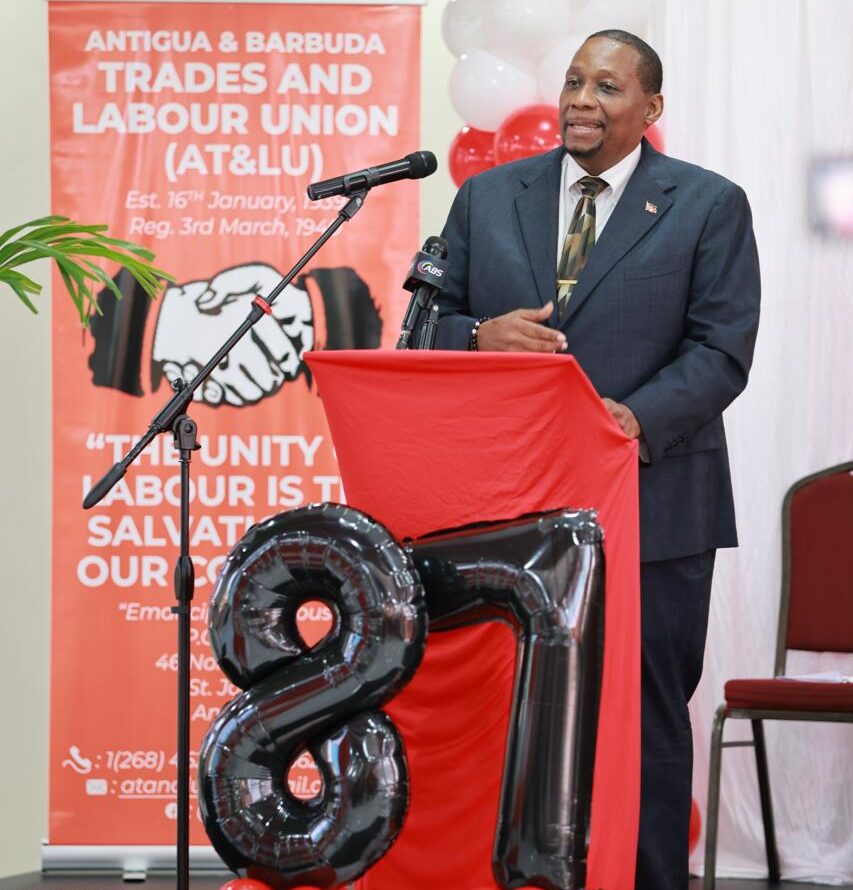
As one of the most established labor organizations in Antigua and Barbuda gathered for its 87th Annual Delegates’ Conference this year, senior diplomat Dr. Clarence E. Pilgrim delivered a landmark call to action, challenging the nation’s trade union movement to step beyond its traditional workplace advocacy role and take a leading stance in the fight against persistent crime and violence.
Hosted by the Antigua Trades and Labour Union (AT&LU) under the conference theme “Developing Stronger Workers, Stronger Future,” the event became a platform for Pilgrim to outline a new, holistic framework for addressing public safety. The ambassador pushed back against the widespread narrative that crime reduction is the sole responsibility of national law enforcement agencies, arguing that violent crime is rooted in deep, interconnected social challenges that extend far beyond police patrols and courtroom proceedings.
In his feature address, Pilgrim emphasized that crime and violence cannot be disentangled from systemic issues spanning family breakdown, gaps in educational access, unequal economic opportunity, stunted youth development, and disinvestment in local communities. “Crime and violence cannot be treated only as police matters. They are family, education, economic, youth-development and community issues,” he told delegates.
To illustrate the urgency of collective action, Pilgrim referenced the nation’s recent National Day of Prayer, a day dedicated to calling for national healing and peace. Just 24 hours after the observance, Antigua and Barbuda was shaken by another fatal shooting, underscoring that spiritual reflection alone is not enough to reverse the tide of violence. “Prayer remains important, but prayer must be accompanied by responsibility and action,” he stated.
Pilgrim laid out a clear roadmap for how the country’s labor movement can contribute meaningfully to public safety, highlighting mentorship programs, apprenticeship initiatives, and expanded skills training as high-impact entry points for unions. He also called for the formation of broad cross-sector partnerships that bring together employers, faith institutions, sporting bodies, and local community groups to collaborate on long-term violence prevention.
“Safer communities require more than enforcement. They require belonging, opportunity, discipline and hope,” Pilgrim explained. This argument formed the core of his broader challenge to the AT&LU, urging the 87-year-old institution to expand its mandate beyond fighting for fair wages and safe working conditions for its members.
In the modern landscape, Pilgrim argued, trade unions have a critical role to play in nurturing holistic development for workers, supporting their growth across economic, technological, social, intellectual and civic dimensions. Rather than only preparing members to secure and retain employment, Pilgrim said unions should equip workers to thrive in all areas of life.
Reflecting on the AT&LU’s decades-long legacy as a foundational builder of Antigua and Barbuda’s national development, Pilgrim emphasized that the union cannot afford to become a static institution fixated on preserving its history. To remain relevant, it must continue adapting to meet the evolving needs of the nation and its changing most pressing challenges.
“An institution that helped to build the nation must never become merely a witness to its future,” Pilgrim told delegates. “It must continue helping to shape that future.”