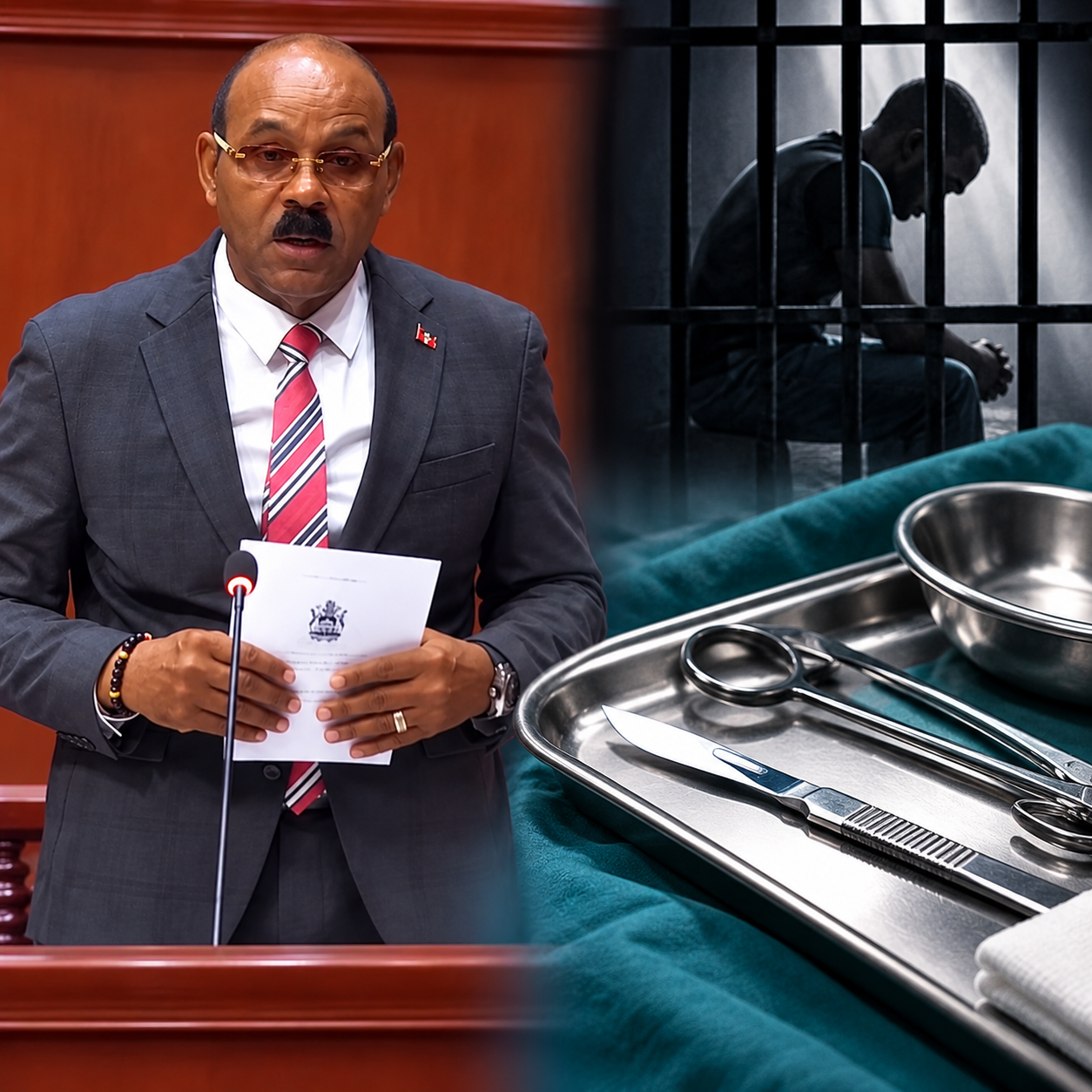
ST. JOHN’S, Antigua — Antigua and Barbuda Prime Minister Gaston Browne has officially recorded his long-held public position in support of chemical and surgical castration for repeat serious sexual offenders during a parliamentary address this week, bringing the controversial proposal back into the center of national policy debate over criminal justice reform.
Speaking on Monday during parliamentary deliberations on the Firearms (Amendment) Bill 2026, which formed part of a broader discussion on crime rates and sentencing reform, Browne told assembled lawmakers that current penalties are insufficient to deter repeated acts of severe sexual violence, arguing that more aggressive measures are necessary to protect vulnerable communities.
“I’m an advocate of chemical castration,” Browne stated openly during the debate, as he outlined proposed changes he hopes to see integrated into upcoming sexual offenses legislation. Going a step further, the prime minister added that for the most hardened offenders, including serial rapists, surgical castration should also be put on the table as an available sentencing option.
This is not the first time Browne has publicly backed the proposal: earlier this month, he first raised the idea of castration as an option specifically for repeat child sex offenders, framing it as a complementary measure to lengthier prison sentences. That initial announcement drew immediate pushback from legal experts across the region, including prominent Grenadian criminal defense attorney Jerry Edwin, who condemned the policy as “barbaric” and a disingenuous “political stunt” designed to score cheap political points ahead of any upcoming electoral contests.
Despite the criticism, Browne has stood firm in his defense of the proposal, reiterating this week that the measure deserves serious legislative consideration as an option for judges handling repeat sexual offender cases. Monday’s parliamentary address marks a key milestone in the debate, as it formalizes Browne’s position on the official legislative record at a time when parliament is considering a sweeping package of harsher criminal penalties across multiple offense categories.
In his remarks, Browne argued that lengthy prison sentences alone cannot fully address the risk that recidivist sexual offenders pose to the public, and that policymakers have a responsibility to consider all evidence-based options that reduce the likelihood of future victimization. He also used the opportunity to renew criticism of what he views as excessively lenient sentencing for serious sexual crimes currently, emphasizing that parliament has a democratic duty to strengthen sentencing guidelines for these offenses.
It is important to note that the prime minister’s comments do not mean that castration as a criminal penalty has been passed into law. Rather, his remarks signal his public support for adding these options to the statute book as part of forthcoming amendments to sexual offending legislation.
Browne has consistently stressed that any castration measure he supports would be carefully structured under law, applied only to repeat offenders convicted of the most severe sexual offenses. His renewed statement in parliament confirms that the proposal remains an active part of the government’s broader ongoing review of how Antigua and Barbuda penalizes repeated acts of serious sexual violence.