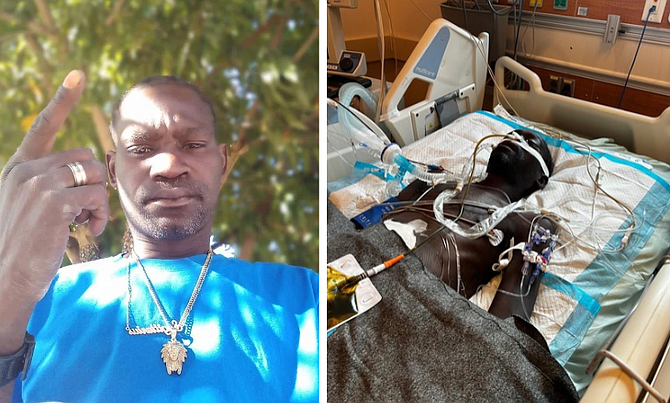
A Bahamian family is calling for full transparency and legal accountability after a devastating surgical complication left 42-year-old Lamond Brice with necrotic intestines at Nassau’s Princess Margaret Hospital (PMH), alleging hospital leadership concealed the error that caused his life-threatening condition for days. Brice, a loving father and beloved family member described by relatives as the constant “life of the party” before his procedure, was admitted to PMH on September 3 to remove a confirmed non-cancerous growth from his stomach, according to his family’s account.
The first procedure was carried out on September 4, and clinicians initially told the family the surgery had gone according to plan. Within days, however, Brice’s condition declined sharply: he began experiencing persistent vomiting and crippling abdominal pain, prompting clinicians to order a CT scan that revealed severe internal damage. He was rushed into emergency second surgery on September 7, where family members say they were informed his intestines had already begun to die.
For days after the second procedure, Brice’s relatives told reporters they were given no clear explanation for what triggered the tissue damage, despite multiple scheduled meetings with the care team. It was only after Malaya Curry, Brice’s aunt, pressed the lead surgeon for a full explanation that the clinician admitted his team had accidentally nicked a key vein during the initial September 4 operation. “He said, ‘I am sorry. I made a mistake,’” Curry recalled in an interview, adding that the hidden error robbed the family of the chance to seek alternative care outside of PMH. “If they had told me the truth and been honest with me, I could’ve probably saved his life or do more to get more help.”
According to Curry’s account, following the discovery of the damaged vein, clinicians left Brice’s abdomen open for roughly three days while they attempted to repair the injury by grafting a healthy vein harvested from his thigh to the abdominal region. A third procedure was later performed to restore blood flow and function to the dying intestines, but the intervention was ultimately unsuccessful. Clinicians eventually informed the family that no further curative treatment could be provided, and care shifted entirely to palliative measures to keep Brice comfortable as his condition worsens.
Today, Brice remains alert but unable to speak, as intubation tubes inserted through his mouth are required to manage bowel waste that can no longer pass through his digestive system normally. His family says watching his rapid physical decline has been an agonizing experience, with daily visits to the intensive care unit leaving them heartbroken. “It hurt to my core in my heart to see my nephew in the hospital,” Curry said. “I got to go every day to see him suffering, dying a slow death because of the hands at PMH.”
Brice’s niece, Marissa Rolle, says the family is now pushing for PMH to cover the cost of emergency overseas care, including a portable total parenteral nutrition (TPN) pump to deliver nutrients intravenously and a life-saving intestinal transplant that is not available at the Bahamian public hospital. The family submitted an official formal complaint to the Public Hospitals Authority (PHA), which oversees PMH, this week and has retained legal counsel to pursue a negligence claim against the facility. Rolle noted that the family is far from the first to experience harm from preventable errors at PMH, saying “It’s too many families going into PMH and having to go through the same thing, negligence after negligence. So, we just want justice. We just want him to get the right treatment needed.”
In an official statement provided to the Tribune, PHA acknowledged it has received the family’s concerns and confirmed the complaints are currently under active internal review. The authority noted that PMH’s clinical leadership has maintained consistent communication with Brice’s family throughout the review process, and that PHA “takes concerns regarding patient care seriously and remains committed to ensuring that all matters raised are appropriately reviewed in accordance with established clinical and administrative procedures.” PHA declined to share further details about Brice’s care, citing mandatory patient confidentiality rules and the ongoing status of the internal review.