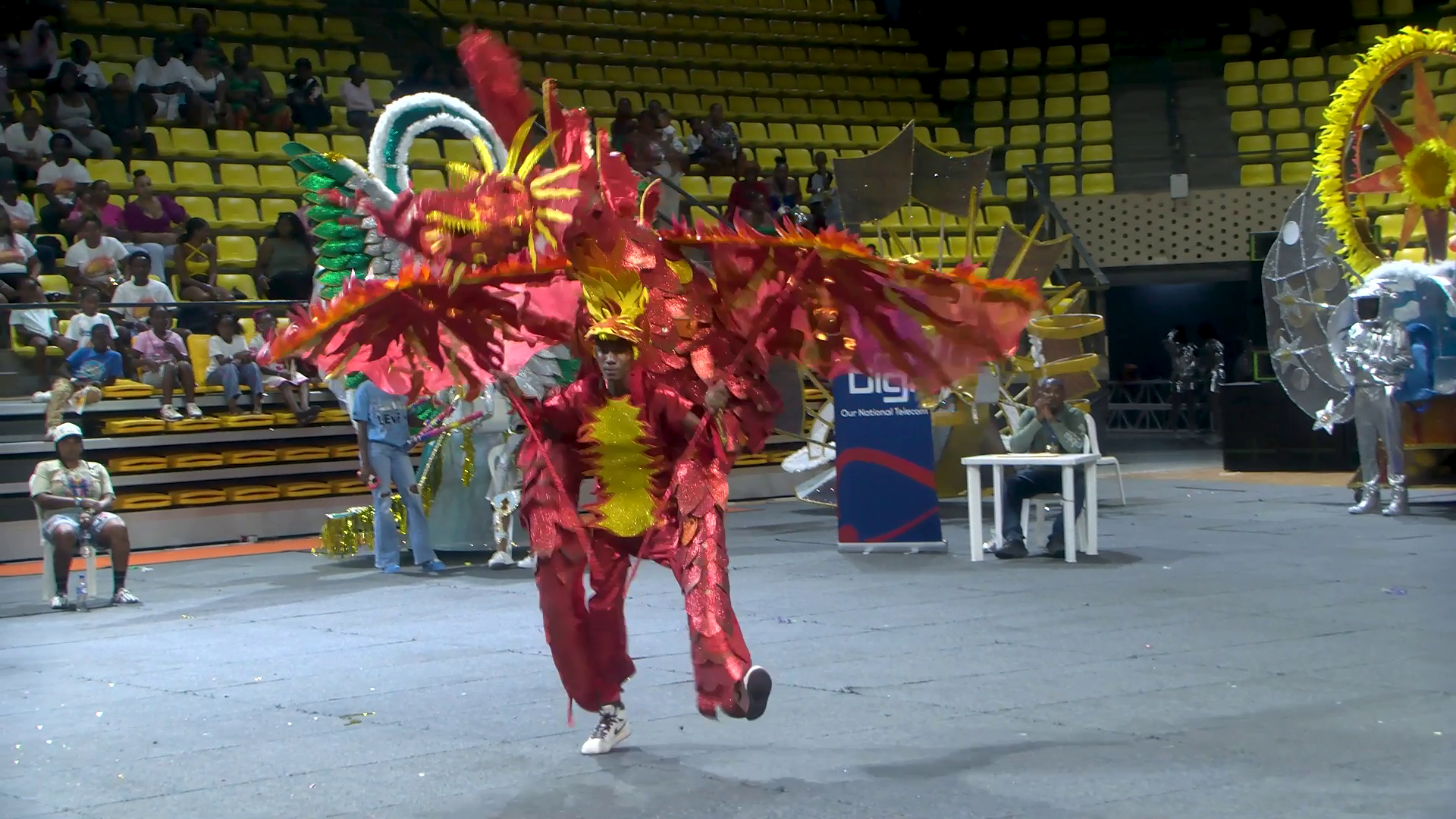
Every year, Belize’s iconic carnival road march draws thousands of energized spectators and revelers, but a striking gender imbalance has long gone under-examined: while women and girls flood the parade routes, moving to the infectious beat of soca music in vibrant custom costumes, men remain strikingly underrepresented among dancing bands.
Local outlet News Five journalist Shane Williams recently dived into this persistent gender divide to unpack the social and cultural forces that keep many Belizean men on the carnival sidelines, rather than joining the celebration.
At this year’s Orange Walk Carnival, Williams observed the same lopsided dynamic that has become standard across the country: female revelers dominated every participating band, with only a small handful of men stepping forward to dance. Carnival insiders say the gap is not rooted in simple personal disinterest — it grows out of deeply ingrained cultural beliefs about what it means to be a man in Belize. From childhood, boys are taught that public dancing at carnival does not align with traditional ideals of masculinity, creating a barrier that persists into adulthood.
Even for young boys who develop an early love for soca music and the electric energy of carnival, that joy is often cut short by social stigma. Junior revelers like Nile Hamilton, Nelson Maskall and Andre Bradley all spoke of their excitement for carnival: they love the chaotic energy, the packed crowds, the vibrant costumes, and the sense of community that comes with marching alongside bandmates and supportive family members. But for many, that early enthusiasm fades when faced with teasing and ridicule from peers.
Pauline Bradley, band leader for the popular group Soca Massive, explained that harmful stereotypes linking male carnival participation to sexual identity are one of the biggest barriers holding Belizean men back. “We have little boys who want to join, but they are afraid because other boys clown them and call them names [associated with being gay],” she said. Bradley emphasized that this assumption is completely unfounded: she has worked with adult male dancers who started participating in carnival as children, many of whom are straight, proving that a man’s choice to dance says nothing about his identity.
Event promoter John Marsden argues that forcing men to join is not the solution — instead, shifting cultural attitudes will happen organically as more men see carnival as an inclusive space for anyone who loves soca and celebration. “I don’t think we can do anything to make them want to be a part of it,” Marsden explained. “Eventually they’ll see that if it’s fun, it’s a great time and they’ll join it if their heart takes them.” He believes that as more men break the taboo and participate, rigid stereotypes will gradually break down. That sentiment is echoed by the men who already take part in carnival every year, who are actively encouraging other Belizean men to give the celebration a try.
“Y’all come out and y’all try that. If you like it stay, have fun. Carnival is all about having fun okay,” said senior reveler Windell Russell. Fellow participant Kieran Ysaguirre added, “Come out, enjoy yourself. Have fun. That’s carnival for you, just to have fun.” Leroy Smith, another long-time carnival dancer, extended an open invitation to any interested men: “Just look forward to beautiful costumes, pure hypeness. If anybody interested you could always come join the band. We have more space. We are one band, one love.”
Bradley argues that dismantling the stigma starts early, by challenging the rigid, limiting ideas about masculinity that boys learn from childhood. “People are brought up different and I just feel like they need to get out of that negative mentality,” she said. That fear of social judgment remains the single biggest obstacle to greater male participation, but shifting the cultural conversation around what masculinity can look like could eventually open up carnival as a space for all Belizeans to celebrate together.