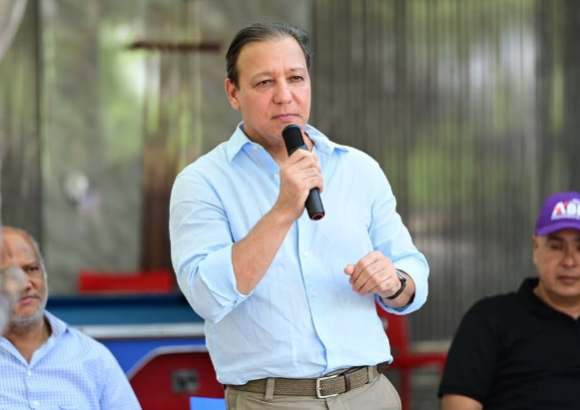
In campaign gatherings held in Santiago de los Caballeros, Dominican Republic, leading presidential aspirant Abel Martínez has raised explosive allegations of systemic corruption surrounding the country’s ongoing deportation operations targeting undocumented foreign residents, claiming a criminal “mafia” network has infiltrated official immigration procedures to extort bribes from migrants seeking to avoid expulsion.
Speaking during his recurring grassroots “A Coffee with Abel” outreach sessions in the Bella Vista and Yagüita del Pastor neighborhoods, Martínez addressed the issue alongside local Dominican Liberation Party (PLD) members, community leaders, and assembled supporters, outlining his stark criticisms of the current government’s handling of immigration enforcement.
The presidential candidate emphasized that all individuals residing in the Dominican Republic without valid legal documentation should be held accountable under existing immigration law, with no exceptions made based on nationality. He pushed back against the current administration’s approach, calling for federal authorities to implement more robust, transparent, and accountable action to uphold the country’s immigration statutes, and to follow through on the public enforcement commitments officials have already made to curb irregular migration.
Martínez also reminded attendees that he has previously backed legitimate government efforts to regulate immigration flows into the country, but stressed that lax oversight and weak controls have created openings for corruption. He warned that the Dominican Republic cannot sustain its current approach to undocumented migration, arguing that more rigorous, transparent governance of the system is long overdue.
Martínez’s comments come amid a sweeping year of immigration enforcement by the Dominican government in 2026. Official data from the General Directorate of Migration shows that as of August 21 this year, authorities have processed more than 250,000 undocumented migrants through detention and border control facilities. Of that total, nearly 186,140 people have been deported, while an additional 64,290 have undergone formal voluntary repatriation processes.