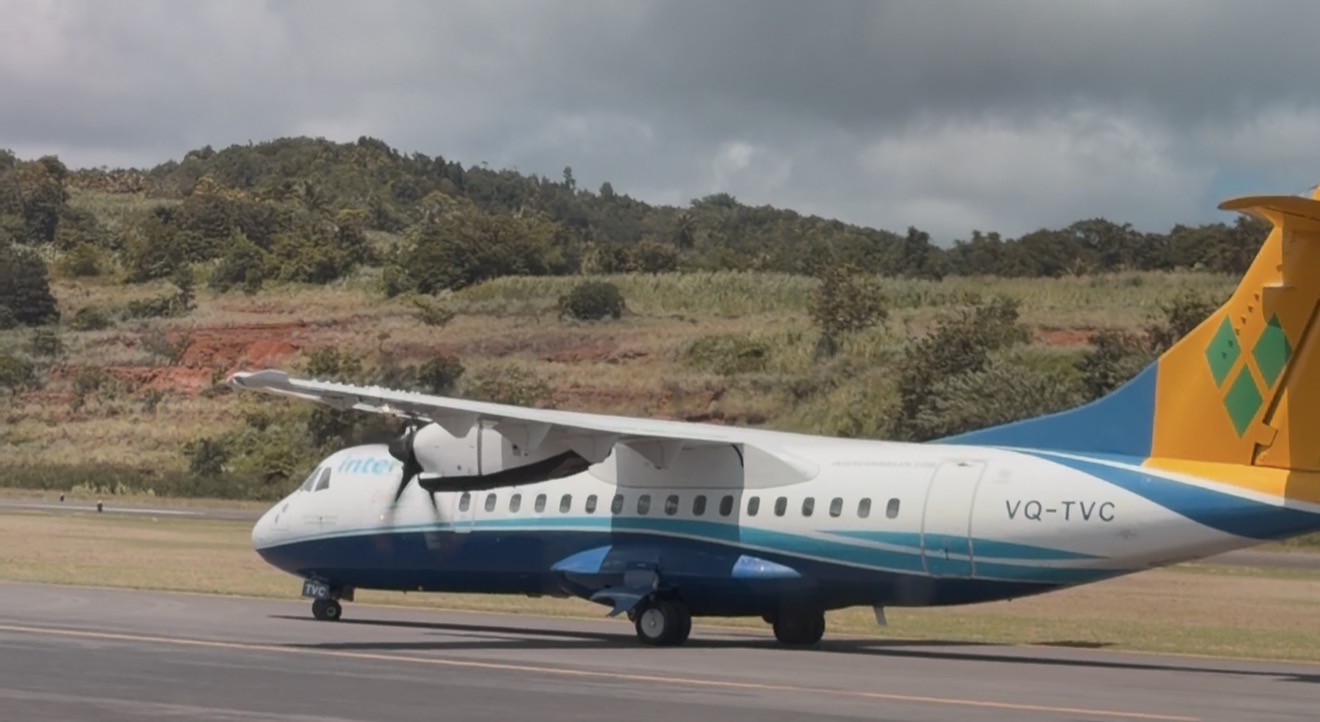
A frustrated regional traveller has penned an open letter to the Director General of the Eastern Caribbean Civil Aviation Authority (ECCAA), demanding urgent regulatory intervention to address persistent poor service from regional carrier InterCaribbean Airways — including a high-profile recent incident that left dozens of passengers stranded in Barbados without their checked luggage.
The most recent disruption unfolded last Friday, when passengers traveling from Dominica to Barbados arrived at their connecting hub only to discover that airline staff had offloaded nearly all checked bags from their flight, citing mandatory aircraft weight-and-balance requirements. Among the affected passengers were travelers connecting to international destinations including Manchester, the U.S. Midwest, and Panama, along with others heading to other Caribbean points of arrival. Many passengers, especially those traveling to cooler climates, were forced to pay out of pocket for emergency clothing, toiletries, and other daily necessities. What made the situation even more unacceptable was that the airline offered no clear timeline for when the abandoned luggage would depart Dominica or how it would be delivered to passengers’ final destinations.
The letter acknowledges that weight-and-balance protocols are non-negotiable for aviation safety, so the criticism does not question that core safety rule. Instead, the core grievance centers on whether InterCaribbean is intentionally overbooking seats and accepting more checked baggage than its assigned aircraft can legally and safely carry. The author argues that if an airline operates aircraft with fixed load limits, its booking and baggage acceptance systems must be updated to reflect those constraints. It is completely unacceptable, the letter argues, for the airline to collect full ticket fares and baggage fees only to leave passengers’ belongings behind with no advance warning, no adequate on-the-ground support, and no clear plan to reunite passengers with their property.
This latest baggage fiasco is far from an isolated unavoidable error, the author emphasizes. InterCaribbean charges premium ticket prices for short regional routes, enforces strict baseline baggage limits, and charges steep additional fees for extra checked luggage. In exchange for these costs, passengers have a reasonable right to expect competent operational planning, transparent communication, and delivery of all baggage the airline agrees to carry.
Friday’s incident is also just the latest in a long string of complaints from passengers across the Eastern Caribbean. For months, travelers have publicly reported repeated issues including widespread delayed and canceled flights, chronic lost or delayed baggage, missed international connecting itineraries, abysmal communication from airline staff, and near-impossible access to meaningful customer assistance. Most recently, in August 2024, the government of the British Virgin Islands was forced to hold emergency talks with senior InterCaribbean leadership after a surge in passenger complaints about poor service, delays, and cancellations. At that time, airline representatives attributed the widespread service failures to ongoing aircraft technical issues and industry-wide staffing shortages.
Against this backdrop, the open letter calls on ECCAA to launch a full formal inquiry to answer several critical questions: First, are InterCaribbean’s passenger and baggage loading plans properly aligned with the capacity of the aircraft assigned to each route? Second, is the airline consistently meeting all mandatory operational and consumer protection standards? Third, does the airline properly notify passengers before departure if their checked baggage cannot be accommodated on their scheduled flight? Fourth, what formal protocols are in place to track and speedily deliver baggage that is intentionally offloaded for operational reasons? Fifth, are passengers affected by these disruptions receiving adequate support and reimbursement for their out-of-pocket costs? And finally, do the repeated delays, cancellations, and baggage issues point to broader systemic operational or capacity problems that require formal regulatory intervention?
The author stresses that this call is not an attempt to pressure ECCAA to override legitimate, safety-focused aviation decisions. Instead, it is a request for the regulator to investigate whether persistent poor operational planning is repeatedly creating scenarios where the airline cannot deliver on its promise to transport passengers and their baggage as booked.
A key point highlighted in the letter is the limited competition for regional air travel in the Eastern Caribbean, leaving most travelers with few alternative carriers. The author argues that this lack of consumer choice must not become a free pass for an airline to deliver consistently substandard service without regulatory scrutiny or meaningful consequences.
The letter outlines clear next steps for ECCAA: the authority should publicly outline its regulatory remit in this matter, launch a full investigation into any potential violations of aviation rules falling within its mandate, and coordinate with national consumer protection agencies and national aviation authorities across the region as needed. If operational deficiencies are confirmed, InterCaribbean should be ordered to implement binding corrective actions within a fixed, public timeline. Persistent noncompliance should result in appropriate sanctions under regional and national aviation laws, up to and including a formal review of the airline’s operating approvals if necessary.
Beyond regulatory action, the letter demands that InterCaribbean immediately provide all passengers affected by Friday’s baggage disruption with updated information about their luggage, arrange expedited delivery to their final destinations, and compensate passengers for all reasonable out-of-pocket expenses caused by the incident.
“Caribbean passengers deserve more than expensive tickets, unexplained disruptions and silence when things go wrong,” the author concludes. “They deserve an airline industry that is safe, reliable, accountable and properly regulated. ECCAA must act.”