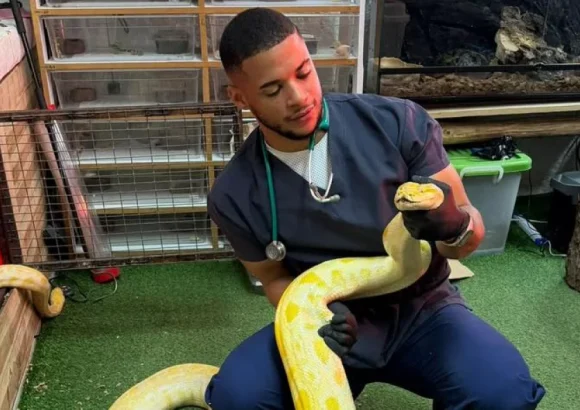
For most people, stumbling across a snake triggers an immediate instinct to flee, followed quickly by a panic-induced question: is this one poisonous? On the eve of International Snakebite Awareness Day, observed annually on September 19, a leading wildlife veterinarian has cleared up widespread public anxiety for residents and visitors of the Dominican Republic: the country hosts no snake species that pose a fatal threat to human life.
Dr. Miguel Smith Cardona, a wildlife veterinary specialist, shared the key clarification in an interview with local outlet Hoy. “In the Dominican Republic, we do not have venomous snakes of medical importance to humans,” he explained. “That means we have no true vipers, rattlesnakes, or coral snakes capable of causing potentially deadly envenoming, which is a risk seen in many other countries across the Americas.”
This official clarification does not mean the island nation is entirely devoid of snakes. In fact, around 25 distinct snake species make their home in the Dominican Republic, Dr. Smith Cardona confirmed. The existing population includes a range of native species, such as the Hispaniolan boa (Chilabothrus striatus), Ford’s boa (Chilabothrus fordii), the graceful boa (Chilabothrus gracilis), and the green vine snake (Uromacer oxyrhynchus), alongside additional species from the Uromacer and Hypsirhynchus genera. Other common native species are the Hispaniolan racer (Haitiophis anomalus), the Hispaniolan dwarf boa (Tropidophis haetianus), and multiple blind snake species belonging to the Typhlops genus. In total, the country is home to boas, racers, vine snakes, small dwarf boas, and subterranean blind snakes, each with unique biological traits and behavioral patterns.
While none of these species carry life-threatening venom, that does not mean they will never bite, Dr. Smith Cardona cautioned. Most bites occur only when a snake feels threatened, trapped, or cornered, and reactions to bites vary by species.
“The Hispaniolan, Ford’s, and graceful boas are constrictors, meaning they have no venom at all,” the specialist explained. “A bite from one of these boas would only cause mechanical injury: small wounds, minor bleeding, and localized pain.”
For other native species, symptoms differ slightly. Some snakes from the Uromacer genus have rear-facing fangs and produce mild secretions that they use to paralyze small prey. In humans, these secretions can trigger mild local reactions including burning, numbness, or swelling, but these effects are never life-threatening and do not qualify as medically significant envenoming. Species like Hispaniolan racers typically prioritize fleeing when they encounter humans, and will only bite if they are picked up or trapped. Dwarf boas are small and reclusive, while Typhlops blind snakes are tiny, live almost exclusively underground, and almost never interact with humans.
Even without the risk of fatal poisoning, Dr. Smith Cardona emphasized that any snake bite should be treated with proper care. “For bites from boas and other non-venomous species, you will mostly see wounds, pain, bleeding, and local inflammation,” he said. The recommended first step after a bite is to thoroughly clean the wound site, then seek a professional medical evaluation to address any risk of bacterial contamination or secondary infection. It is important to note that reaction severity can vary across species, so medical assessment is always recommended regardless of which snake caused the bite.
Beyond bite safety, Dr. Smith Cardona also corrected a common misconception about snake behavior toward humans. “Snakes do not chase or attack people unprovoked,” he stated. “In every interaction with humans, the dominant instinct is to flee or defend themselves only when threatened, not to actively pursue or attack.”
International Snakebite Awareness Day was launched to draw global attention to the public health risks of snake bites, which affect millions of people worldwide each year. Dr. Smith Cardona’s clarification aims to reduce unnecessary fear of snakes in the Dominican Republic while educating the public on appropriate safety protocols for encounters.