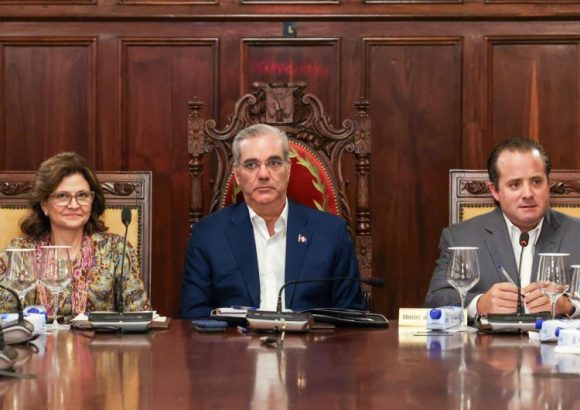
In a formal gathering led by the nation’s top executive leaders, the Dominican Republic’s 60th Council of Ministers meeting concluded with two key policy advances that will shape the country’s mid-term development trajectory. President Luis Abinader and Vice President Raquel Peña chaired the session, where attendees gave formal approval to the 2027 General State Budget Bill, a nearly RD$2.037 trillion spending package that outlines the government’s policy priorities through the next three years.
The proposed budget lays out targeted projections for government revenue and spending, matching the country’s broader macroeconomic outlook. Officials project RD$1.51 trillion in total government revenue for 2027, a figure that equals 15.7% of the Dominican Republic’s projected gross domestic product. The spending ceiling for the fiscal year is set at RD$1.838 trillion, or 19.2% of forecast GDP. The government’s underlying macroeconomic framework anticipates 4.75% real GDP growth and an average annual inflation rate of approximately 4.5% for 2027.
Finance and Economy Minister Magín Díaz noted that the 2027 budget was crafted against a backdrop of consistent economic resilience in the Dominican Republic. Current economic data shows the country has hit 4.5% growth, inflation is on a downward trajectory, and international reserves have remained above the US$15 billion mark, creating a stable foundation for long-term budget planning.
Budget Director José Rijo Presbot outlined the adjusted spending allocations in the new proposal. Compared to the initial 2026 budget, capital spending will see a 19.7% increase, while day-to-day current government spending will rise by 12.3%. The budget framework aligns with the administration’s Meta RD 2036 national development goals, prioritizing six core policy areas: education, public health, social protection, infrastructure development, citizen and border security, and institutional strengthening.
A wide range of public works and social projects are earmarked for funding under the 2027 budget. These include the construction and expansion of public hospitals, upgrades to primary care units and the National Emergency Network, new highway development, integrated regional transportation systems, expanded drinking water and sanitation services, affordable housing improvements, completion of the Santiago monorail project, and increased passenger capacity for Santo Domingo Metro Line 2.
In line with long-standing policy commitments, the government will maintain its requirement of allocating 4% of GDP to education. This funding will support the Ten-Year Education Plan Horizon 2034, expand technical and vocational training programs, and grow the national school transportation system to serve more students across the country. Following approval by the Council of Ministers, the budget bill is scheduled to be sent to the National Congress for legislative review and approval before the October 1 deadline.
Beyond the 2027 budget, the Council of Ministers also advanced a second major policy initiative: a draft bill that would formalize the National Territorial Planning Plan as a legally binding framework for land use across the country. The proposal is rooted in the existing Law 368-22 on Territorial Planning, Land Use and Human Settlements, and is designed to align planning efforts across national, regional, and municipal levels of government while encouraging more sustainable management of the country’s land resources.
The draft legislation integrates core priorities of environmental sustainability, disaster risk management, and climate change adaptation into all levels of territorial planning. Its stated core objectives are to protect the Dominican Republic’s unique natural resources and improve the organized development of human settlements to support more equitable, climate-resilient growth across the country.