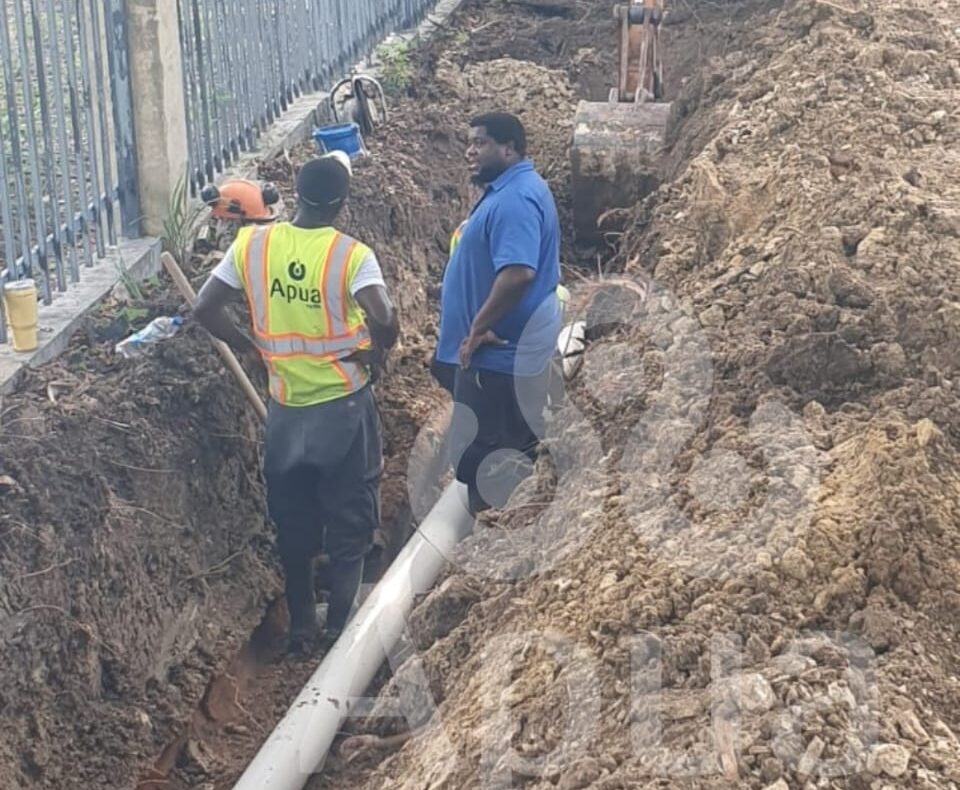
A major infrastructure upgrade project in central St. John’s, Antigua is moving closer to its key milestone, with the Antigua Public Utilities Authority (APUA) projected to wrap up all critical repiping work by the close of this week. Once finished, the handover will clear the path for the Ministry of Works to resume long-planned road rehabilitation across the construction-impacted zones.
Maurice Merchant, the Director General of Communications, shared this official update during the weekly post-Cabinet media briefing held on Thursday. According to Merchant, this upcoming week marks the final phase of APUA’s pipe replacement work across downtown St. John’s, with active crews operating along three major city thoroughfares: High Street, St. Mary’s Street, and Newgate Street. Barring any unforeseen disruptions to the established work schedule, APUA will formally transfer control of the affected streets back to the Ministry of Works by the end of the weekend.
Merchant did, however, issue a note of caution regarding potential timeline shifts, noting that recent unseasonable rainfall has already impacted open work sites, creating delays that could push back the completion date if wet conditions persist. The current repiping initiative is not an isolated project: it is a core component of a broader national push to upgrade Antigua and Barbuda’s aging, outdated water distribution network. By coordinating pipe replacement alongside ongoing road rehabilitation work, project planners aim to cut down on redundant construction and long-term disruption for local residents and commuters.
To achieve this goal, APUA and the Ministry of Works have ramped up inter-agency coordination, with the explicit goal of reducing how often newly resurfaced roads have to be dug up again to address unexpected pipe leaks. Even with this improved coordination, Merchant openly acknowledged that unexpected leaks can still develop after road resurfacing work is complete. He explained that heavy vibrations from the large compaction rollers used during road paving can put additional stress on older existing pipes, triggering leaks that were not detectable before construction started. He added that APUA teams are also adapting their installation practices to exercise greater care when placing new replacement lines to mitigate this risk.
The full scope of the repiping work involves multiple stages: removing corroded old pipes, clearing out contaminated or loose surrounding soil, properly compacting the ground to create a stable base, and laying the new water lines before the road restoration process begins.
In closing, Merchant made a public appeal for understanding from motorists, pedestrians, and other regular road users who have navigated detours and congestion throughout the course of the dual water infrastructure and road improvement projects. He emphasized that the coordinated work will deliver long-term, more reliable water service and safer, smoother roads for the entire community once completed.