As the country prepares for the upcoming expiration of the national state of emergency on September 17, a key independent lawmaker has adopted a wait-and-see stance on whether the senate’s crossbench will revisit its proposed amendments to the revised Zones of Special Operations (ZOSO) Bill.
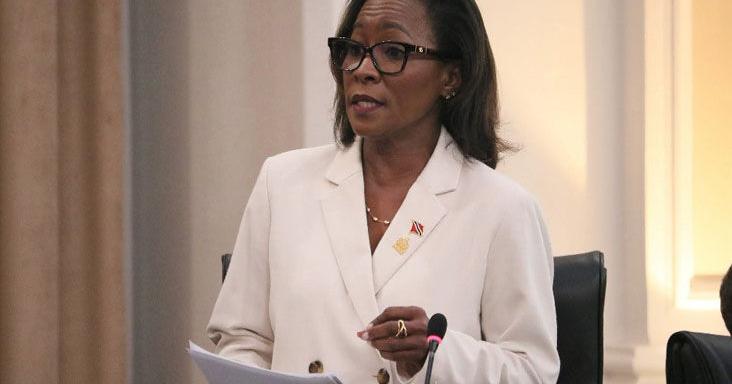
Independent Senator Marlene Attzs shared her position with reporters outside Parliament on Wednesday, noting that she would not commit to supporting the government’s reintroduced legislation until she reviews what modifications the administration has made to the draft text. During the bill’s last parliamentary iteration, more than 50 amendments were submitted by lawmakers, nearly half of which originated from the independent senate bench. Attzs’ own proposed changes were crafted to strike a deliberate balance between two core national priorities: the government’s urgent push to curb the country’s rising violent crime rate, and the protection of fundamental civil liberties, governmental transparency, and legislative accountability.
On the previous iteration of the bill, the governing party refused outright to consider any crossbench amendments, a point Attzs did not shy away from recalling. Still, she says she holds cautious optimism that the revised draft will incorporate at least some of the crossbench’s proposed safeguards for how ZOSO powers are deployed by law enforcement.
Addressing the critical need for coordinated action on crime, Attzs emphasized that the national security crisis demands a collective response from all parliamentary blocs, rather than unilateral action from the governing party. “We’re hoping that this time around, as we collectively try to deal with the issue of crime in the country, that some of those amendments are taken on board and given consideration so that collectively we can address this issue that is facing the country,” she said.
When asked if she would be willing to compromise on any of her proposed amendments ahead of the bill’s introduction, Attzs declined to pre-judge the government’s revised text. She noted that she will assess the new draft in its full context once it is officially tabled, and declined to assume it will retain the exact same structure and content as the earlier, unrevised version.
Among the core unresolved questions the amendments seek to clarify is the methodology for designating areas as official Zones of Special Operations. Attzs pointed out that the draft legislation lacks clear guidance on what criteria and data are used to draw ZOSO boundaries, a fundamental policy gap that independent lawmakers intend to raise during parliamentary debate once the revised bill is officially introduced.
The conversation also turned to lingering tensions from a past controversy: Prime Minister Kamla Persad-Bissessar’s earlier claim that some unnamed senators had offered to exchange their votes on the bill for political favors. When asked if independent senators remain concerned by the accusation, Attzs noted that a significant period of time has passed since the claim was made, and no public evidence has been presented to substantiate it. Echoing a common line from the country’s political leaders, she added that if any evidence of improper activity exists, those making the claim should bring it to law enforcement for investigation, noting that positions on the controversy have softened in the absence of proof.