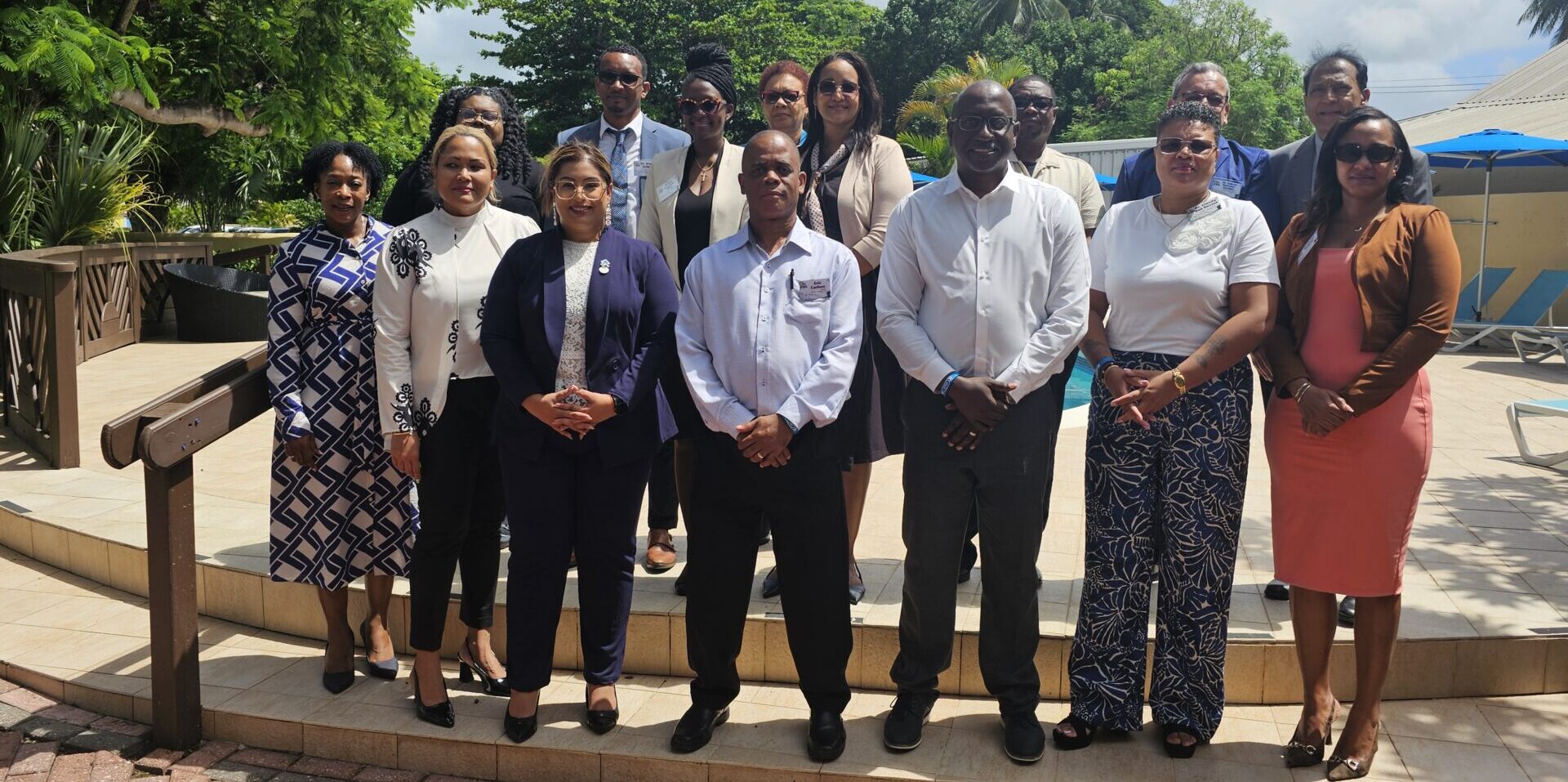
Against the ongoing global focus on strengthening post-pandemic health infrastructure, public health laboratory leaders and specialists from across the Caribbean have convened in Bridgetown, Barbados, for a three-day strategic workshop focused on shoring up regional capacity to detect and respond to emerging health threats faster.
Hosted by the Caribbean Public Health Agency (CARPHA), the 11th annual meeting of the Caribbean Public Health Laboratory Network (CariPHLN) ran from September 8 to 10, 2026, as a hybrid event, with funding provided by CARPHA’s Pandemic Fund grant. In total, 26 laboratory directors took part alongside CARPHA staff, public health professionals and regional stakeholders. Eleven of the participating directors attended in person, representing Aruba, The Bahamas, Barbados, Belize, Curaçao, Dominica, Guyana, Jamaica, Saint Lucia, Saint Vincent and the Grenadines, and the Turks and Caicos Islands. The remaining 15 directors joined remotely from Anguilla, Antigua and Barbuda, Bermuda, the British Virgin Islands, Bonaire, the Cayman Islands, Grenada, Haiti, Montserrat, the Netherlands, Saint Kitts and Nevis, Sint Maarten, Suriname, and Trinidad and Tobago. Specialists from CARPHA’s Medical Microbiology Laboratory (CMML), which operates across the agency’s three regional campuses, also contributed to the discussions.
In her opening address to the workshop, CARPHA Executive Director Dr. Lisa Indar emphasized that robust, interconnected laboratory systems are non-negotiable for protecting collective regional health security. “Public health laboratories remain one of the most critical foundations of regional health security,” Dr. Indar stated, highlighting the core functions these facilities perform: from detecting dangerous pathogens and confirming outbreaks to tracking antimicrobial resistance, disseminating reliable public health data, and ensuring safe transport of diagnostic specimens.
Dr. Gabriel M. Gonzalez Escobar, Assistant Director of Surveillance, Disease Prevention and Control and head of the CMML, noted that the annual gathering fills a critical gap for Caribbean laboratories, creating a structured space to share on-the-ground experiences and align efforts to strengthen collective regional systems.
A central theme of this year’s workshop was turning laboratory-generated data and insights into faster, more effective public health intervention. Attendees conducted in-depth reviews of current regional laboratory capacity, protocols for specimen submission and transport, and opportunities to streamline cross-border data sharing.
Participants also gained expanded familiarity with two key CARPHA tools designed to boost regional response capacity: the Regional Integrated Early Warning Surveillance and Response System (RIEWSS), which aggregates data from multiple surveillance sources to enable earlier threat detection and coordinated cross-border action, and SENAITE, a cloud-based Laboratory Information Management System that streamlines laboratory workflows, centralizes data management and facilitates secure information exchange between facilities.
Other key topics on the agenda included monitoring and addressing antimicrobial resistance, improving tuberculosis testing and surveillance, strengthening preparedness for measles and other vaccine-preventable diseases, implementing rigorous biorisk management standards, refining specimen referral and transport networks, upgrading laboratory information infrastructure, and integrating real-world laboratory data into evidence-based public health policy making.
Attendees also shared national case studies of outbreak response and capacity building initiatives, and collaborated to map out concrete, actionable next steps for the CariPHLN network to advance collective goals.
This year’s workshop builds on steady progress made since the 2025 meeting, including more frequent executive meetings for the network, renewed activity from the CariPHLN Technical Advisory Group, the launch of a dedicated antimicrobial resistance (AMR) Technical Advisory Group, and advances across multiple priority areas: regional diagnostic capacity, emergency preparedness, laboratory worker training, technical standard harmonization, specimen referral networks, cross-border data sharing, and communication between CARPHA member states.
CariPHLN functions as CARPHA’s flagship regional network designed to connect national laboratory leaders, expand access to specialized and referral testing, align regional quality standards, and coordinate joint action on shared health threats. Moving forward, CARPHA confirmed it will continue leveraging the network to build more resilient, interconnected laboratory systems across the region, with the ultimate goal of enabling earlier threat detection, faster emergency responses, and stronger overall health security for all Caribbean nations and territories.