SANTO DOMINGO — Facing growing threats to legitimate smallholder farmers and national agricultural output, the Dominican government has activated a coordinated cross-agency protocol to respond to illegal invasions and unauthorized occupations of land allocated under the country’s Agrarian Reform initiative. The policy action is rooted in a core priority: shoring up legal property certainty for working farmers and safeguarding ongoing domestic agricultural production.
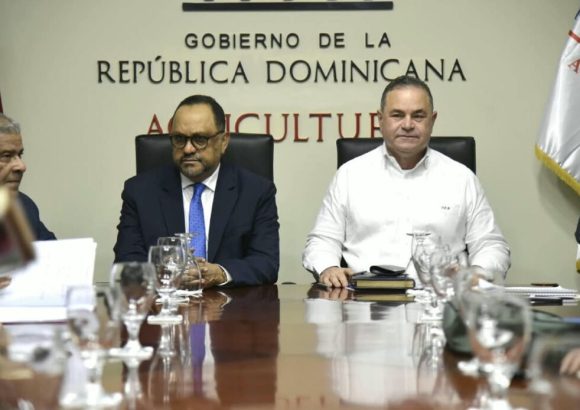
The framework was finalized during a high-level working meeting hosted by the Ministry of Agriculture, bringing together top leadership from across the Dominican government and key representatives from the nation’s largest peasant farmer organizations. Attendees included Justice Minister Antoliano Peralta, Agriculture Minister Francisco Olivo Espaillat, and Darío Castillo Lugo, director of the Dominican Agrarian Institute (IAD), the government body tasked with overseeing agrarian reform land holdings.
To lay the groundwork for targeted action, authorities will first conduct a comprehensive baseline survey of affected regions. This survey will inform the development of a structured, multi-pronged intervention plan aligned with legal, technical, and operational standards. Five priority areas have already been flagged for immediate review: Mogollón in San Juan de la Maguana, Villa Riva, Montecristi, Monte Plata, and Villa Altagracia.
According to official accounts gathered from on-the-ground farmer reports, parties seeking to seize control of productive agricultural land often leverage third-party intermediaries and false claims of ties to legal or governmental institutions to forcibly displace farmers who hold legitimate claims to the property. Peasant farmer organizations have repeatedly warned that these illegal encroachments destabilize the property rights of producers who have worked and maintained the land for decades, creating volatile social environments that can escalate into violent conflict and put the lives and safety of legitimate farmers at direct risk.
A core component of the new protocol is the establishment of a permanent inter-institutional technical commission tasked with addressing ongoing land disputes. This body will be responsible for documenting all reported cases of illegal occupation, conducting formal assessments of the legal and territorial status of each contested plot, and recommending proportional, law-aligned responses to resolve conflicts. Where eligible, the commission will also work to identify pathways to formal land regularization and issue definitive property titles to legitimate holders, resolving longstanding ambiguities that leave plots vulnerable to seizure.
Justice Minister Peralta emphasized that all government interventions will adhere strictly to due process standards and existing Dominican legal frameworks, with the dual goals of protecting the fundamental property rights of legitimate producers and preserving land that is formally zoned for agricultural development. “We will not act outside the bounds of the law, but we will not stand by while lawful producers are displaced from their land,” Peralta stated in essence.
Agriculture Minister Olivo Espaillat underscored the direct link between secure land tenure, consistent agricultural output, and the Dominican Republic’s national food security. “These lands were set aside with a clear purpose: to grow food for our people and generate sustainable well-being for rural communities across the country,” he said. “We will advance every necessary action to ensure that purpose is fulfilled.”
Long-term oversight is built into the new protocol, with ongoing monitoring mechanisms that bring together the Ministry of Justice, Ministry of Agriculture, IAD, and continuing participation from peasant farmer organizations to track progress and address new cases as they emerge. Government officials stressed that all measures, from resolving current illegal occupations to preventing future encroachments, will remain aligned with national law and due process protections for all parties.