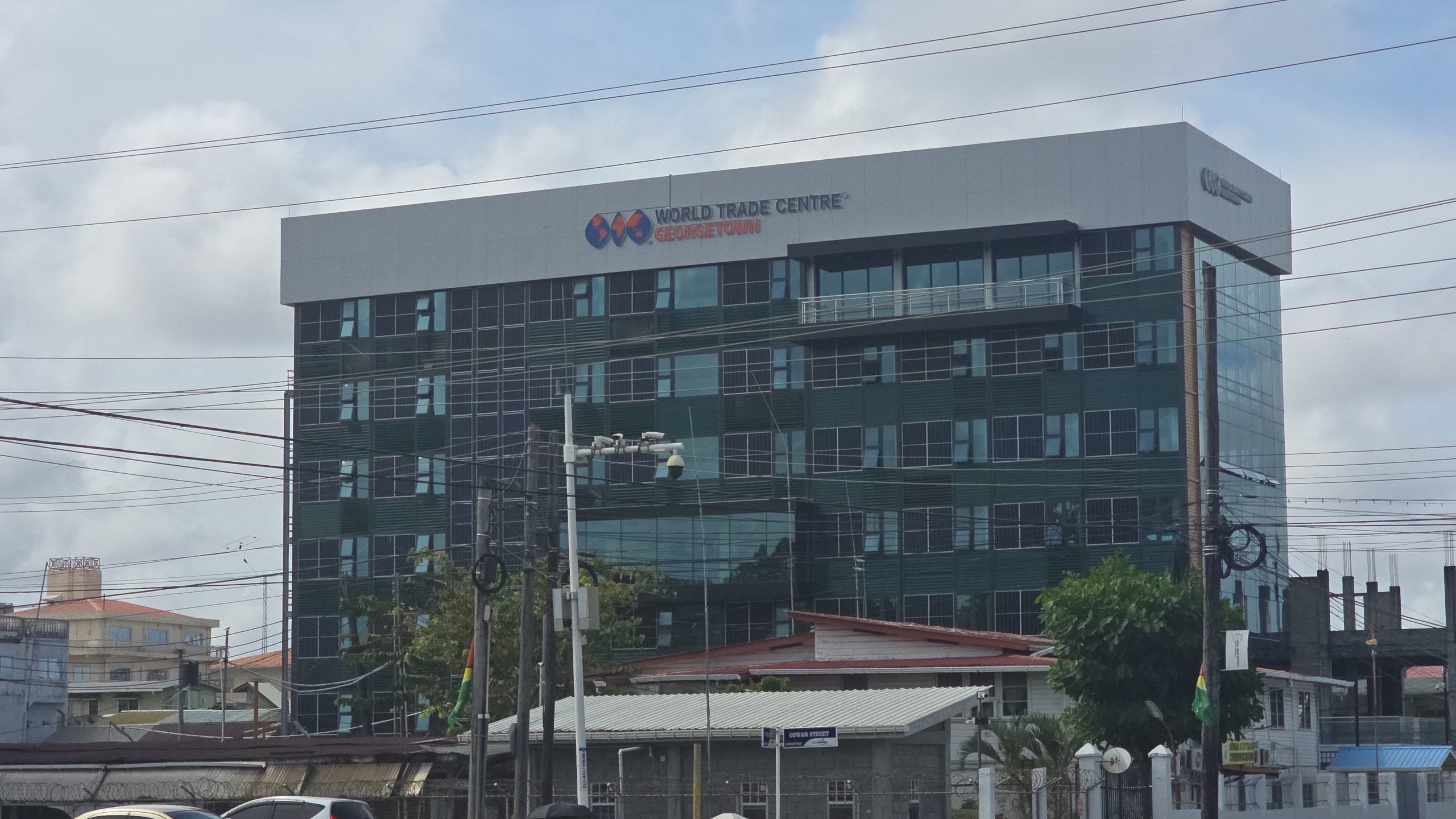
Georgetown’s World Trade Centre (WTCG) has announced that its upcoming annual International Trade and Investment Conference, scheduled for October 19 to 23 in Guyana, will dedicate a flagship session to examining how artificial intelligence reshapes competitiveness and growth for small, open developing economies. The announcement was made publicly by WTCG on Saturday, following preliminary stakeholder discussions held earlier this month.
The special session, titled “AI, Trade and the Future Competitiveness of Small Economies,” is designed to cut through widespread industry hype surrounding generative and advanced AI, and deliver practical, context-specific analysis for local and regional stakeholders. Unlike broad global AI dialogues that often overlook the unique needs of small developing nations, the session will directly explore what AI adoption means for on-the-ground actors across Guyana and the wider Caribbean: from small-scale export producers and domestic manufacturers to family-owned agricultural operations, regional financial institutions and cross-border logistics providers.
Ahead of the main conference, WTCG organized a closed-door informal roundtable to map out key risks and opportunities for CARICOM member states, including Guyana, which is currently experiencing one of the fastest economic growth rates in the Western Hemisphere. Attendees reached a clear consensus: while the risks posed by unregulated AI are tangible, small developing economies cannot afford to slow or resist AI integration. Instead, they argue that countries like Guyana should accelerate responsible AI adoption, while simultaneously investing in critical safeguards: robust cybersecurity infrastructure, risk management frameworks, and institutional capacity to govern emerging AI tools.
WTCG Executive Director Wesley Kirton, who is currently preparing to represent the organization at the Food and Beverage Show of Americas opening Monday at Miami Beach Convention Center, outlined three core risk categories identified during the roundtable discussion. These include immediate malicious misuse of AI tools by bad actors, widespread structural economic disruption that could displace existing labor and industries, and the long-term risk of losing human oversight over highly advanced autonomous AI systems. Citing the 2026 Global AI Safety Report, which highlights the growing emergence of fully autonomous AI agents that can operate without any human input, roundtable participants acknowledged that these risks cannot be ignored.
Despite these concerns, the majority of attendees agreed that AI offers transformative cost-saving benefits that can help small economies overcome longstanding structural disadvantages in global trade. For example, AI tools can dramatically streamline routine trade processes from market research and competitor analysis to tariff calculation, export documentation preparation and consumer demand forecasting. These efficiency gains cut overhead costs for small and medium-sized enterprises that often lack the resources of large multinational corporations, leveling the playing field for small producers looking to access global markets.
Following the roundtable, a dedicated working group has been convened to develop a comprehensive policy paper, titled “AI and the Future of Guyana and CARICOM: Threat, Opportunity or Both?”, which will be presented as a foundational discussion document at October’s main conference. Kirton emphasized that Guyana’s ongoing rapid economic transformation creates a unique window of opportunity to embed AI into growing sectors, allowing the country to leapfrog traditional development barriers that have held back many small developing economies for decades.