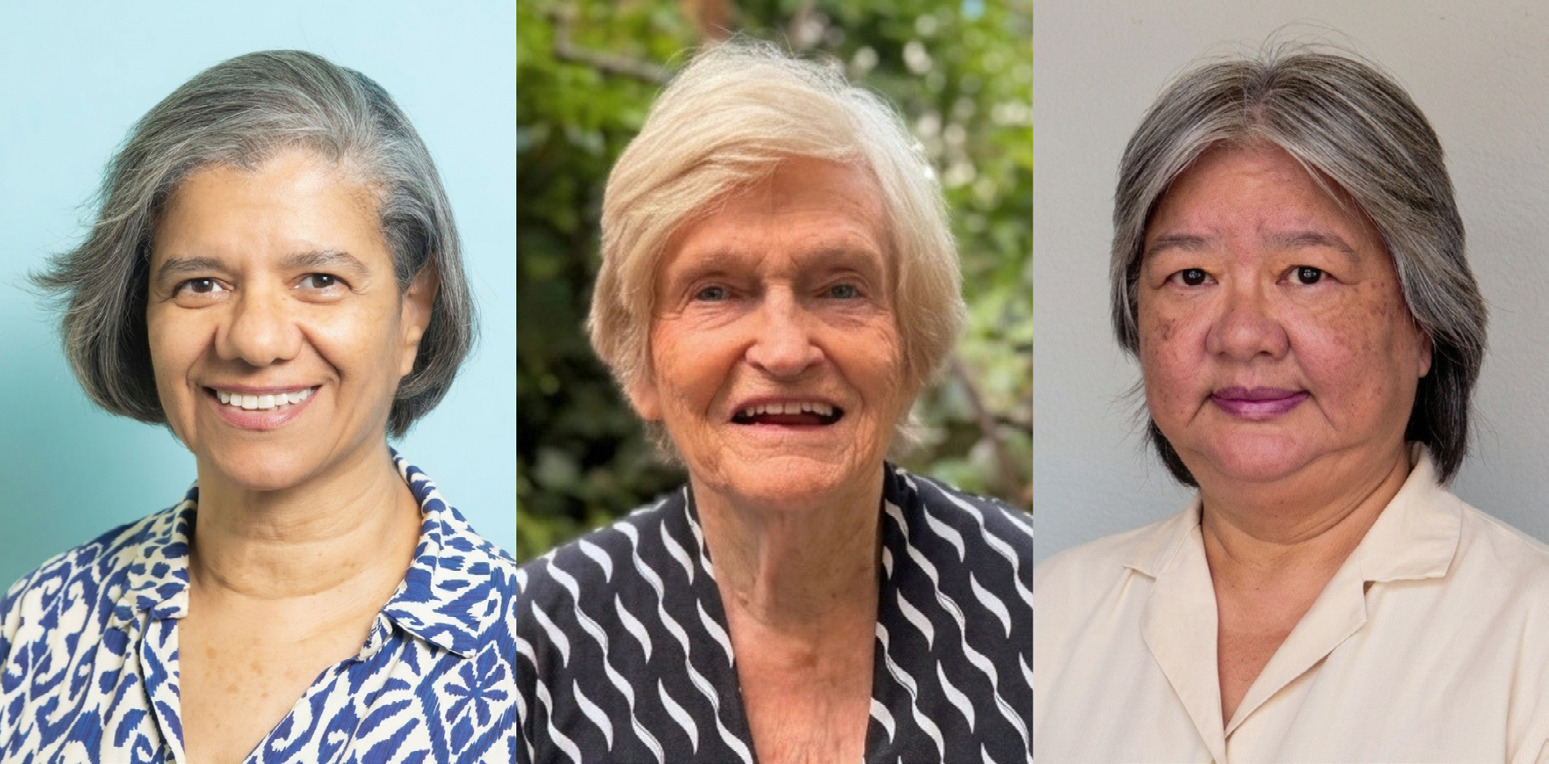
Three pioneering researchers, two affiliated with the University of the West Indies (UWI), have been honored as 2026 Yidan Prize laureates for Education Development, one of the most prestigious recognitions in global education. The award celebrates more than 30 years of groundbreaking work that has fundamentally reshaped global approaches to understanding and advancing early childhood development across the world.
Professor Susan P. Walker, an Emeritus Professor of Nutrition at UWI’s Caribbean Institute for Health Research (CAIHR), and Dr. Susan M. Chang-Lopez, Senior Lecturer at CAIHR, share this year’s award with their long-time collaborator Sally Grantham-McGregor, Emeritus Professor at University College London. Grantham-McGregor has deep institutional ties to UWI: she began working at the University Hospital of the West Indies in 1967, later joined UWI’s Tropical Metabolism Research Unit, and departed as a full professor in 1995.
The three researchers earned the award for developing Reach Up, an evidence-based, scalable early childhood intervention program that originated from a 1986 research study in Jamaica and has since expanded to reach hundreds of thousands of children from low-income, vulnerable households across 21 countries in Latin America and the Caribbean, Africa, Asia, and the Middle East. The program is currently scaling up its operations in Brazil, where it will eventually serve 1.5 million children.
Dorothy K. Gordon, head of the Yidan Prize Judging Panel for Education Development, made the official announcement of the 2026 laureates, noting that their decades of work have reshaped global education by producing some of the most robust empirical evidence to date linking early cognitive stimulation, pre-primary learning, and long-term life outcomes. Gordon pointed out that a primary barrier to healthy child development for children growing up in poverty is the lack of access to early learning opportunities at home and limited enrollment in pre-primary education. She commended the laureates for their open willingness to share their research findings and intervention techniques with the global community.
According to Gordon, the practical innovation embedded in the Reach Up program, paired with the strong international network of partner institutions that supports its implementation, demonstrates how lasting, equitable change can be achieved through the combination of rigorous empirical evidence, cross-border collaboration, and local leadership.
Reach Up delivers low-cost, practical, culturally adaptable solutions that build caregivers’ capacity to provide developmentally appropriate stimulation for children between the ages of 0 and 4. Its learning activities are integrated into everyday household routines, empowering caregivers to foster the knowledge, social skills, and confidence children need to communicate, play, and interact in ways that support healthy cognitive development. Delivered through existing local networks of health, social protection, education, and humanitarian systems, all of Reach Up’s curricula and resources are available for free, and the program undergoes continuous evaluation and adaptation to maintain its effectiveness across diverse regional contexts.