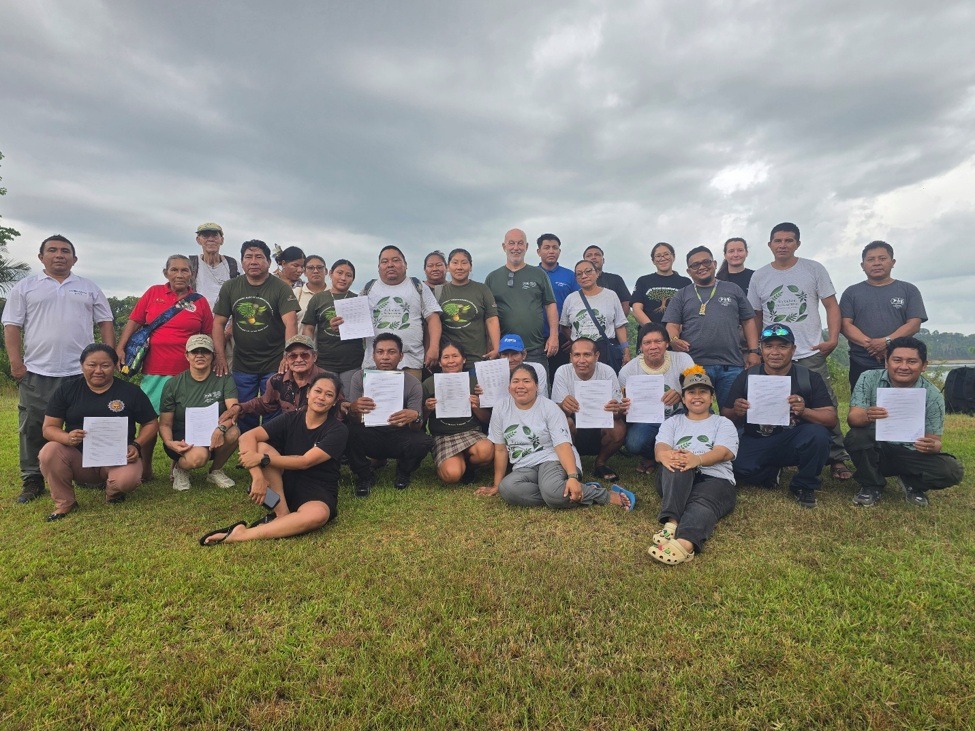
In a historic step toward cross-border collaboration and the preservation of Indigenous medicinal heritage, traditional healers and knowledge holders from Guyana, Suriname, and Brazil have officially launched the first-ever Regional Traditional Knowledge and Healers Network during a four-day gathering held September 8-11, 2026 at Guyana’s Iwokrama River Lodge.
Hosted by the Iwokrama International Centre for Rainforest Conservation and Development (IICRCD) in partnership with the Amazon Conservation Team Guianas (ACT Guianas), the gathering brought together representatives from Indigenous communities across the three Amazon nations to share expertise on traditional healing practices, medicinal plant knowledge, and culturally rooted health approaches. In a statement following the launch, IICRCD expressed its full support for the new network, noting its commitment to building a cohesive regional platform that amplifies Indigenous voices and advocates for the formal integration of traditional medicinal knowledge into national public health systems.
The gathering built on two prior cross-border knowledge exchange events, with participants working to formalize the network’s core structure, ethical frameworks, communication protocols, and advocacy agenda. A key outcome of the meeting was the opportunity for Guyana and Suriname to learn from Brazil’s two decades of experience integrating traditional healing into public health. Brazil’s Unified Health System (SUS) established a dedicated Indigenous Health Subsystem in 1999, and its national policy recognizes medicinal plants and phytotherapy as legitimate complementary health practices – a model that participants agreed could offer valuable insights for neighboring countries seeking to formalize their own approaches to Indigenous health.
ACT Guianas, the nonprofit organization that facilitated the meeting, has expanded its regional mandate over more than 20 years of work across the Guiana Shield and Amazon regions. Operating under a biocultural framework that ties forest health to community wellbeing, ACT Guianas supports the intergenerational transmission of traditional healing knowledge through its Traditional Healers and Apprentices Program. The organization coordinates cross-border collaboration, secures funding, and facilitates dialogue with governments and formal healthcare institutions, while upholding the principle that full authority over traditional knowledge remains with the Indigenous healers and communities that steward it.
The proceedings opened with a spiritual cleansing ritual led by Adele John, a young apprentice from Guyana’s Surama Village. Following the opening ceremony, participants engaged in forest immersion activities in the woodlands surrounding Iwokrama River Lodge and breakout working sessions to develop a three-year strategic roadmap for the network. Key objectives achieved during the gathering included the exchange of best practices among healers from all three countries, a collective review of lessons learned from four years of cross-border exchanges, and a commitment to strengthening the ethical practice and public credibility of traditional healing across the region. Participants also explored pathways to secure formal government recognition and eventual integration of traditional healing practices into national health systems.
The Iwokrama International Centre, established in 1996 through a joint mandate from the Government of Guyana and the Commonwealth Secretariat, manages 371,000 hectares of protected rainforest as a model for balanced conservation, community benefit, and sustainable economic development. Zoned into a Sustainable Utilization Area and a Wilderness Preserve, Iwokrama serves as a living laboratory for testing innovative forest management models that deliver ecological, economic, and social value for local communities and the global community. Twenty local communities, totaling approximately 7,000 people, participate in Iwokrama’s co-management framework, sharing benefits from sustainable timber, ecotourism, and research activities, while leading researchers conduct long-term studies on climate change impacts and ecosystem service valuation. ACT Guianas and Iwokrama both note that the new regional network aligns with their shared mission of protecting biocultural diversity, strengthening Indigenous self-determination, and advancing equitable collaboration between traditional knowledge holders and formal institutional partners.