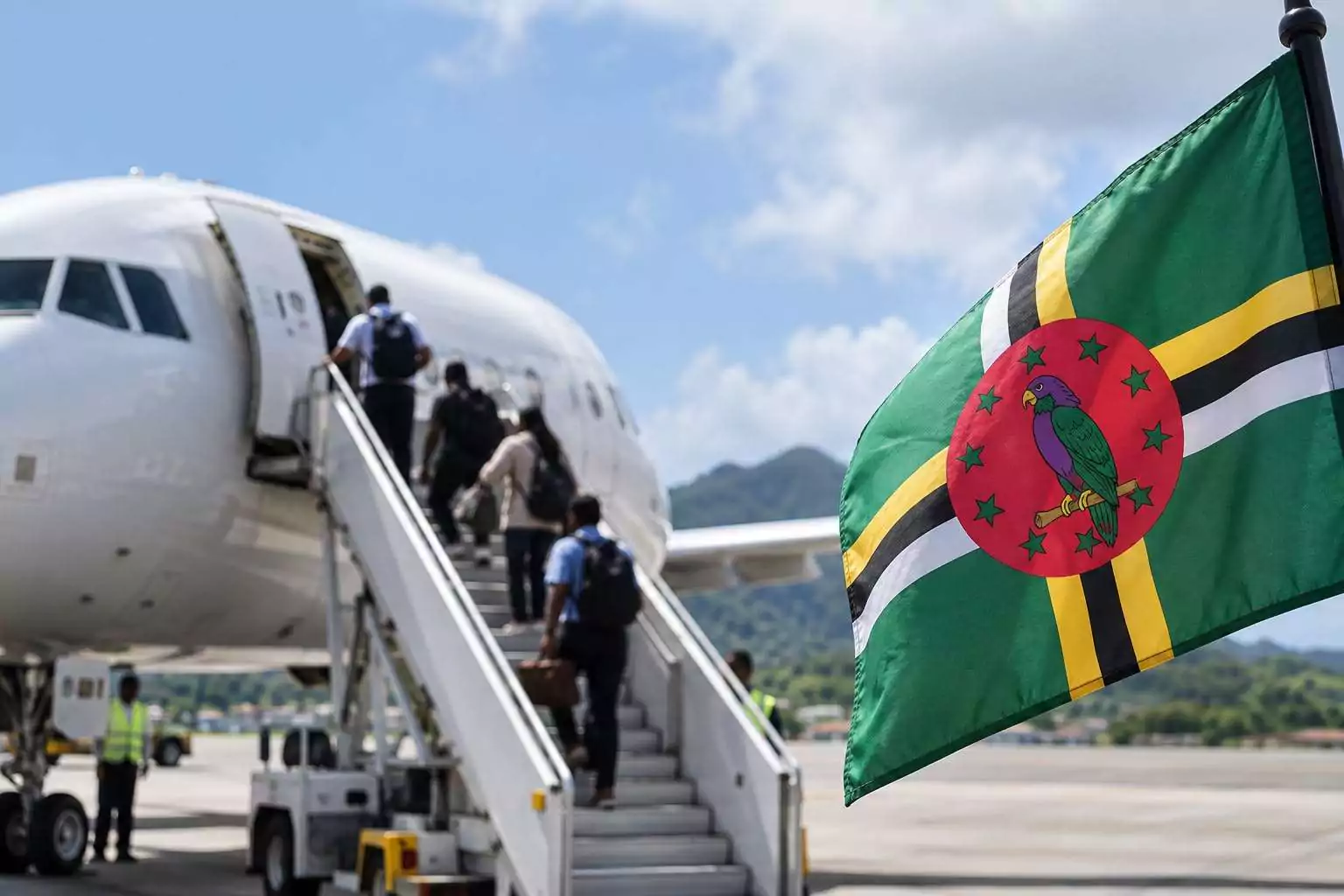
A diplomatic transfer arrangement between the United States and Dominica has reached a key milestone, with five Colombian citizens who were moved to the Caribbean island under a third-country hosting plan having now returned to their home country, local media outlet Dominica News Online has confirmed.
The announcement of the completed process came directly from Dominican Prime Minister Roosevelt Skerrit during a weekly press briefing held Wednesday, where he detailed the step-by-step negotiations that preceded the transfer. According to Skerrit, the Dominican government initially turned down an initial candidate list submitted by US authorities, as local officials required more detailed background information to properly vet each individual before approving their entry.
After US officials submitted a revised second list of candidates, Dominican authorities conducted a thorough review and ultimately selected five Colombian nationals who were found to have no prior criminal convictions. “They came into Dominica, and they’ve all left and returned to Colombia,” Skerrit told reporters, noting that the entire transfer and departure process was wrapped up in a far shorter timeline than initial projections had suggested.
The entire operation was coordinated with logistical support from the International Organization for Migration, while full funding for accommodation, food, and support services during the Colombians’ stay on the island was covered by the US government. Skerrit explained that the five individuals were housed in a local hotel for the duration of their stay, with all basic needs fully met throughout the process.
All five people agreed to move back to Colombia on a fully voluntary basis, Skerrit emphasized. Once the voluntary return agreements were finalized, travel arrangements were made, tickets were purchased, and the Dominican government facilitated a smooth departure process.
In additional remarks Wednesday, Skerrit confirmed that as of the press conference, there are no third-country nationals currently being hosted under the arrangement in Dominica. The formal agreement between the two countries lays out that Dominica may accept between five and seven third-country nationals per quarter, but the Caribbean nation’s government retains full independent discretion to approve or reject any candidate put forward by the United States.
The non-binding agreement also explicitly permits Dominica to reject candidates based on criminal history, and requires US authorities to provide relevant medical and criminal background records for all proposed candidates, where the release of such information is permitted under US law. Either side is able to end their participation in the arrangement at any time, simply by providing formal written notice through diplomatic channels. The agreement also requires that all individuals accepted into Dominica under the plan must be treated in full compliance with Dominica’s Constitution, domestic legislation, and the country’s binding international human rights obligations.