In a press address to global and domestic media on September 7, 2026, Cuban Foreign Minister Bruno Rodríguez Parrilla unveiled the most recent comprehensive assessment of harms inflicted by the United States economic and energy blockade on Cuba, covering the period from March 2025 to February 2026. He emphasized a critical, often overlooked truth: the decades-old blockade is not a distant geopolitical tool, but an unrelenting, daily attack on the fundamental right to life for ordinary Cuban people.
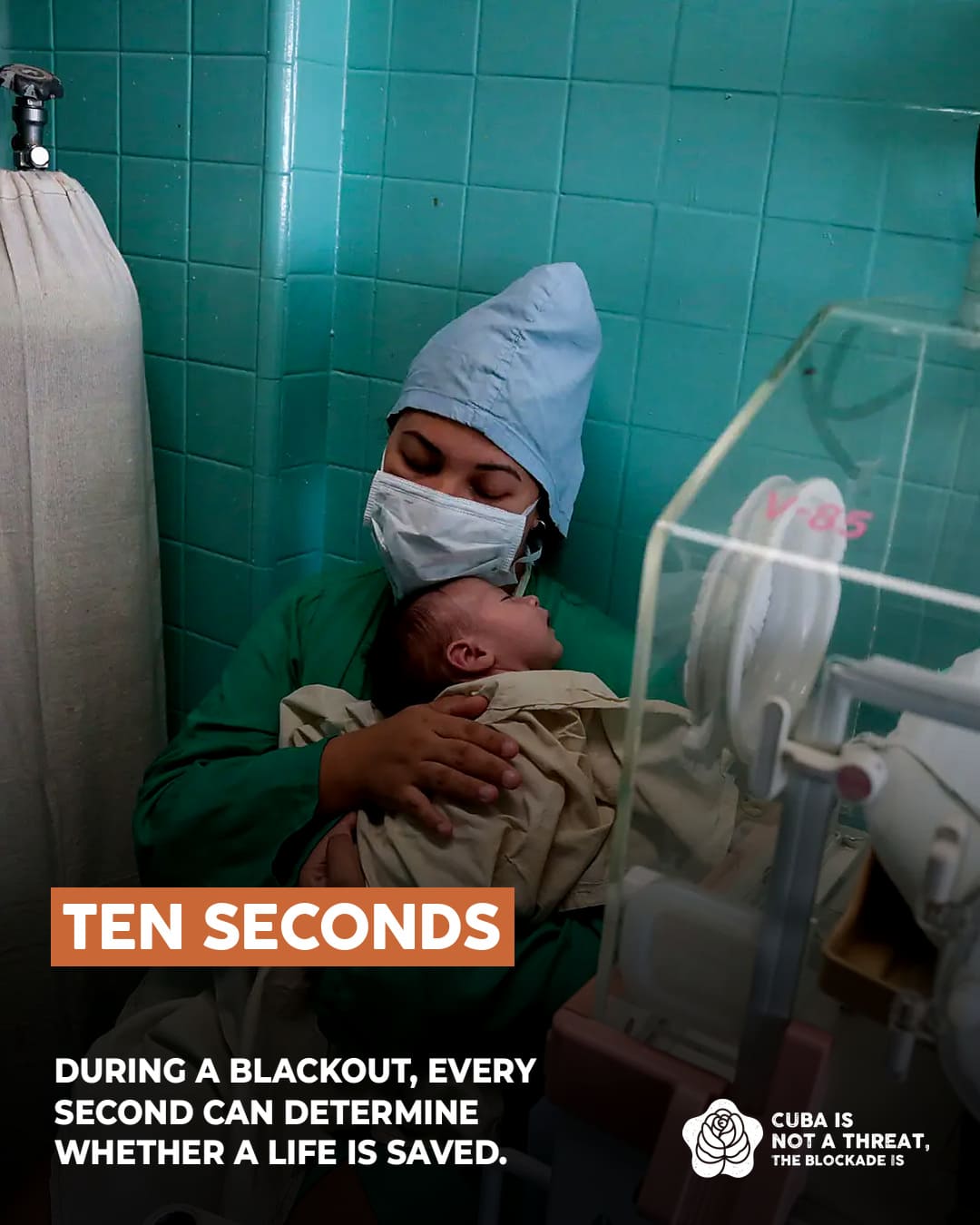
Nowhere is the blockade’s cruelty more pronounced than in the country’s hospitals and clinics, where widespread energy shortages have turned routine care into a life-or-death struggle. Newborns relying on life-sustaining incubators and mechanical ventilators are left exposed during frequent power outages, and medical staff have been forced to manually pump air to keep infants alive when grid and backup systems fail. Surgeons have completed urgent procedures by the dim light of rechargeable flashlights and even cell phone screens, with no alternative available when electricity cuts out mid-operation.
Despite widespread investments in solar infrastructure to shield critical healthcare services, ongoing energy restrictions have crippled hospital operations across the island. Ambulance fleets lack sufficient fuel to respond to emergencies, dialysis treatment for patients with kidney failure is regularly interrupted, and more than 7,000 shipping containers holding desperately needed medications remain stuck outside Cuban ports, leaving families to endure agonizing searches for scarce life-saving drugs.
Leading Cuban clinicians have shared on-the-ground accounts of this ongoing crisis. Dr. Niurka Moreno Obregón, head of neonatology at a leading Havana hospital, explained that most mechanical ventilators lack backup batteries, leaving staff no choice but to step in when generators fail during blackouts. Dr. Yudmila Rodríguez Verdecia, chief anesthesiologist, recalled high-stakes surgeries carried out under cell phone illumination: “The surgery cannot be stopped. We are plunged into complete darkness, and we keep working.”
The crisis hits children with cancer particularly hard. Each year, between 300 and 400 Cuban children receive a cancer diagnosis, and their survival depends on consistent access to specialized medications and radiation equipment that requires a stable energy supply. For families, this means living in constant fear of treatment interruption. Licet Rodríguez Alonso, the mother of 15-year-old cancer patient Diego, shared her anguish: “Diego is in the middle of radiation, but there’s no fuel for the generators. How will those machines run? If the hospital shuts down, how can I keep my son’s treatment going?”
The cumulative impact of the blockade’s restrictions has left Cuba with a backlog of more than 100,000 patients waiting for life-improving or life-saving surgery, 12,000 of whom are children. Fuel shortages have disrupted cold chain transport for vaccines, leaving more than 30,000 children waiting for scheduled immunizations. An additional 2,888 patients dependent on regular haemodialysis face unstable, interrupted care, as the treatment requires a steady energy supply that the country’s strained grid can no longer guarantee.
Global health and international leaders have increasingly voiced urgent alarm over the humanitarian crisis. On May 7, 2026, World Health Organization Director-General Tedros Adhanom Ghebreyesus stressed that “health must be protected at all costs and must never be left at the mercy of geopolitics, energy blockades, or blackouts.” The UN Resident Coordinator in Cuba has warned that 32,000 pregnant people face elevated risk of complications due to care gaps, while a spokesperson for the UN Secretary-General has echoed deep concern for thousands of cancer patients unable to access life-saving radiotherapy or chemotherapy.
The collected statistics from the report paint a devastating picture of the human toll, with each number representing individual lives and families upended by the blockade. The island’s infant mortality rate has jumped from 4 deaths per 1,000 live births in 2018 to 9 deaths per 1,000 live births in 2025, a 148% increase. Of the 395 essential pharmaceuticals classified as critical for public health, 300 are currently unavailable across the country. Childhood and youth cancer survival rates have plummeted from 85% a decade ago to just 65% in 2025.
Beyond the public health system disruptions, the US blockade actively blocks Cuba from purchasing a wide range of life-saving advanced medications from major international pharmaceutical manufacturers. These include common first-line cancer treatments such as Pemetrexed produced by Eli Lilly, Palbociclib from Pfizer, Brentuximab vedotin from Seattle Genetics, Pembrolizumab from MSD, and Nivolumab from Bristol Myers Squibb. Vital specialized medical equipment for pediatric cardiology and genetic care, including HeartMate 3 and PediMag cardiac pumps for children with severe congenital heart conditions, also remain inaccessible due to trade restrictions.
Even basic diagnostic supplies are blocked: Phytohemagglutinin, a reagent critical for routine neonatal genetic testing, cannot be imported, forcing the suspension of testing and care planning for 140 patients in 2025 alone.
In closing, the report frames the blockade’s disproportionate impact on the most vulnerable segments of Cuban society — newborns, sick children, elderly patients, and low-income families — as having a clear genocidal character. Behind every statistic is a human story: an infant fighting for breath when a ventilator fails, a birthing mother delivering in total darkness, a family watching a loved one suffer without access to affordable treatment, and a clinician working against all odds to save a life with insufficient tools. The blockade is not an abstract policy debate: it is collective punishment inflicted on an entire people, and its cost is measured in human lives.