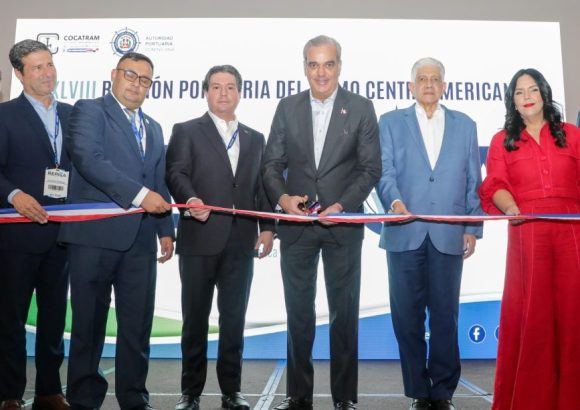
As the Dominican Republic works to solidify its position as a leading logistics and cruise tourism hub for the Caribbean and Central America, national leaders kicked off the 48th Central American Isthmus Port Meeting (REPICA 2026) in Santo Domingo this week, spotlighting the transformative impact of ongoing port modernization projects on the country’s economic trajectory.
Opening the five-day industry gathering, which runs from September 7 to 11, President Luis Abinader stressed that ports are the foundational backbone of the Dominican Republic’s long-term economic growth, arguing that robust, efficient maritime infrastructure is non-negotiable for expanding cross-border trade and attracting regional investment. “There can be no meaningful economic development without adequate ports, streamlined logistics networks, consistent government investment, and the robust public-private partnerships our administration has prioritized,” Abinader told attendees.
The president outlined the country’s aggressive pipeline of port development initiatives, ranging from newly completed upgrades to groundbreaking projects that are still underway. Key projects highlighted include the new construction of the Port of Pedernales, the expansion of the existing Port of La Romana, the upcoming grand opening of the Port Samaná, and comprehensive modernization work at the Port of Manzanillo.
Alejandro Campos, executive director of the Dominican Port Authority (APORDOM), expanded on the tangible benefits of these infrastructure investments, detailing how port upgrades have already driven growth across tourism, trade, and employment sectors. Campos noted that when the Dominican Republic last hosted REPICA in 2018, the country operated just three cruise terminals and welcomed roughly 1 million cruise tourists annually. Today, that number has jumped to six fully operational cruise ports, with annual cruise visitor volume surging to nearly 3 million, marking a dramatic expansion of the country’s maritime tourism economy.
Beyond tourism, the national Port Modernization Master Plan is projected to generate more than 10,000 new jobs across the country, Campos reported. In Cabo Rojo, Pedernales, development of the new port has already created more than 300 direct jobs and close to 1,000 indirect roles for local workers. Upgrades to the Arroyo Barril terminal in Samaná, meanwhile, are expected to generate between 1,000 and 1,500 additional direct jobs once completed.
Campos added that the government’s strategic vision balances economic growth with environmental stewardship: beyond establishing the Dominican Republic as a top regional cruise and logistics hub, the plan prioritizes enhanced connectivity, improved global competitiveness, and proactive protection of the country’s vulnerable coastal ecosystems and natural resources.
Hosted by the Central American Commission of Maritime Transport (COCATRAM) in partnership with APORDOM, REPICA 2026 brings together senior port authority leaders, transportation policymakers, maritime industry executives, and other key stakeholders from eight regional markets: Belize, Guatemala, El Salvador, Honduras, Nicaragua, Costa Rica, Panama, and the Dominican Republic. Over the course of the conference, attendees will collaborate on discussions covering pressing industry topics including emerging port technologies, sustainable operational practices, infrastructure financing, operational efficiency, innovation in maritime logistics, and modern port governance frameworks.