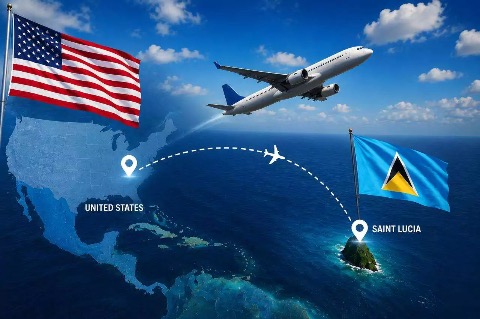
The Caribbean nation of Saint Lucia is on the cusp of a significant milestone this week, as it prepares to receive its first group of six non-US, non-Saint Lucian migrants under a widely debated two-year migration pilot program forged with the United States. The inaugural group, composed of five men and one woman, will mark the formal shift of the agreement from months of planning to active implementation, though details of their national identities remain undisclosed as of press time.
The terms of the bilateral arrangement lay out clear parameters for transfers: US migration authorities are permitted to put forward up to 10 prospective migrants per quarter, equaling a maximum of 40 new arrivals annually. Crucially, the Saint Lucian government holds final authority to vet every individual candidate and reject any application it deems unsuitable. To safeguard the island’s security and public interests, strict eligibility criteria exclude unaccompanied minors, citizens of Saint Lucia, and individuals with documented criminal histories, with only minor immigration-related offenses excluded from this ban.
As the first migrants prepare to land, public anxiety across the country has mounted over key unaddressed questions: where the new arrivals will be housed, what formal legal status they will hold during their stay, and who will ultimately cover the operational costs of the program. In response to growing public pressure, government officials have moved quickly to clarify widespread misinformation, emphasizing that the transferred migrants are not arriving to serve criminal prison sentences, nor will they receive automatic eligibility for permanent residency or Saint Lucian citizenship.
International support for the initiative is being coordinated by the International Organization for Migration, which will provide logistical and social support to participants. A core component of the program’s design is the option for voluntary return to each migrant’s country of origin once their participation in the pilot concludes.
A major sticking point in negotiations remains the question of funding. The Saint Lucian government has repeatedly maintained that local taxpayers should not be responsible for covering program costs, nor should public resources allocated to Saint Lucian citizens be diverted to support the initiative. It has formally requested full financial assistance from the United States, but talks over funding are still ongoing. Neither the total amount requested by Castries nor the projected overall cost of the pilot has been made public.
With the first group of arrivals just days away, the program now faces intensified public and political scrutiny. Observers across the region will be watching closely to assess how the agreement functions in practice, what financial burden it ultimately places on Saint Lucia’s public coffers, and how the government addresses ongoing public concerns about the pilot’s long-term implications.