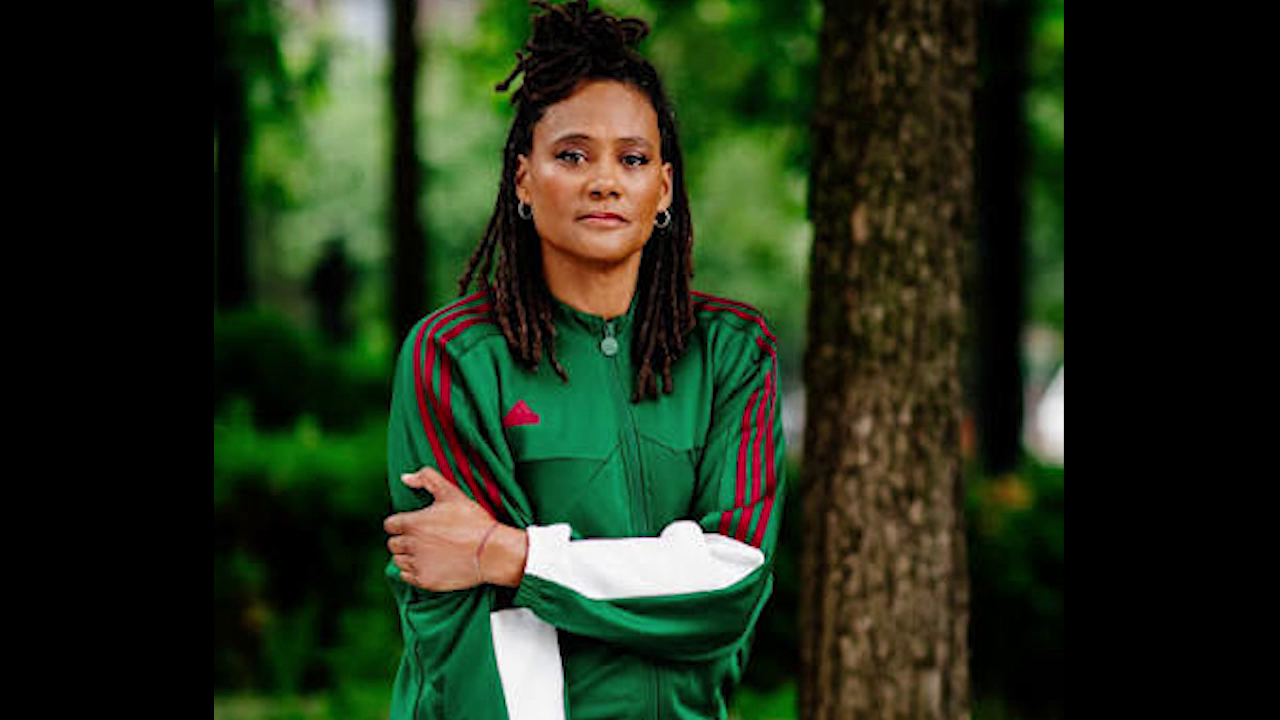
Twenty-six years after a iconic Olympic moment that put Belize in the global sporting spotlight, former track-and-field athlete Marion Jones has returned to her mother’s home country with a clear, urgent call to action: build the systems needed to turn Belize’s raw athletic talent into world championship success.
Jones’ connection to Belize runs deeper than a single race. At the 2000 Sydney Olympics, after claiming gold in the women’s 100-meter event, Jones completed her victory lap carrying both the U.S. flag and the Belizean flag — an unplanned, heartfelt gesture honoring her dual heritage as the daughter of a Belizean-American mother. “When I crossed the finish line, my eye went straight to my mom in the crowd,” Jones recalled of the moment. “My uncle had the Belizean flag with him, and I grabbed it instinctively. Both countries are my home.”
That spontaneous act earned Jones a permanent place in Belize’s national story. When she visited the country two years after the Sydney Games, Belize embraced her as one of its own, and she immediately began giving back: visiting local schools, meeting emerging young athletes, and investing her own money to upgrade substandard community sporting facilities. It was on that first visit that Jones truly understood how deeply Belize claimed her, a bond that would shape her work decades later.
Her life took a devastating turn in 2007, when Jones admitted to using performance-enhancing drugs ahead of the Sydney Olympics and lying to federal investigators. She was stripped of all five of her Olympic medals, served six months in federal prison, and saw her legendary track career end in disgrace. For years, she stayed away from Belize, grappling with the hurt her choices had caused a country that had celebrated her so openly. “One of the hardest parts of that whole experience was knowing I disappointed Belize,” Jones shared. “It hurt me deeply to see the people who loved me let down. I needed time to make amends to myself, to my family, and to come back ready to contribute something good.”
After retiring from professional sport — which included a stint in the WNBA after her track career ended — Jones rebuilt her life as a motivational speaker and sports development consultant. Now, she is back in Belize to headline the country’s first ever National Sports Summit, with a singular mission: to help build a cohesive national strategy that nurtures local talent from childhood to the international podium.
Jones argues that while Belize has no shortage of gifted young athletes, the country lacks the coordinated investment and planning needed to compete on the global stage. “The talent is already here. People have been working hard behind the scenes for decades to develop that talent, but we don’t have a unified plan for sport, funding, coach training, or equipping our coaches to build world-class athletes,” she explained.
Pointing to neighboring small Caribbean nations like Jamaica, the Bahamas, Barbados and Saint Lucia that consistently produce Olympic and world champions, Jones noted their success stems from intentional, cross-sector collaboration. “These countries are similar in size to Belize, but they have a dedicated national strategy for sport,” she said. “We need government, sports federations, the National Sports Council, and the Belize Olympic Committee to all sit down together, acknowledge that what we’ve been doing isn’t working, and build a real plan. No more signing a document and putting it on a shelf — we need actionable, sustained change.”
For many of Belize’s young athletes today, Jones is best known as the name attached to a local sporting stadium, and few witnessed the 2000 Sydney moment that first connected her to the country. But now, after weathering the highest highs and lowest lows of public sporting life, Jones is focused on giving the next generation the opportunities she never had. Through her work at the summit and beyond, she aims to help a new generation of Belizean athletes create their own unforgettable moments on the world’s biggest sporting stages.