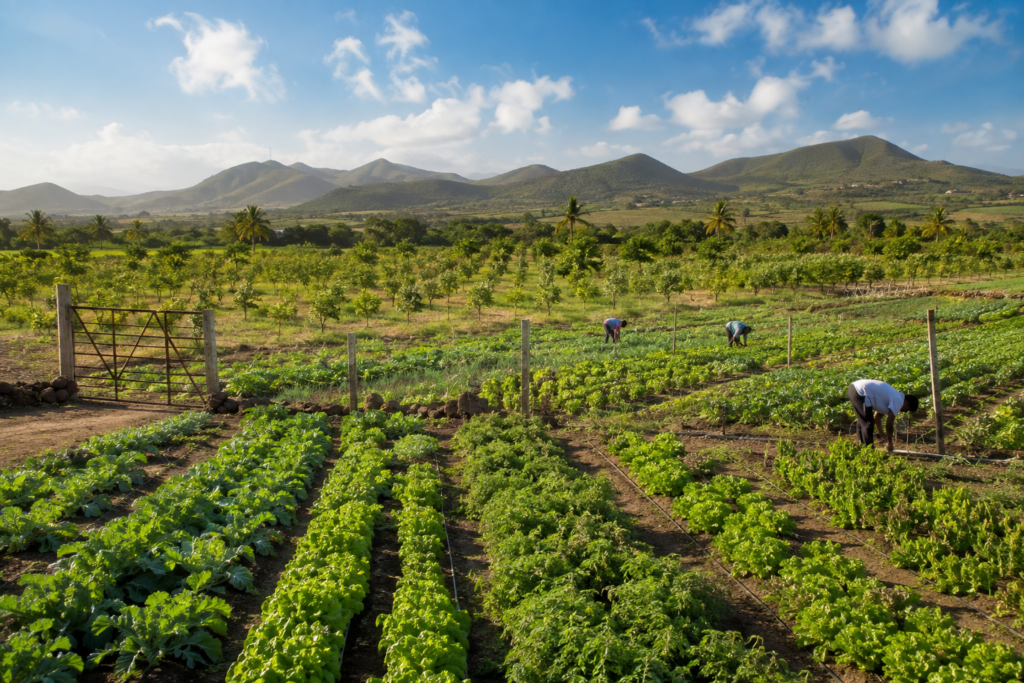
The twin-island nation of Antigua and Barbuda has announced a landmark initiative to preserve its limited but ecologically and economically critical agricultural territory through the establishment of a dedicated farm trust. Facing growing pressure from coastal development, climate-driven coastal erosion, and unregulated land conversion that has steadily reduced available farmland over the past two decades, government officials have framed the trust as a long-term solution to protect the country’s food security and support small-scale local producers.
Under the new framework, the trust will acquire at-risk agricultural parcels, hold them in permanent public ownership, and lease them to qualified local farmers at below-market rates. This model is designed to prevent speculative land buying that drives up prices and pushes working farmers off their land, while also ensuring that greenfield agricultural spaces are never converted to non-farming uses such as luxury resort development or residential construction.
Agriculture ministry representatives note that Antigua and Barbuda currently imports more than 70% of its food supply, a dependency that leaves the nation vulnerable to global supply chain disruptions and volatile international commodity prices. By protecting existing farmland and expanding access for new and emerging farmers, the government aims to boost domestic food production, cut import bills, and create new livelihood opportunities in rural communities.
The initiative also incorporates environmental protections: the trust will require participating farmers to adopt climate-smart agricultural practices, including soil conservation, rainwater harvesting, and reduced synthetic pesticide use, to help mitigate the impact of droughts and hurricanes that are increasingly frequent in the Caribbean region. Funding for the initial phase of the project is being supported by a regional climate adaptation grant from the Caribbean Development Bank, with plans to expand the trust’s land holdings through public-private partnerships in coming years.