Every August 30, the Caribbean island nation of Saint Lucia gathers to honor one of its most cherished cultural traditions: La Woz, the Rose Festival. This vibrant annual gathering is one half of Saint Lucia’s iconic dual flower festival heritage, alongside the La Marguerite Festival, weaving centuries of local custom into modern communal life.
For weeks leading up to the main celebration, community-centered seances (traditional gatherings) are hosted across every corner of the island, building anticipation for the climactic final events: a formal interdenominational church service and the grand Gwan Fete La Woz. Each year, the honor of hosting the main festivities rotates to a different Saint Lucian community; for 2024, that distinction went to Monchy, a quiet coastal district in the Gros Islet region.
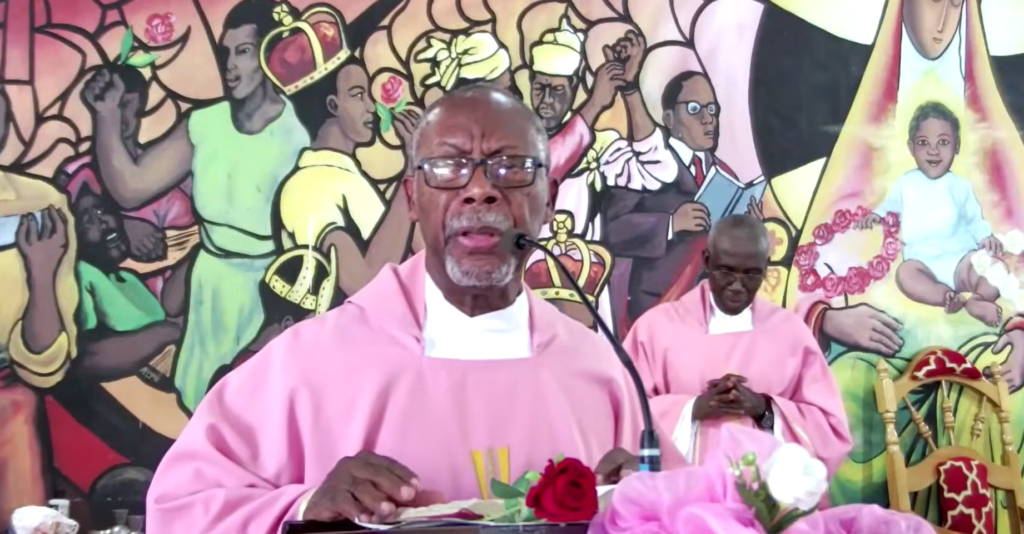
The service, held at Monchy’s St Rose De Lima Church – a sanctuary named for the same patron saint that inspires the festival – was led by chief celebrant Monsignor Patrick Anthony, a native son of Monchy who first served as a parish priest in this very community. During his address, Anthony laid out a long-held vision he has nurtured since the 1970s: to transform La Woz from a rotating regional celebration into a full national flower festival, with Monchy as its permanent geographic and cultural heart.
“I had a vision of Saint Lucia having flower festivals. Saint Lucia should have a big festival of flowers and Monchy should be the centre of that. Viv La Woz!” Anthony declared to the congregation, which included Dr Ernest Hilaire, Saint Lucia’s Minister for Tourism and Culture, and leadership from the island’s Cultural Development Foundation (CDF) – the two bodies Anthony says he is formally presenting his proposal to.
Anthony reflected on the turbulent history of the beloved festival, recalling a period when the Catholic Church excommunicated the celebration over public behaviors deemed inappropriate at the time. He credited late Bishop Charles Gachet for leading the process of reconciliation between the Church and festival organizers, noting that iconic late Lucian visual artist Sir Dunstan St Omer served as the critical bridge between the two groups. St Omer, who was commissioned to create murals for churches across the island, wove both Christian and traditional Lucian cultural symbolism into his work to help heal the rift.
Pointing to the church’s St Omer mural, Anthony highlighted a small but meaningful detail: the wreath held in the infant Jesus’s hands incorporates floral elements from both La Woz and La Marguerite, cementing the festivals’ place in the island’s shared religious and cultural identity. Calling Monchy “Mama La Woz”, Anthony argued that positioning the community as the national festival hub would create unique new tourism draw for the island, comparable to the globally renowned Saint Lucia Jazz festival and beloved national Carnival. He envisions a month-long celebration every August that would draw visitors from across the Caribbean and beyond.
To bring the vision to life, Anthony proposed a simple first step: require every household in Monchy to plant a small rose garden, then host an annual competition awarding $10,000 Eastern Caribbean dollars to the resident with the most beautiful garden. The proposal drew widespread agreement from attendees, with murmurs of approval rippling through the congregation.
Anthony added that Monchy is already rich with untapped cultural potential, pointing to the nearby coastal village of Dauphin – the setting of Nobel Prize-winning poet and playwright Derek Walcott’s first play, *The Sea at Dauphin*. He called on the CDF to launch an annual Walcott theater competition based in Monchy, where local school groups could stage the playwright’s work for visitors and residents alike. “We are sitting on a gold mine, and we are not making use of it,” he emphasized.
Following the formal church service, 2024 La Woz Festival activities shifted to the Monchy playing field, where performance groups from communities across Saint Lucia, plus a visiting troupe from neighboring Martinique, treated attendees to traditional folk songs and dance that carried the celebration late into the day.