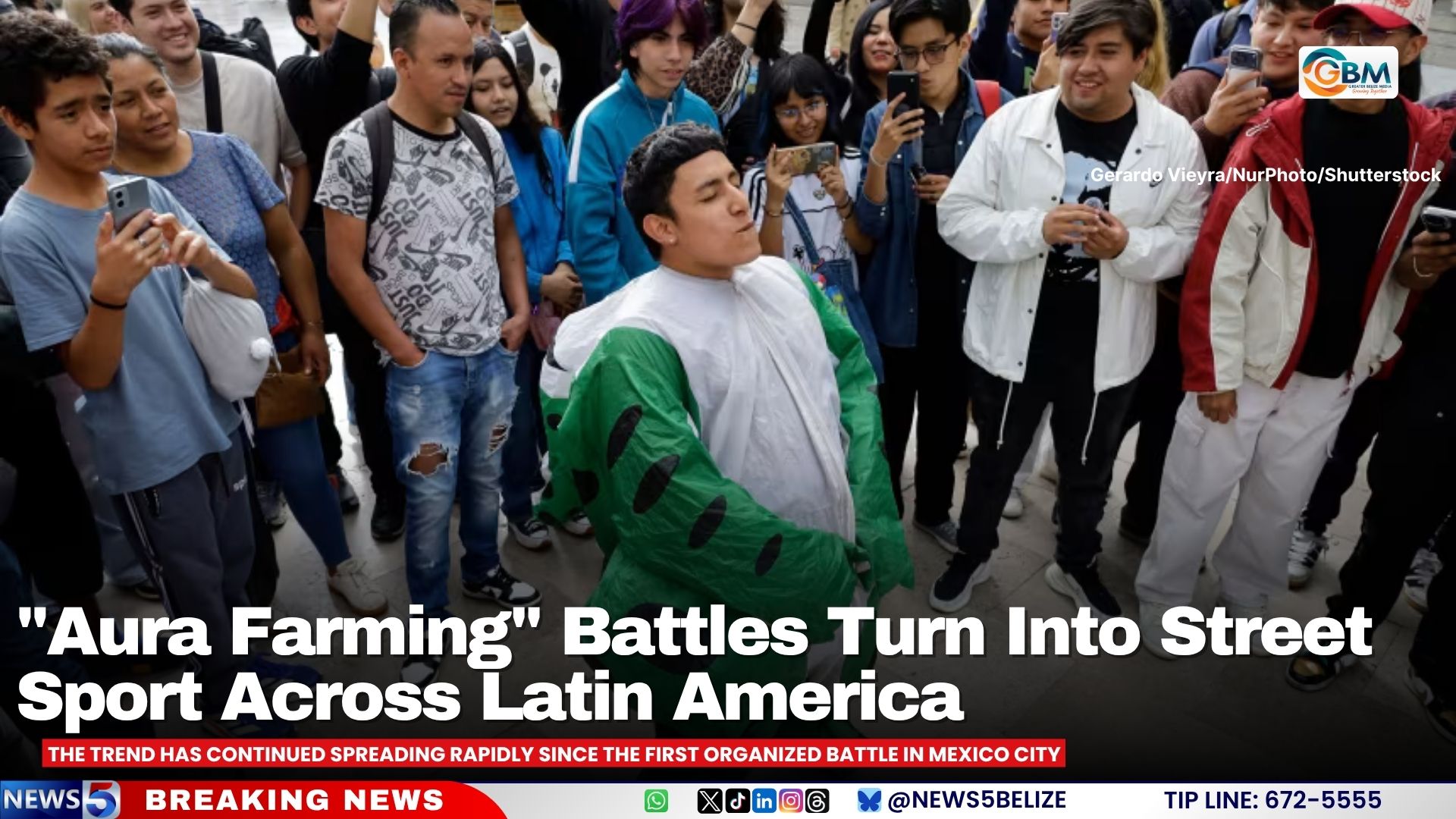
A grassroots street competition born from TikTok culture is rapidly taking over public spaces across Latin America, drawing thousands of young participants and spectators to its unique, rule-free format that prizes personal magnetism over traditional athletic or artistic talent, according to international reports.
Known as aura battles, the unorthodox contests center on one core goal: cultivating an effortless, confident “aura” that resonates with onlookers. Unlike structured sports or performance competitions, aura battles have no official referees, fixed scoring systems, or rigid guidelines. Competitors take turns showcasing carefully understated dances, stylized poses, and dramatic deliberate gestures, with the crowd’s reaction acting as the final judge. Top performers often walk away with small cash prizes, but most participants join for viral social media fame rather than financial reward.
The craze traces its origins to online internet slang called “aura farming,” a term that describes the practice of projecting an effortless cool without appearing to try too hard. The phrase first gained traction online in 2024, but exploded into global mainstream popularity in 2025 following viral clips of 11-year-old Indonesian boy Rayyan Arkan Dikha. Footage of Dikha dancing calmly at the bow of a moving longboat during a traditional race amassed millions of views across social platforms, sparking a wave of “aura farming” edits featuring anime characters, professional athletes, and A-list celebrities.
In recent weeks, the trend has jumped from phone screens to city streets across Latin America. At a recent gathering held at the University of Costa Rica in San José, crowds clustered around competing participants, recording every exchange on their mobile phones to share online. Similar impromptu and organized events have popped up across Mexico, Argentina, and Brazil, most curated by local content creators who design the battles specifically to generate viral social media content.
Frederick Luis Aldama, a humanities professor at the University of Texas who observed an aura battle firsthand in Mexico City’s iconic Parque México, told reporters the trend holds unique appeal for young Latin Americans. He noted that the region has a long-standing cultural tradition of spontaneous public gathering in plazas and community courtyards, making the open-air format of aura battles feel like a natural fit for local communities. Aldama added that he was surprised by how the crowd’s favor leaned into quiet composure rather than over-the-top performance, aligning with the core “aura farming” ethos of effortless cool.
Not all local officials have welcomed the spread of the trend. In the Brazilian city of Cuiabá, Mayor Abílio Brunini blocked a planned aura battle championship from being held in the city’s central public square, claiming participants would eventually regret their involvement in the unstructured event. Despite the official ban, video footage captured dozens of young people holding an impromptu competition outside Cuiabá’s City Hall in July, defying the order to stop the gathering.
Since the first official organized aura battle was held in Mexico City on August 20, 2026, the movement has expanded at an extraordinary pace. Within days of the Mexico City event, comparable gatherings were confirmed in Costa Rica, Argentina, and Brazil, with organizers already planning new events across the region to keep up with skyrocketing youth interest.