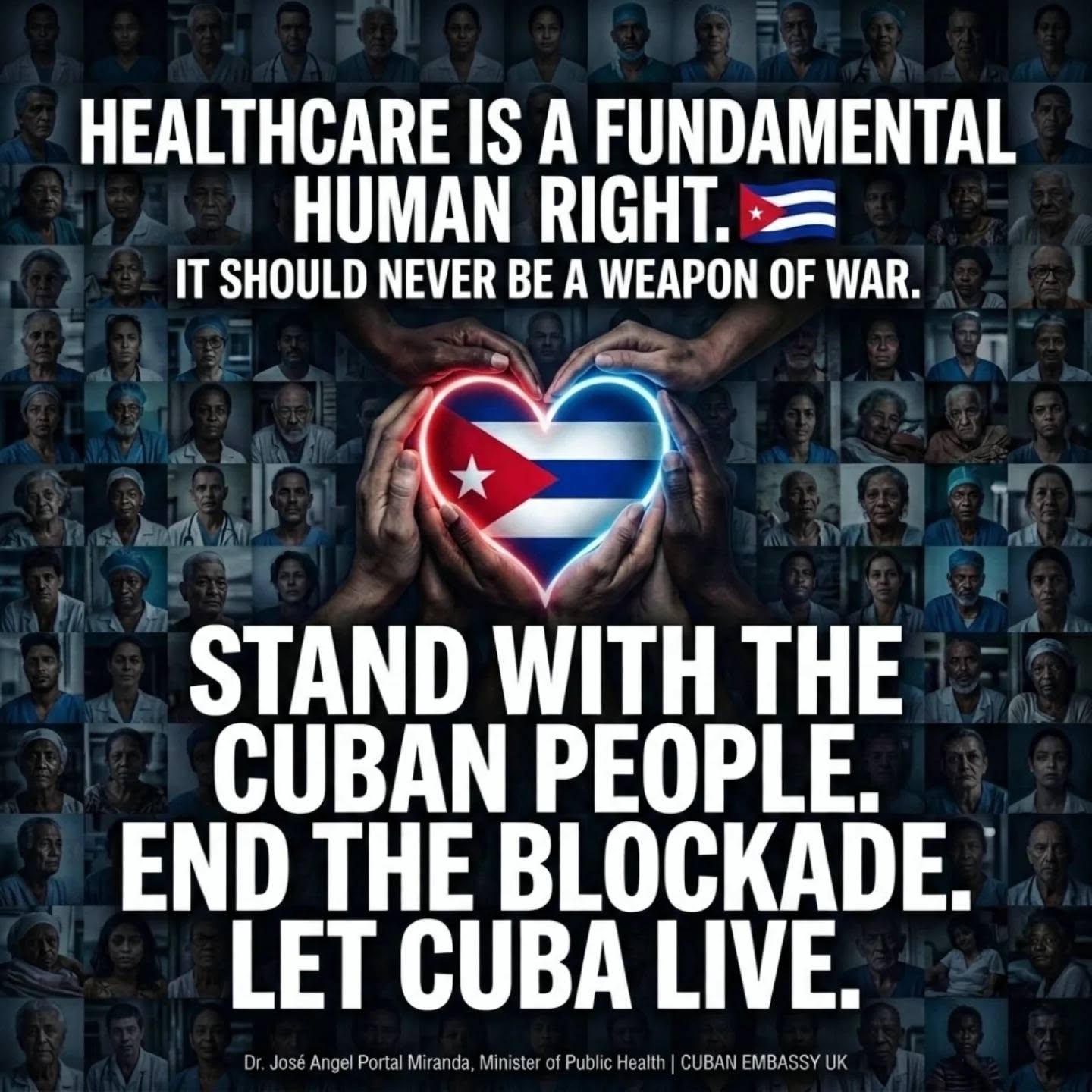
Authored by Yadirys Echenique Paz, Cuba’s top diplomatic representative to Grenada, this opinion piece argues that the long-running United States economic embargo against the Caribbean island nation meets the definition of genocide—even without direct military strikes or violent armed conflict inflicted on the Cuban public. For more than nine million Cuban citizens, this embargo has functioned as a wide-reaching policy of collective punishment that has pushed everyday hardship to levels that severely compromise access to basic necessities required for modern life. Paz questions what moral or strategic justification could ever exist for a global superpower to inflict this level of cruelty on a small developing island nation. At the core of the current crisis is a deliberate strategy of economic strangulation that includes a targeted energy siege designed to cut off all fuel supplies to the island. A January 2026 U.S. executive order expanded existing punitive measures, threatening harsh secondary sanctions against any third country that attempts to ship fuel to Cuba. The devastating impact of this policy is already clear: over a seven-month period, only one commercial vessel successfully delivered fuel to Cuban ports. This extraterritorial coercion extends far beyond Cuba’s borders, forcing sovereign nations to comply with the U.S. embargo and participate in collective punishment that directly violates core norms and foundational principles of international law, according to Paz. The tangible harms of this policy are already visible across nearly every sector of Cuban society. The national power grid has lost an average of 1,400 megawatts of generating capacity daily, leading to extended, widespread blackouts that disrupt residential access to electricity, cripple water pumping infrastructure, halt agricultural output, and shut down industrial operations. Tourism—Cuba’s primary source of new foreign currency—has been effectively paralyzed by widespread aviation fuel shortages and U.S. pressure on international hotel chains that operate on the island. Even the most basic elements of daily life have been upended: crops rot in fields without power for irrigation or processing, manufacturing facilities remain shuttered, and millions of households go for hours or days without access to electricity or running water. Cuba’s public health system, long a source of national pride and a global model for accessible care in developing nations, is now facing an existential threat. Unplanned power outages that occur during invasive surgeries or while patients are receiving critical care in intensive care units can literally mean the difference between life and death for vulnerable patients. Compounding this crisis is the backlog of thousands of shipping containers holding life-saving medical supplies and staple food products, held in international ports after U.S. pressure coerced global shipping lines to halt service to Cuba. The U.S. has also launched a coordinated campaign of misinformation to discontinue Cuban medical international cooperation programs, a vital source of foreign income for the Cuban government, which only worsens existing shortages of essential health and food resources. The U.S. offensive against Cuba extends far beyond the energy sector. A second executive order, issued May 1, 2026, expanded secondary sanctions to target all foreign individuals and private companies that maintain any form of legitimate commercial ties with Cuba. Paz characterizes this move as a systematic effort to fully disconnect the Cuban economy from global markets, forcing the country into total isolation that inflicts direct, daily harm on the entire civilian population. Even as these harms mount, U.S. policymakers continue to deny responsibility for the crisis with complete impunity—though their position has failed to win unanimous support even within the U.S. Congress, where a growing number of lawmakers have publicly broken ranks to oppose the embargo. The cumulative economic cost of the decades-long U.S. blockade now exceeds $150 billion, a staggering sum that is reflected in every blackout, every failed harvest, and every life-threatening surgical interruption experienced by the Cuban people. Independent experts appointed by the United Nations Human Rights Council have already warned that these coordinated punitive measures are intentionally designed to create a “silent Gaza” in the Caribbean, triggering simultaneous collapses in energy distribution, transportation networks, and basic public services that disproportionately harm low-income and other vulnerable populations. “Deliberately depriving a people of the means to survive is an assault on the right to life and human dignity,” the experts stressed. For Paz, the conclusion is unambiguous: the punitive policy implemented by the United States against Cuba amounts to economic genocide, a violation of international law that the global community cannot afford to tolerate. The piece closes by emphasizing that destroying a people does not require bombs or bullets; cutting off access to the basic essentials required for life is enough to inflict catastrophic harm. Defending Cuba’s right to exist free from external coercion and violence today, Paz argues, means defending the fundamental sovereign rights of all small nations. It requires the international community to speak out against a policy that punishes millions of innocent civilians and attempts to force a sovereign country to bend to foreign will through hunger and darkness. *Note: NOW Grenada disclaims responsibility for the views and content shared by contributing authors, and provides a channel for users to report abusive content.*